
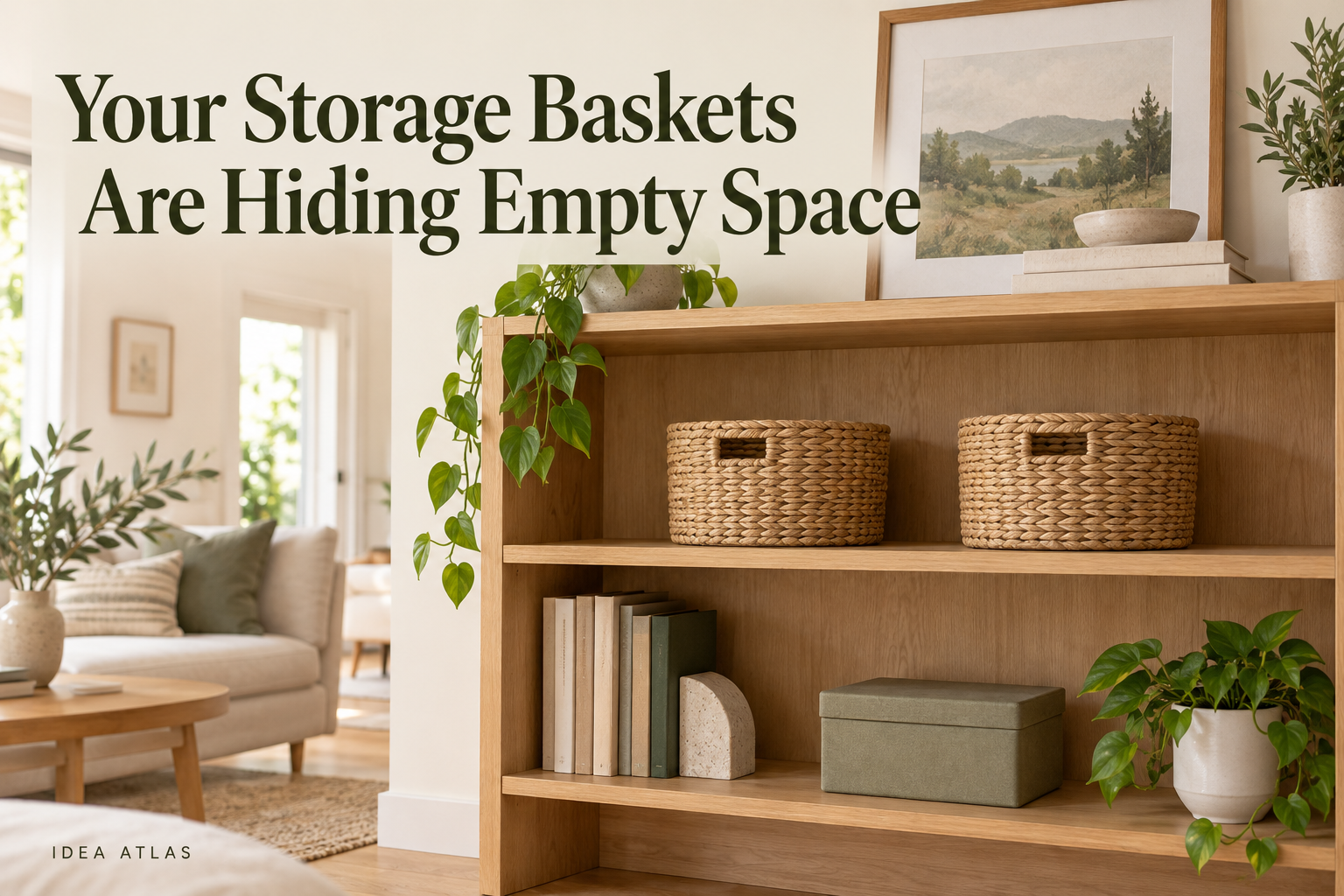
Your shelf looks full, but narrow strips of empty space run between the baskets. One basket leaves a deep pocket behind it. Another has a wide rim and a much smaller base. You may have enough shelf space for the things you own, arranged in pieces that are difficult to use.
Before buying more storage baskets for shelves, check what the baskets leave around them and what they can actually hold inside. A better arrangement might use your existing containers, with one useful open space beside them.
Images are AI-generated illustrations, not photographs of a measured storage makeover. They show arrangement principles rather than a promised increase in capacity.
Look for gaps that cannot do a useful job
Empty space is easy to overlook when the basket fronts form a tidy row. Look at the shelf from above, where possible, and check the sides, the back and the space over each rim.
Several thin gaps may be too narrow for the folded linens or small boxes you want to store. A shallow basket can also leave room behind it that becomes difficult to reach. Round baskets leave different spaces around their edges from rectangular ones.
Scattered gaps can make a shelf feel full before its space is useful.
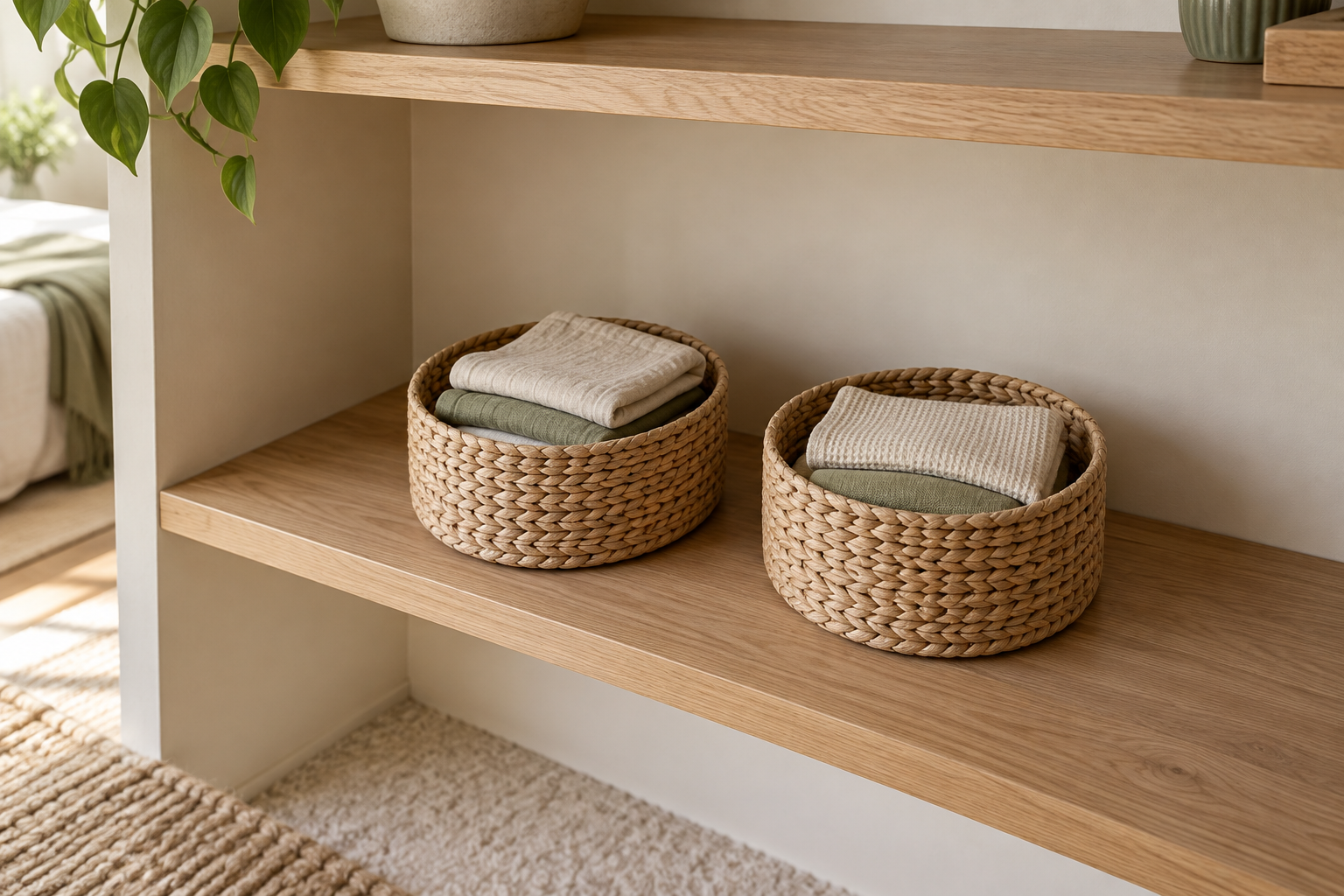
Some of those gaps have a job: they let you grip a handle, lift a basket or see what is inside. Keep those. Concentrate on empty pockets that serve neither storage nor access.
Measure the shelf opening and the basket interior
Start with the clear opening the basket must pass through. Measure between the actual sides or uprights, from the supported front edge to the back, and from the shelf surface to the obstruction above. Brackets, hinges or a front lip can make this opening smaller than the shelf’s advertised dimensions.
Then record the basket’s widest outside width, depth and height, including its rim, handles and lid if present. A flexible basket may spread when loaded, so measure it with its usual contents. Make sure its base will be properly supported.
Check the inside separately. Measure the usable bottom and the narrowest part where a rigid item needs to fit. Tapered walls, rounded corners and thick woven sides can reduce the space available for a flat box even when the top opening looks generous.
For a manufacturer example, The Container Store’s tote measurement sheet shows different measurements at the outside, top and bottom. The same measurement question is worth asking of a basket: which part does the listed size describe?
If the interior measurements are missing, measure an existing basket or ask the seller before ordering. Do not assume the outside dimensions describe the storage space inside.
Try a different arrangement before replacing anything
Empty one shelf onto a nearby surface and keep all its contents together. Put the existing baskets back in a few different positions. Try bringing two nearer each other while preserving enough room to grip and remove each one.
Gathering scattered gaps into one open section can make space for a stack of folded towels beside the baskets.
This does not enlarge the shelf or increase its total empty area. It changes the shape and location of that area, which may make it useful. Keep the same contents in the comparison so the improvement does not depend on quietly removing half your belongings.
Rotating a rectangular basket may help if its narrower side faces forward, but check the handle position and reach to the back. Reject an arrangement that makes a frequently used basket awkward to pull out.
Choose a container mix that suits the contents
A matching set can work well when its dimensions suit the shelf.
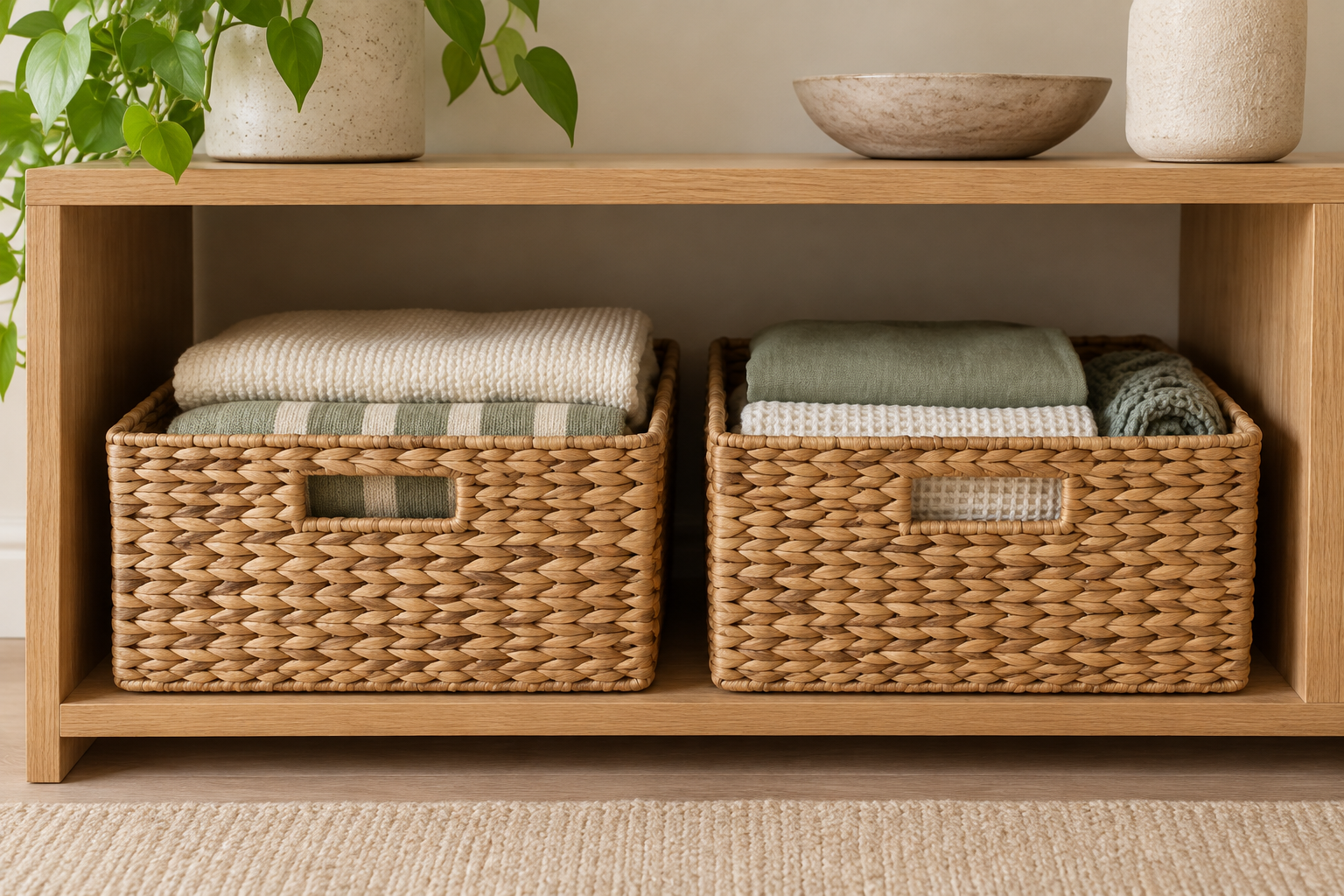
Matching alone does not guarantee a better fit. Several identical baskets can repeat the same awkward gaps, while a mix of sizes may suit the things you actually store.
Grouping containers is useful when it creates an accessible space you need. Spreading them out can be better when each basket needs a side grip or belongs to a separate daily task. Test both with the contents in place.
Give small loose items a container that keeps them together. Consider leaving stable folded linens directly on a suitable shelf if another basket would only add bulk. Keep items that need protection, separation or secure storage in containers appropriate for them.
A large basket can combine several categories, but it also means moving their combined weight whenever you need something underneath. Two smaller baskets may be easier to handle even if they occupy more space.
Leave room for hands, weight and airflow
Load the proposed arrangement and use it normally. Can you grasp the handles without scraping your knuckles? Can you lift out the basket without tilting its contents onto the floor? Does returning it require moving everything nearby?
Leave the clearance your actual hands and removal movement need.
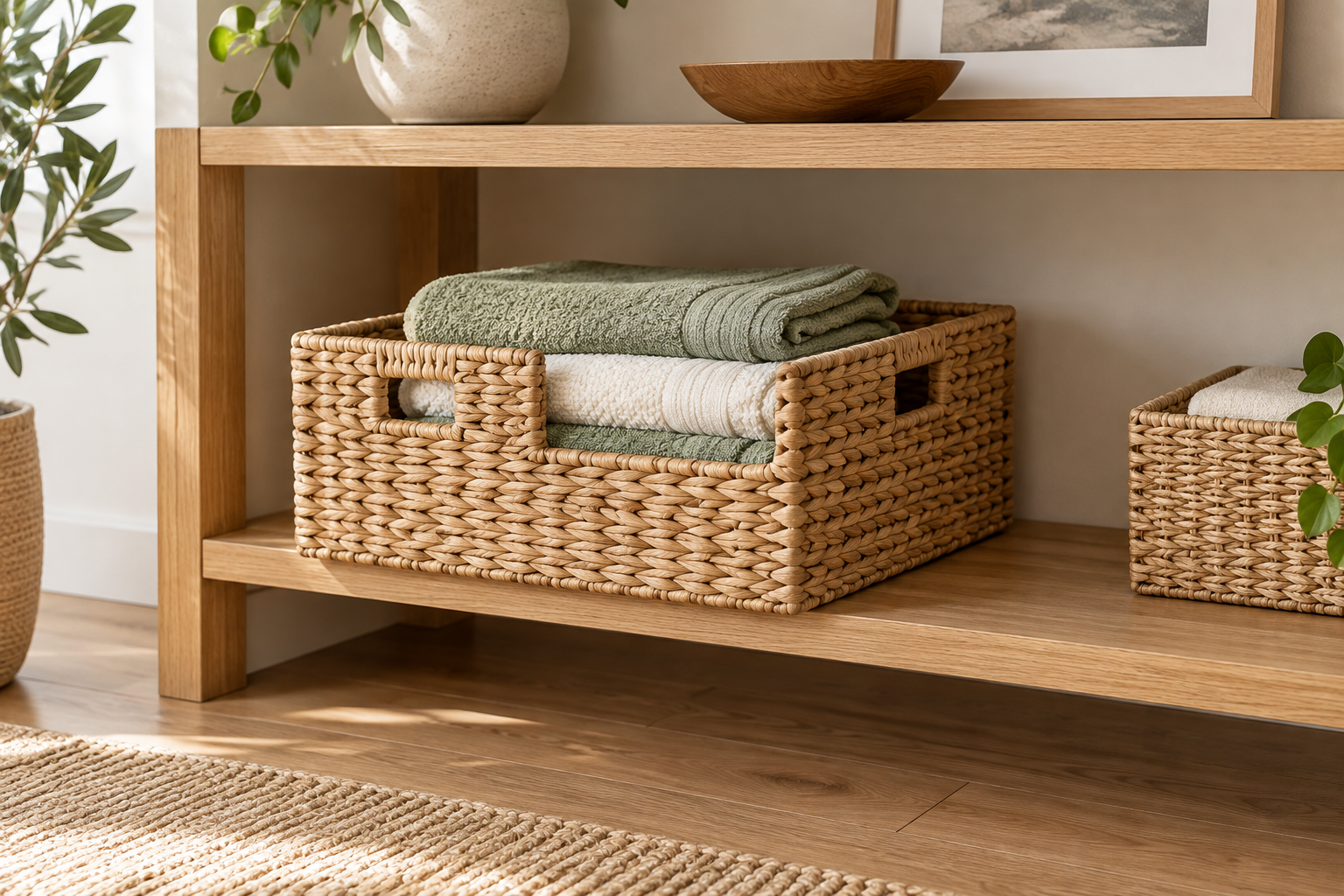
Check the shelf and basket manufacturers’ load limits, including any instructions about weight distribution and furniture anchoring. Fitting more objects into a shelf does not increase the weight it can support. For example, these storage-unit instructions specify different limits for different panels and warn against overloading. Use your own unit’s instructions.
Keep air vents clear and follow any stored equipment’s clearance requirements. Let towels and other washable textiles dry before storing them. A woven basket is not a reason to pack damp fabric tightly or ignore a musty cupboard.
Keep the baskets that already work
If your current baskets hold the right items, remain easy to lift and leave usable access, there is no need to replace them for a tighter-looking row. An intentional gap can be useful breathing room or space for a future item.
For the wider room, our small-apartment storage ideas cover other ways to use the space you have.
Start with one shelf. Measure the opening, check the basket interior and try the existing pieces in a new arrangement. Keep the version that makes your things easier to store and retrieve.
Comments