
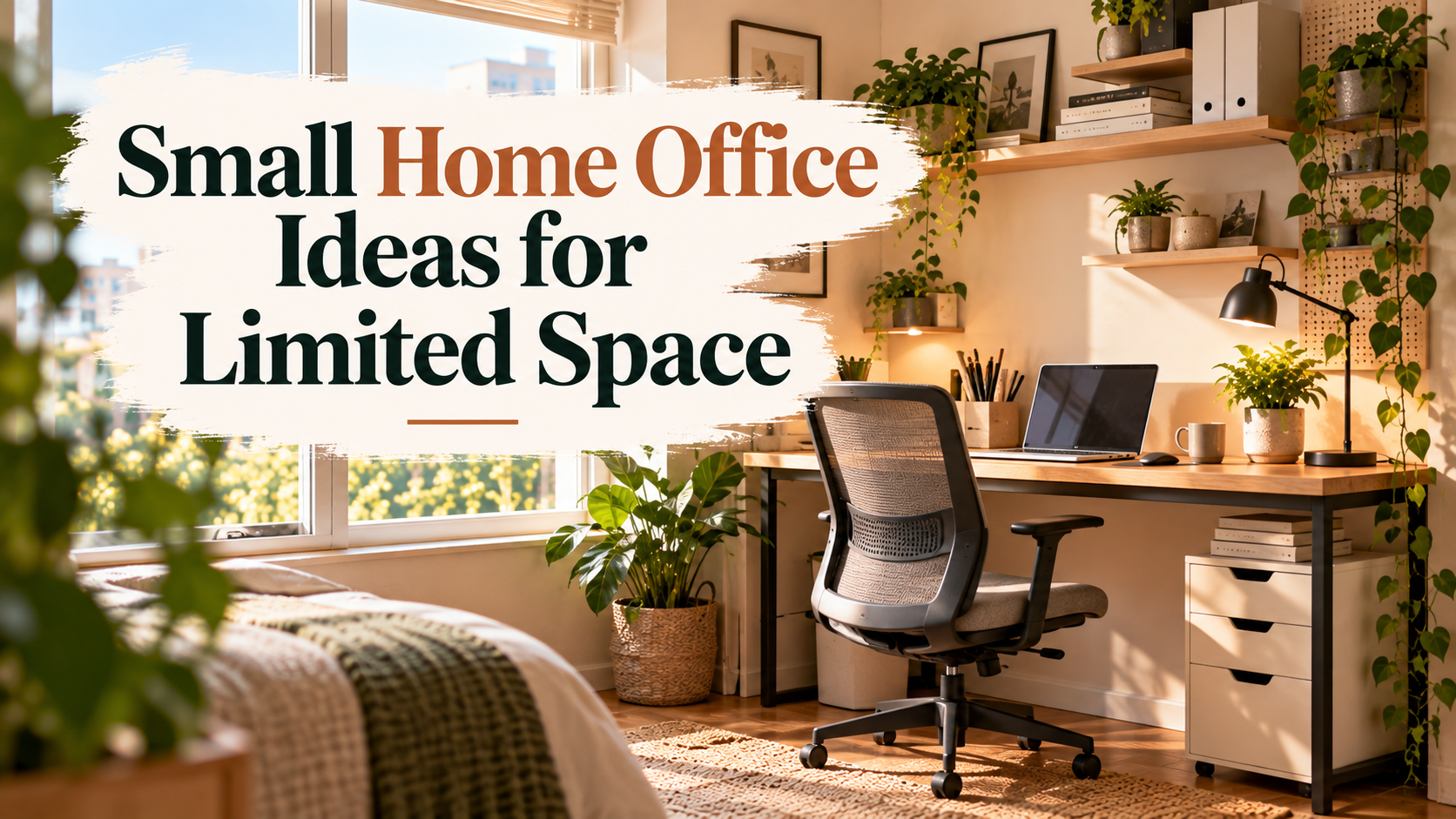
Working from home does not always mean having a separate room for an office.
In a small apartment or compact home, a workspace may need to fit into a bedroom, living room, hallway or even an unused corner. The challenge is creating a place that feels comfortable enough to work in without allowing the office to take over the rest of the room.
Fortunately, a useful home office does not need much floor space.
With the right desk placement, storage and furniture choices, even a small corner can become a practical workspace. Here are simple small home office ideas for making limited space work harder.
- Start With the Smallest Space You Actually Need
- Look for an Underused Corner
- Choose a Desk That Fits the Space
- Use the Wall Above Your Desk
- Keep the Desktop Visually Simple
- Make Natural Light Part of the Workspace
- Choose a Chair That Can Tuck Away
- Let the Workspace Blend With the Room
- Create a Clear End to the Workday
- A Small Workspace Can Still Work Well
Start With the Smallest Space You Actually Need
Before choosing a desk or rearranging a room, think about what your work really requires.
Someone who mainly uses a laptop may need little more than a compact desk, a comfortable chair and access to a power outlet. A larger setup with multiple monitors, paperwork or equipment will naturally need more space.
Design the workspace around those actual requirements rather than trying to recreate a full-size office.
Keeping the setup intentionally compact leaves more room for the other functions of your home.
Look for an Underused Corner
A small home office does not always need its own room.
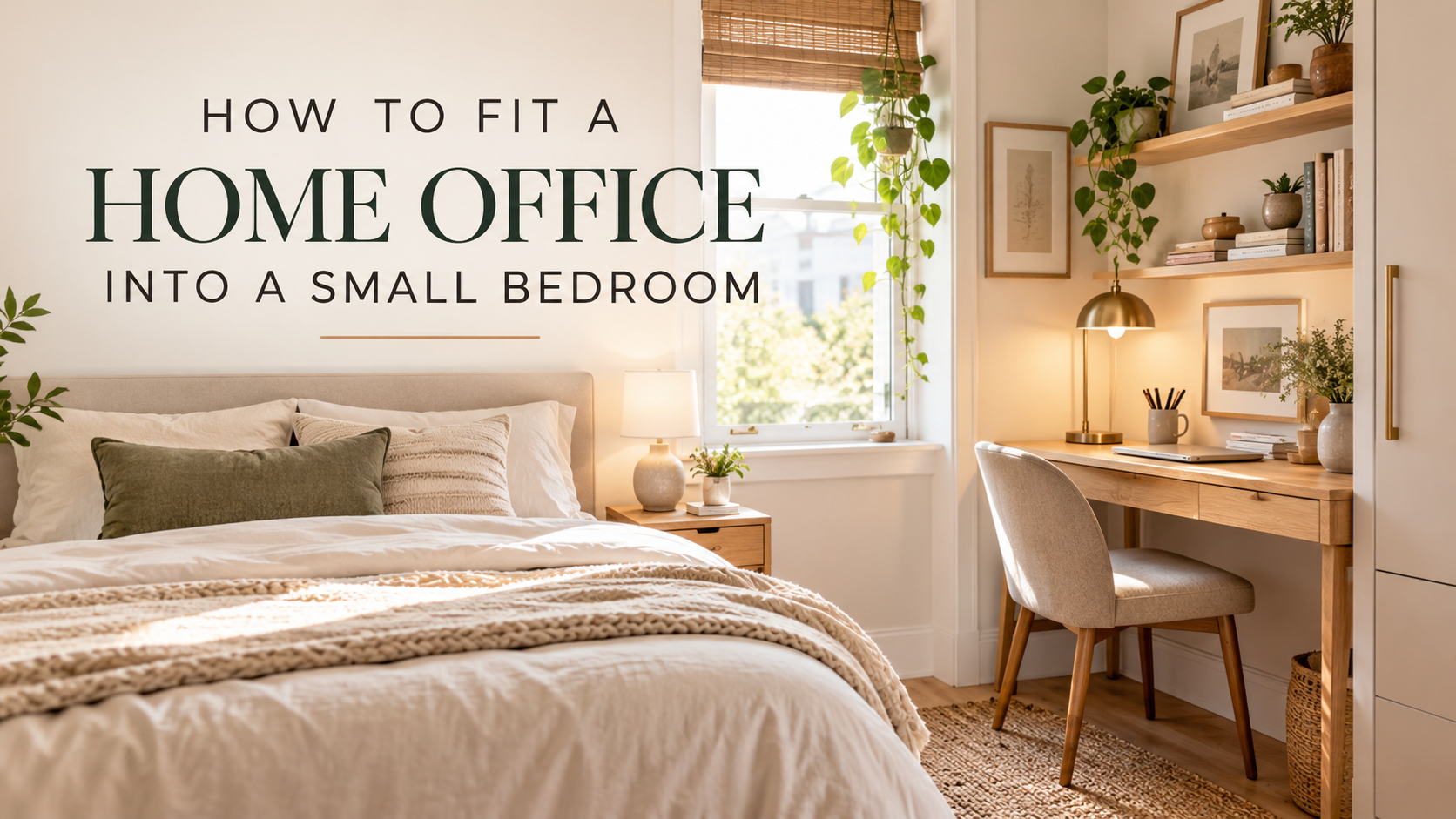
An empty corner beside a window, the end of a living room or an unused section of a bedroom can often provide enough space for a desk.
Look around your home for areas that currently have no clear purpose.
Even a relatively narrow wall can sometimes accommodate a compact desk and chair without interfering with the main walking paths.
The best location is usually one that provides enough room to work while still allowing the surrounding space to function normally.
Choose a Desk That Fits the Space
A large desk can quickly dominate a small room.
Instead, choose a desk based on the equipment you actually use.
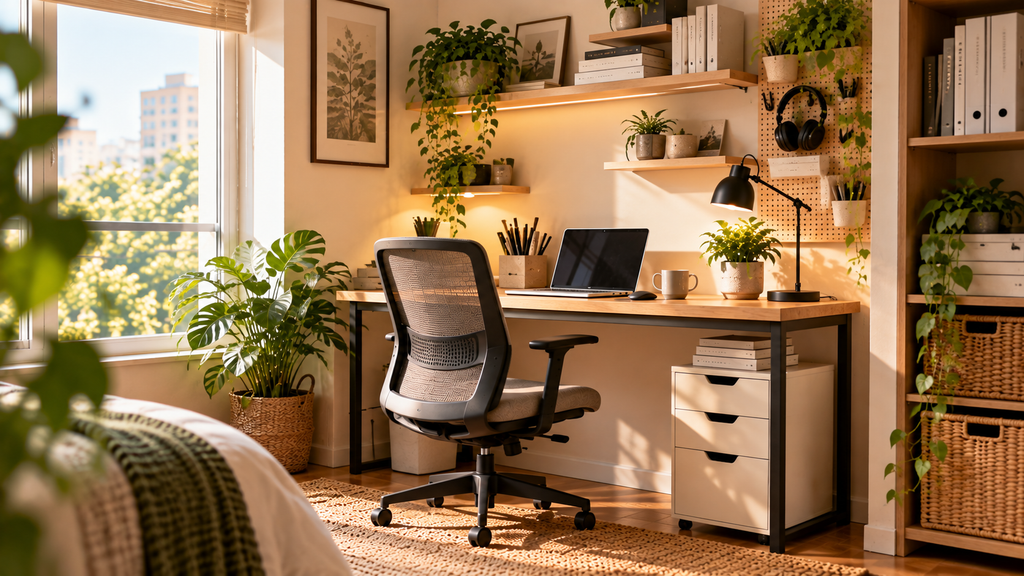
A slim desk can work well for a laptop-based setup, while a wall-mounted or floating desk can preserve more visible floor space.
Corner desks can also make use of areas that might otherwise remain empty.
Before buying anything, measure both the available wall space and the depth of the desk. Depth is especially important in narrow rooms because even a few extra inches can affect the walking space around it.
Use the Wall Above Your Desk
The wall above a desk is valuable storage space.
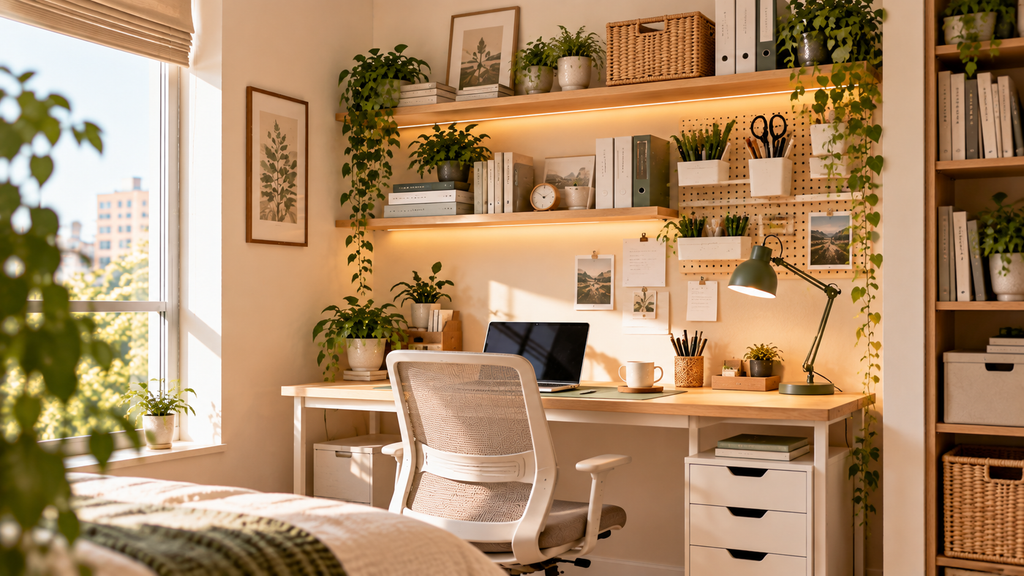
Floating shelves can hold books, office supplies and small decorative items without requiring another cabinet or bookcase.
Wall-mounted organizers can keep frequently used items within reach while leaving the desktop relatively clear.
Try not to fill the entire wall.
A combination of practical storage and some open space usually feels calmer than covering every available surface with shelves.
Keep the Desktop Visually Simple
A small desk can become cluttered very quickly.
Keep only the items you use regularly on the desktop and give everything else a specific storage location.
Cable management can make a surprisingly large difference. Power cords, chargers and adapters can create visual clutter even when the desk itself is relatively tidy.
Simple cable clips, a cable tray or routing cords behind the desk can help create a cleaner workspace.
A visually quiet desk can make a small office feel more comfortable and easier to focus in.
Make Natural Light Part of the Workspace
If possible, position your workspace where it can benefit from natural light.
A desk near a window can make a compact workspace feel brighter and less enclosed.
However, placing a computer directly in front of a bright window may create glare. Positioning the desk beside the window can often provide a better balance between daylight and screen visibility.
For evening work, add a focused desk lamp rather than relying only on overhead lighting.
Good lighting helps a small workspace feel intentional rather than temporary.
Choose a Chair That Can Tuck Away
An office chair takes up more space than it might seem.
In a compact room, look for a chair that can slide underneath the desk when it is not being used.
A chair without oversized arms or a bulky back can reduce the visual footprint of the workspace.
Comfort still matters, especially if you work for long periods. The goal is not simply to choose the smallest chair available, but to find one that provides adequate support without overwhelming the room.
Let the Workspace Blend With the Room
A home office often shares space with another part of the home, so it does not have to look completely separate.
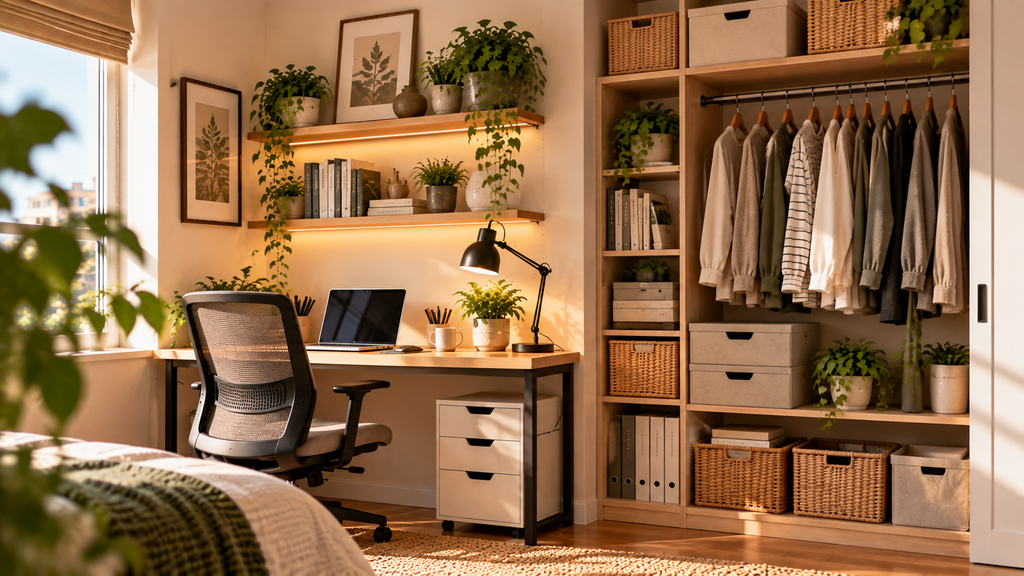
Using similar wood tones, colors and materials can help the desk area feel connected to the rest of the room.
For example, a light wood desk can complement other furniture, while storage boxes or accessories can repeat colors already used elsewhere.
This visual continuity is especially useful in bedrooms and living rooms where a strongly contrasting office setup can make the room feel more fragmented.
Create a Clear End to the Workday
When your office is part of your bedroom or living room, work can remain visually present even after you finish for the day.
A simple reset routine can help.
Put away notebooks, close the laptop, return loose items to storage and leave the desktop as clear as possible.
If the workspace is inside a bedroom, this can be particularly useful because it helps the room return to feeling like a place to relax rather than an office.
You do not necessarily need to hide the workspace. Keeping it organized may be enough to create a clearer separation between work time and personal time.
A Small Workspace Can Still Work Well
A useful home office is not defined by how much space it occupies.
What matters is whether the workspace supports the way you actually work without making the rest of your home harder to use.
Start with your essential equipment, find an underused part of the room and choose furniture that fits the available space. Then use vertical storage, good lighting and simple organization to keep the setup functional.
With a thoughtful layout, even a small corner can become a comfortable and practical place to work.

Comments