
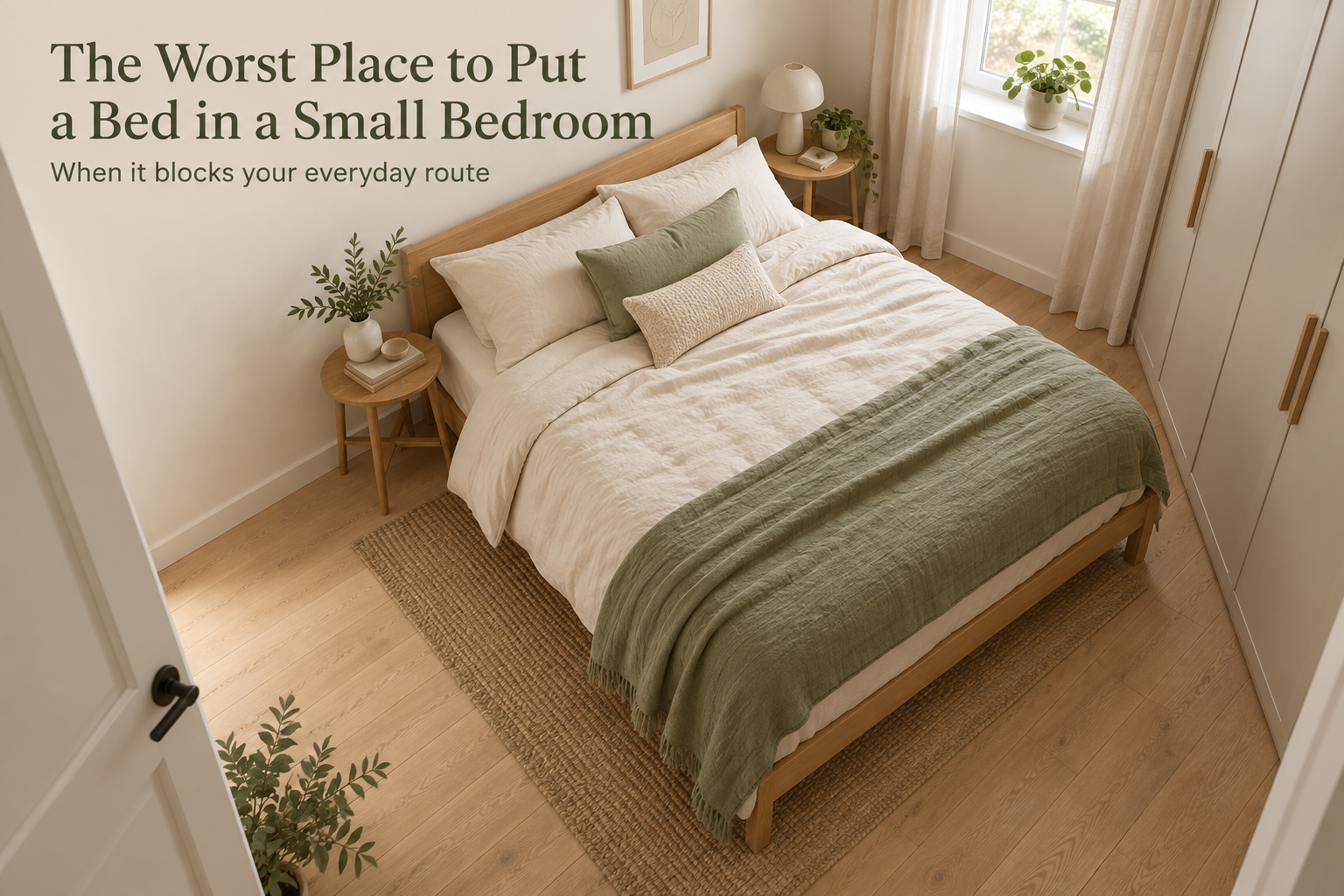
If getting dressed means turning sideways between your bed and the closet, the bed may be in the wrong place. The room can look balanced from the doorway while making the same simple trip awkward every morning.
For a small bedroom with this problem, the worst place to put the bed is across the route you use most: from the entrance to your clothes storage. That is a layout diagnosis, not a rule about one particular wall. A bed facing the door, beside a window, or against a wall can work when the room still functions around it.
The problem is the route the bed interrupts
Picture a bedroom with the entrance near one corner and a wardrobe farther along the same side. The bed sits across the middle of the room, with its foot pointing toward that side wall. Everything technically fits, but reaching the wardrobe means squeezing past the footboard.
This pinch point becomes more noticeable when you carry a laundry basket, pull out a suitcase, or leave the wardrobe door open while choosing clothes. A little unused floor space on the other side of the bed does not help if you cannot use it on that daily trip.
Watch for the small adjustments you have stopped noticing: edging around a bed corner, pushing the bedroom door back to pass, or standing sideways to reach a drawer. Those habits tell you where to investigate. The important question is whether the bed interrupts a route you need repeatedly.
Trace your morning route before moving anything
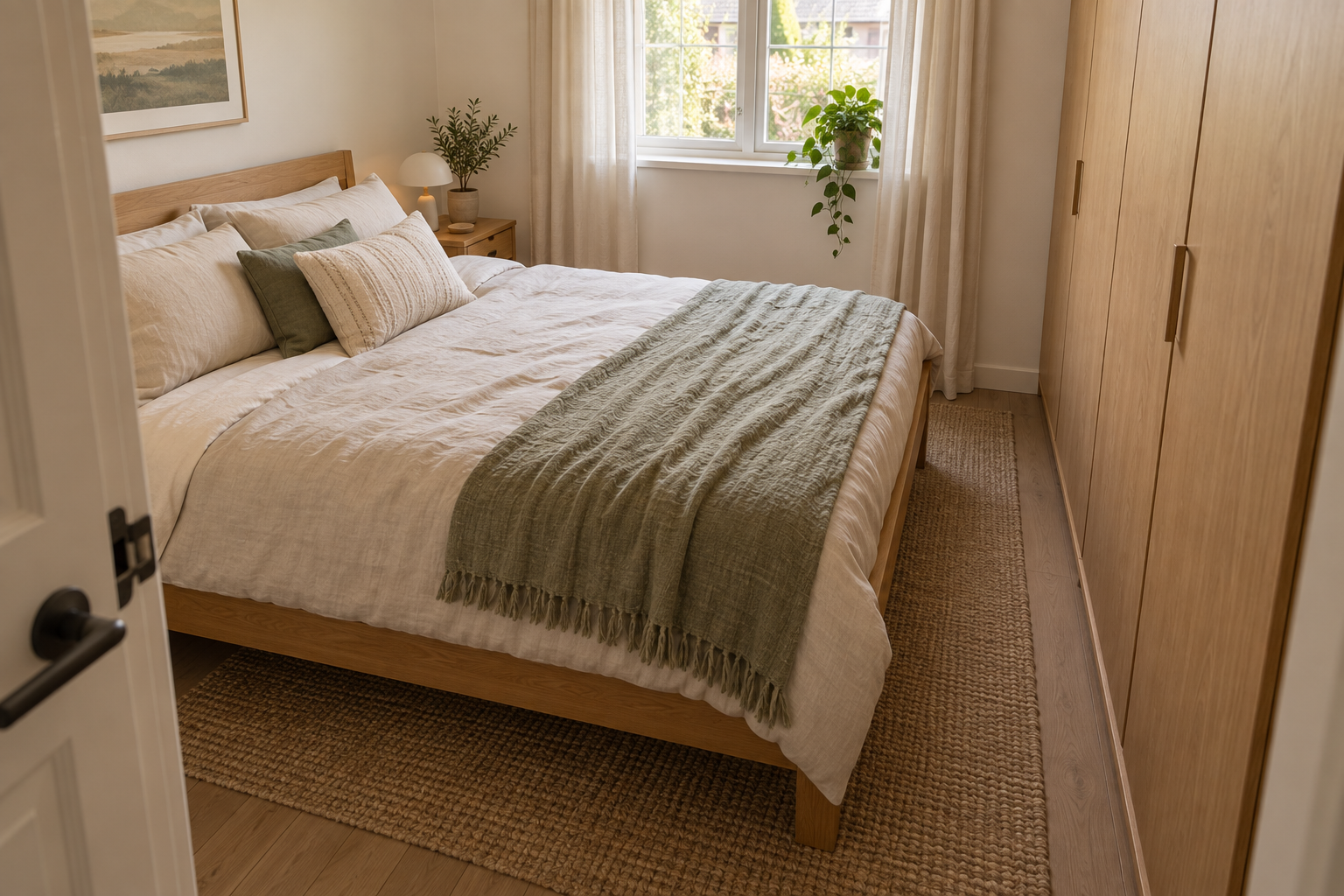
Start at the bedroom entrance and walk through getting ready. Go to the wardrobe, reach the drawers you use, and return to the bed. Repeat the route carrying an empty laundry basket. If you share the room, ask the other person to try their usual routine too.
Then make a rough floor plan. Mark the entrance, closet or wardrobe, windows, and any fixed furniture. Draw the bed frame at its full outside size, including an overhanging headboard or footboard. Mattress dimensions alone can hide the part that catches your leg.
Add the route you just walked. Look for a tight turn or a passage that disappears when something opens. Measure those specific spots so you can compare another arrangement accurately. There is no single clearance number that makes every room comfortable: the furniture, the people using it, and any mobility needs all matter.
Mark where doors swing and drawers extend, then leave space for the person using them.
Check what happens when the doors are open
A layout can pass the walking test with everything closed and still fail during use. Open the bedroom door through its normal swing. Check that it clears the bed frame and lets you enter without an awkward shuffle.
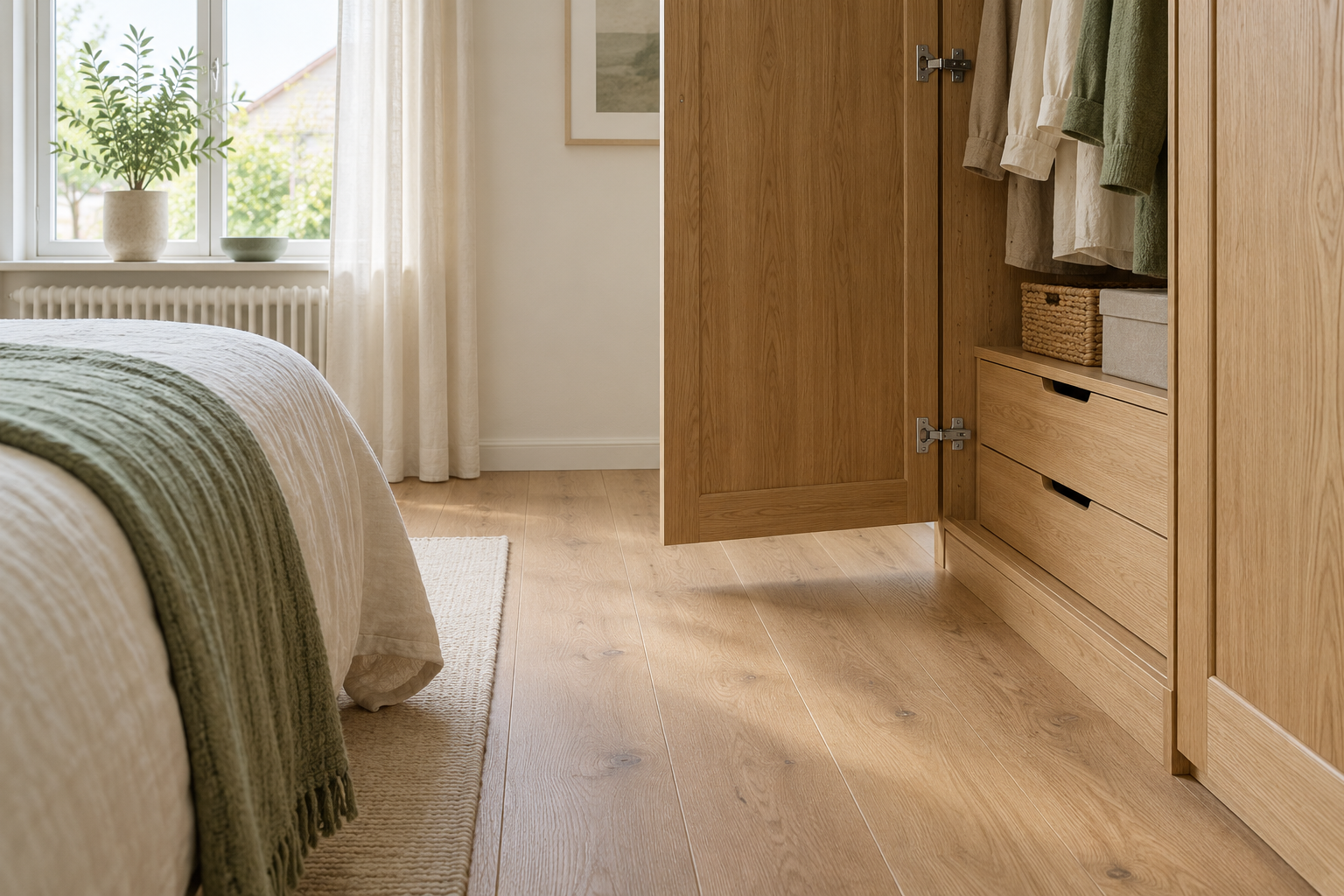
Next, open the wardrobe as you would when getting dressed. A hinged door needs room to swing, and you need somewhere to stand once it is open. Sliding doors avoid that swing, but they do not remove the need for standing space or room to pull out an internal drawer.
Test the lowest drawers as well as the ones at waist height. Can you bend down and reach the back without leaning against the bed? If the bed has storage drawers, open those too. A useful arrangement lets you operate the furniture you already have, rather than keeping it closed to preserve a walkway.
Try the smallest move that clears the path
You may not need to turn the entire bedroom around. First, test shifting the bed sideways so its corner no longer projects into the route. An off-center headboard can be a reasonable trade when it gives you a more direct walk to the closet.
If that does not help, sketch the bed rotated onto another wall. In a rectangular room, changing its direction may move the foot away from a busy passage. Check the new position against the door swings and wardrobe opening you marked earlier; rotation can also create a different bottleneck.
Use a removable outline on the floor, if the surface permits it, or a scaled paper plan to compare options before moving heavy furniture. Keep the actual frame size in your test. Clear the proposed route of the nightstand or laundry hamper as well, or you may simply move the obstruction.
Choose the position that makes the whole trip easier, including the space to stop and use the wardrobe.
A wall-side bed works for some sleepers
For someone sleeping alone, placing one long side of the bed near a wall may free a useful passage on the other side. It is worth considering when direct access to both sides matters less than a workable route to clothing storage. Still test making the bed, changing sheets, and reaching anything stored underneath.
For two people, access from both sides may be more important. If a wall-side position means one person must climb over the other, try an offset arrangement that keeps both sides reachable. The two bedside spaces do not have to match.
Use the needs of the actual sleepers to judge the result. Someone who uses a mobility aid or needs assistance may require an arrangement that differs from a typical room photograph.
Keep the new route clear in everyday use
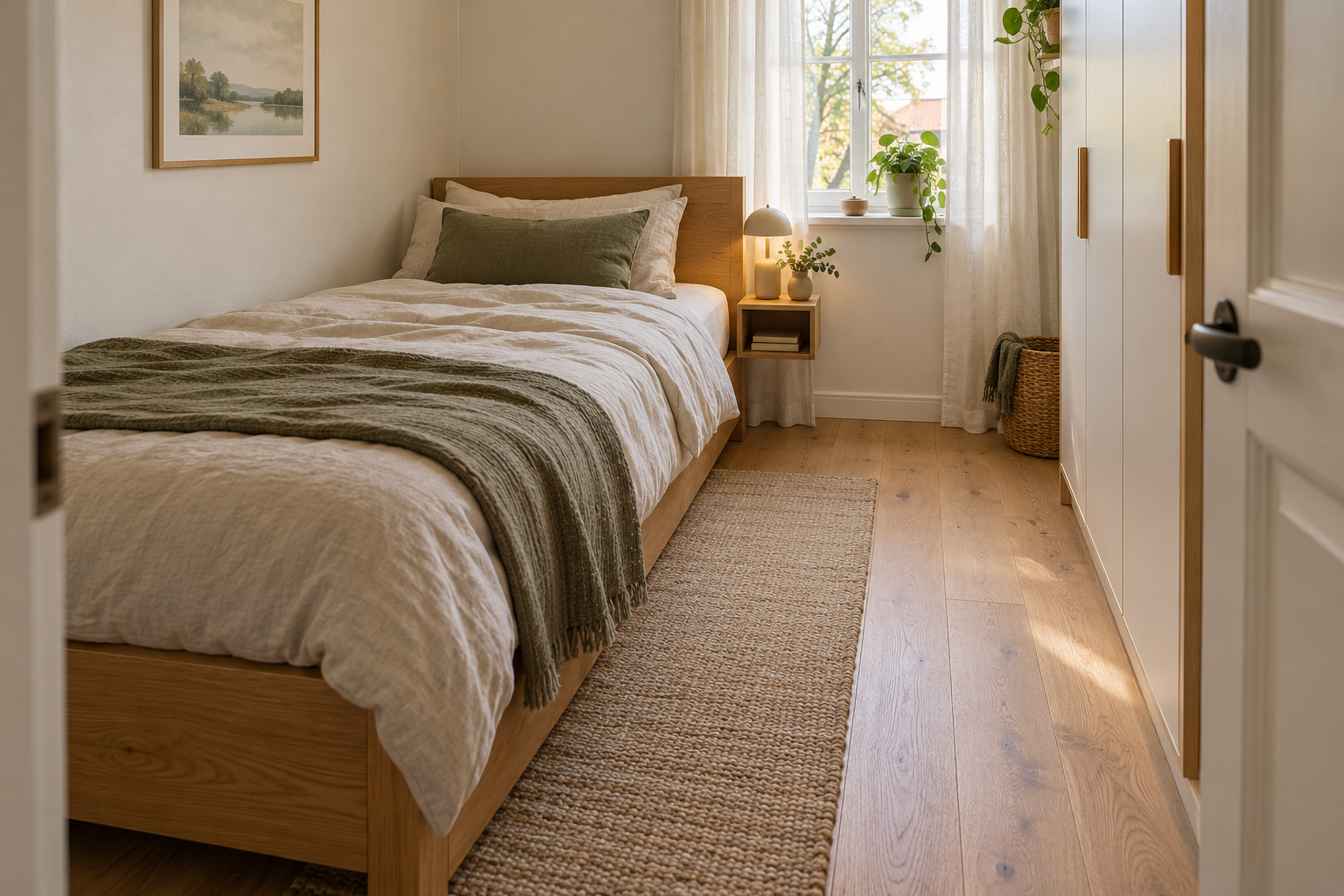
Before settling on a position, check the things a floor plan can miss. Keep vents unobstructed, preserve access to windows and exits, and follow any clearance guidance for nearby heaters. A tidier route to the closet should not create a problem elsewhere.
Once the bed is in place, try the morning routine again. Open the doors, reach for clothes, and carry the basket through. Give the hamper a home outside that route so the improvement lasts.
For wider decorating and furnishing choices, see our small bedroom ideas that don’t feel cramped. Start here with one practical change: place the bed where your daily route can stay open.
Images are AI-generated illustrations. The room photographs show separate examples, not a measured before-and-after renovation.


Comments