
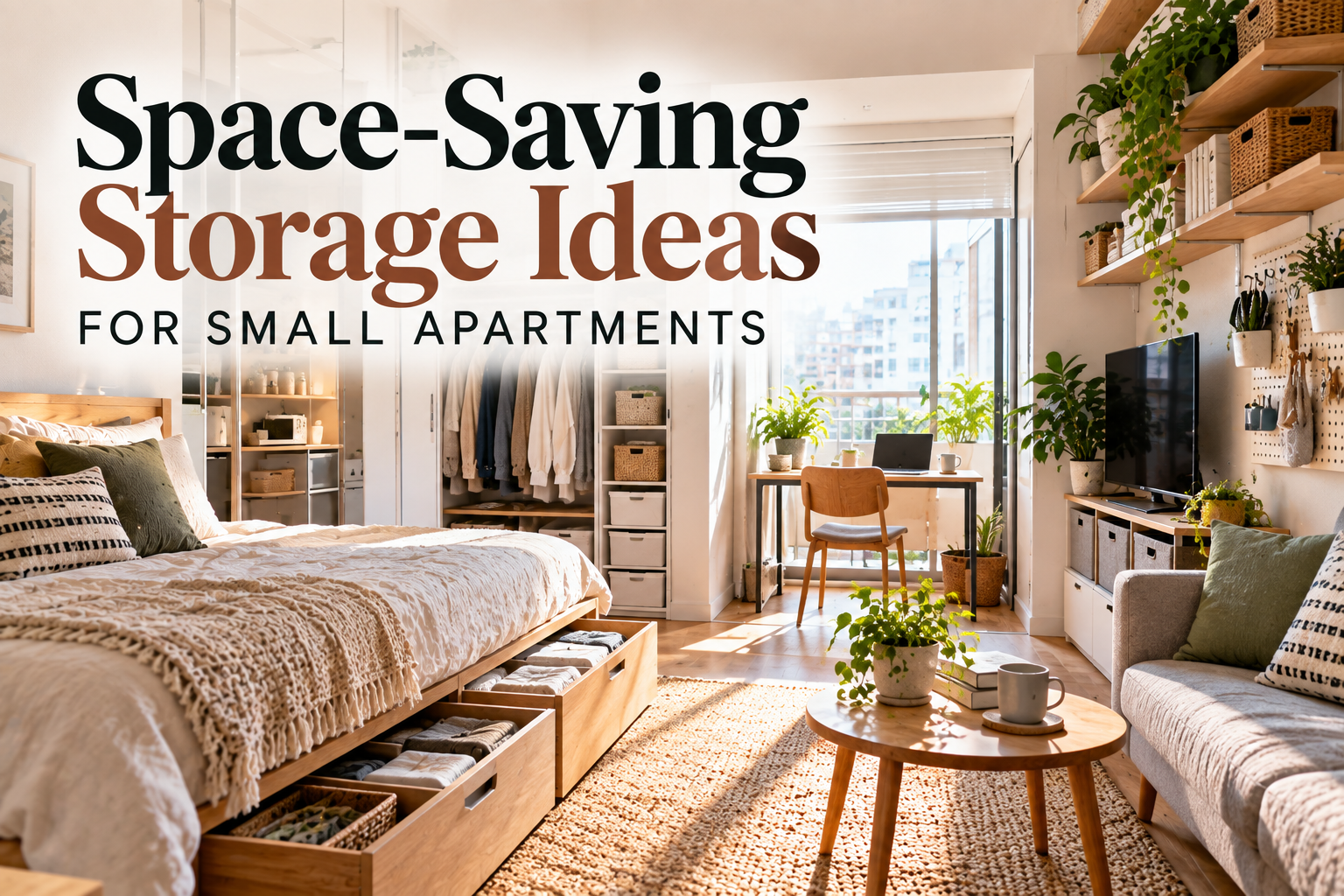
Living in a small apartment often means finding a place for everything without making the home feel crowded.
The challenge is not simply adding more storage. Large cabinets, shelves and containers can sometimes solve one problem while creating another by making a room feel smaller and more cluttered.
Good small-space storage works differently.
It uses overlooked areas, keeps everyday items easy to reach and reduces visual clutter without filling every available wall or corner.
Here are practical space-saving storage ideas for small apartments that can help you make better use of the space you already have.
- Start With What You Actually Need to Store
- Use the Space Under the Bed
- Take Storage Up the Walls
- Make Use of the Space Above Doors
- Choose Furniture With Built-In Storage
- Use the Back of Doors
- Create Storage Around Existing Furniture
- Keep Everyday Surfaces Clear
- Use Baskets and Boxes to Reduce Visual Clutter
- Leave Some Storage Space Empty
- Better Storage Can Make a Small Apartment Feel Larger
Start With What You Actually Need to Store
Before buying storage furniture or organizers, look at what you are trying to store.
Small apartments become difficult to organize when storage solutions are added before the actual problem is understood.
Group similar items together and identify which things you use every day, occasionally or rarely.
Frequently used items should stay easy to reach. Seasonal or rarely used items can be stored in less convenient areas such as high shelves or under the bed.
This simple distinction can prevent valuable storage space from being occupied by things you rarely need.
Use the Space Under the Bed
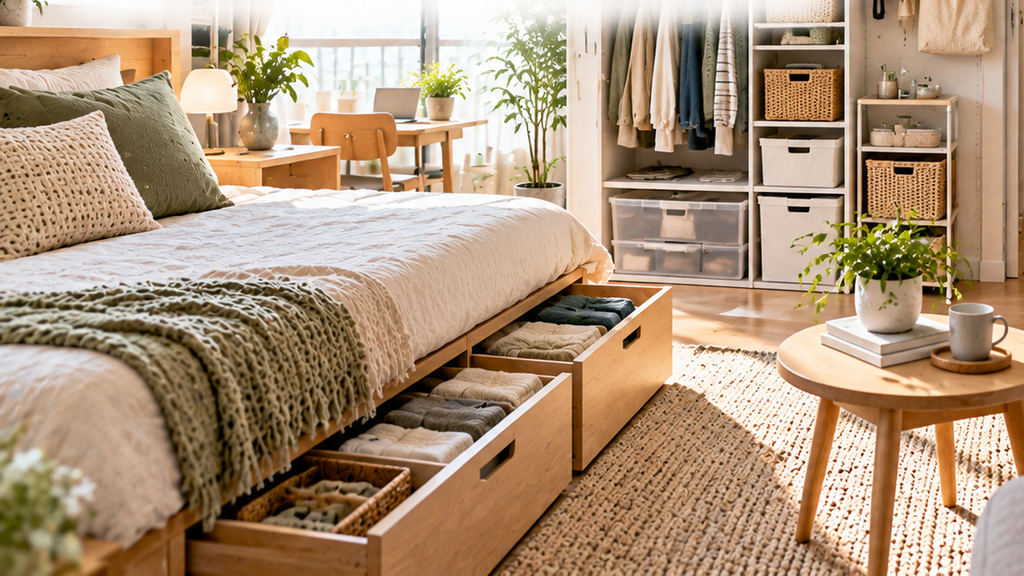
The area beneath a bed is one of the largest hidden storage opportunities in many apartments.
Low drawers, storage boxes or beds with built-in compartments can hold bedding, seasonal clothing, shoes and other items that do not need to remain visible.
Choose containers that fit comfortably under the bed rather than forcing oversized boxes into the space.
If the bed sits too low, small bed risers may create additional clearance, although the change should still feel stable and comfortable.
Using this area effectively can reduce the need for another cabinet or dresser elsewhere in the room.
Take Storage Up the Walls
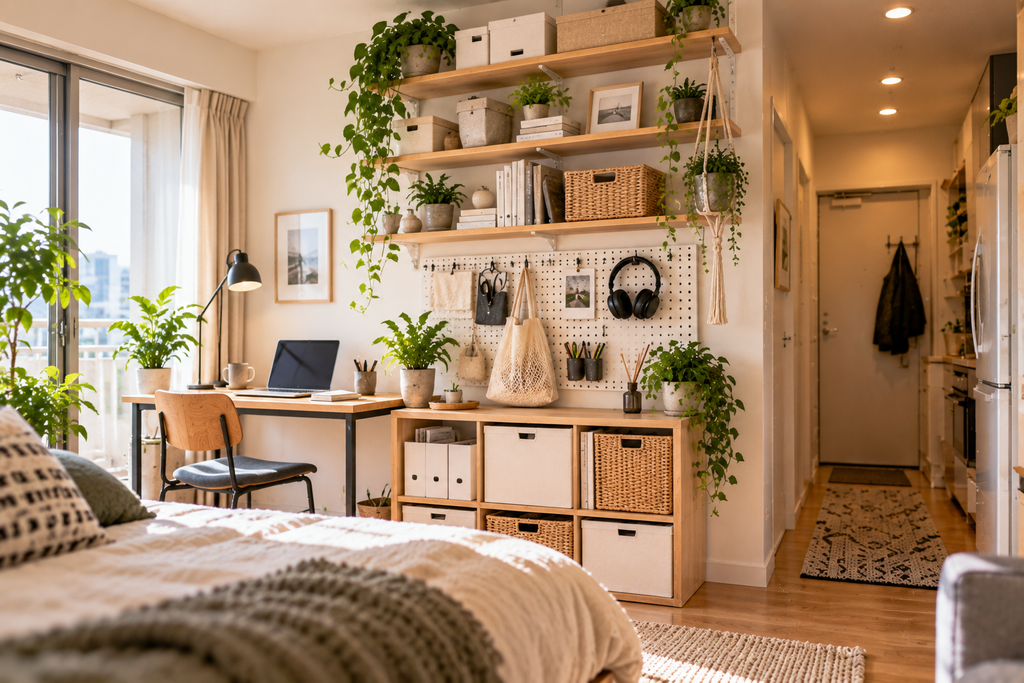
When floor space is limited, vertical storage becomes especially valuable.
Floating shelves can hold books, plants and frequently used objects without occupying the floor.
Tall shelving units can also provide significant storage while using relatively little floor area.
However, more shelving is not always better.
Leaving some sections of the wall open helps prevent a small apartment from feeling visually crowded.
Use vertical storage strategically in places where it solves a specific storage problem rather than filling every empty wall.
Make Use of the Space Above Doors
The wall area above a doorway is often ignored.
A shelf positioned above a door can provide useful storage for items that are not needed every day, such as extra towels, travel bags or seasonal accessories.
Because the shelf sits above normal eye level, it can add storage without significantly affecting the usable floor area.
Use matching boxes or baskets if you want the storage to appear more organized.
This approach works particularly well in bedrooms, hallways and small home offices.
Choose Furniture With Built-In Storage
Furniture can perform more than one function.
An ottoman with hidden storage can provide seating while holding blankets or accessories.
A coffee table with drawers or a lift-up surface can store remotes, chargers and other everyday items.
Benches with storage compartments can work near an entrance or at the end of a bed.
In a small apartment, multifunctional furniture can reduce the total number of pieces you need.
The best options are usually those that provide storage without becoming significantly larger than the furniture they replace.
Use the Back of Doors
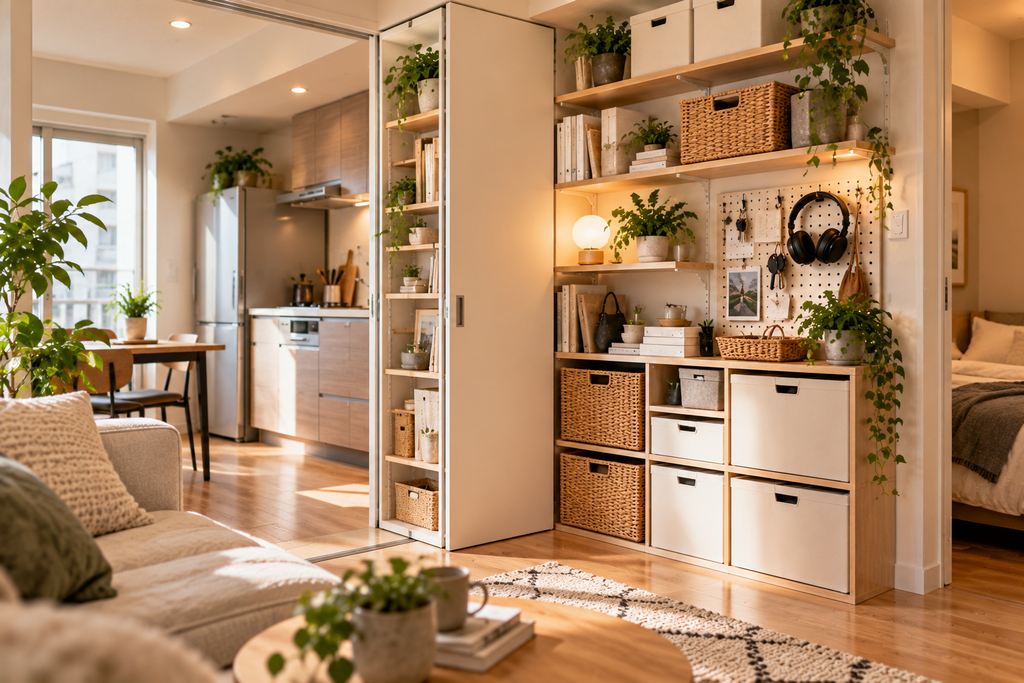
Doors provide another useful vertical surface.
Over-the-door organizers can hold shoes, accessories, cleaning supplies or small household items.
Hooks can also create convenient storage for bags, jackets or towels.
The important thing is to avoid overloading the door.
Too many items can create visual clutter and make the door harder to use.
Choose a small number of items that benefit from being easily accessible.
Create Storage Around Existing Furniture
Sometimes the best storage opportunity is directly beside furniture you already have.
A narrow shelving unit can fit beside a refrigerator, desk or wardrobe.
Small rolling carts can use gaps that would otherwise remain empty and can be moved when needed.
The space beside a sofa may also accommodate a slim side table with shelves or drawers.
Before buying additional furniture, measure these narrow areas carefully.
Small gaps can sometimes provide surprisingly useful storage without changing the layout of the room.
Keep Everyday Surfaces Clear
Kitchen counters, coffee tables and desks can quickly become informal storage areas.
While keeping a few frequently used items visible is practical, too many objects can make a small apartment feel cluttered.
Give common items a nearby storage location.
A drawer near the desk can hold chargers. A basket near the sofa can collect small accessories. A tray inside a cabinet can organize frequently used kitchen items.
The easier an item is to put away, the more likely the surface will remain clear.
Clear surfaces can make a small room feel noticeably calmer and more spacious.
Use Baskets and Boxes to Reduce Visual Clutter
Open shelving is useful, but many small objects displayed together can create visual noise.
Baskets and storage boxes can group similar items into simpler visual forms.
Choose containers that fit the shelves properly and avoid using too many different styles.
A consistent set of baskets or neutral boxes can make open storage feel more intentional.
Labels can also be useful for containers that hold items you do not access frequently.
The goal is not to hide everything, but to reduce the number of individual objects competing for attention.
Leave Some Storage Space Empty
It may seem strange to leave unused space in a small apartment, but completely filling every shelf, drawer and cabinet can make organization harder.
A little extra capacity allows new items to be stored without immediately creating clutter.
It also makes frequently used storage easier to access.
Instead of treating every empty space as something that must be filled, consider it flexibility for the future.
A small amount of breathing room can make the entire storage system easier to maintain.
Better Storage Can Make a Small Apartment Feel Larger
The most effective storage solutions are not necessarily the ones that hold the most items.
Good storage supports the way you actually use your home.
Start with the things you need to store, then look for overlooked areas such as under the bed, above doors and along vertical walls.
Use multifunctional furniture where it makes sense, keep everyday surfaces relatively clear and avoid filling every available space.
When storage becomes part of the layout rather than an afterthought, even a small apartment can feel more organized, comfortable and spacious.
Comments