
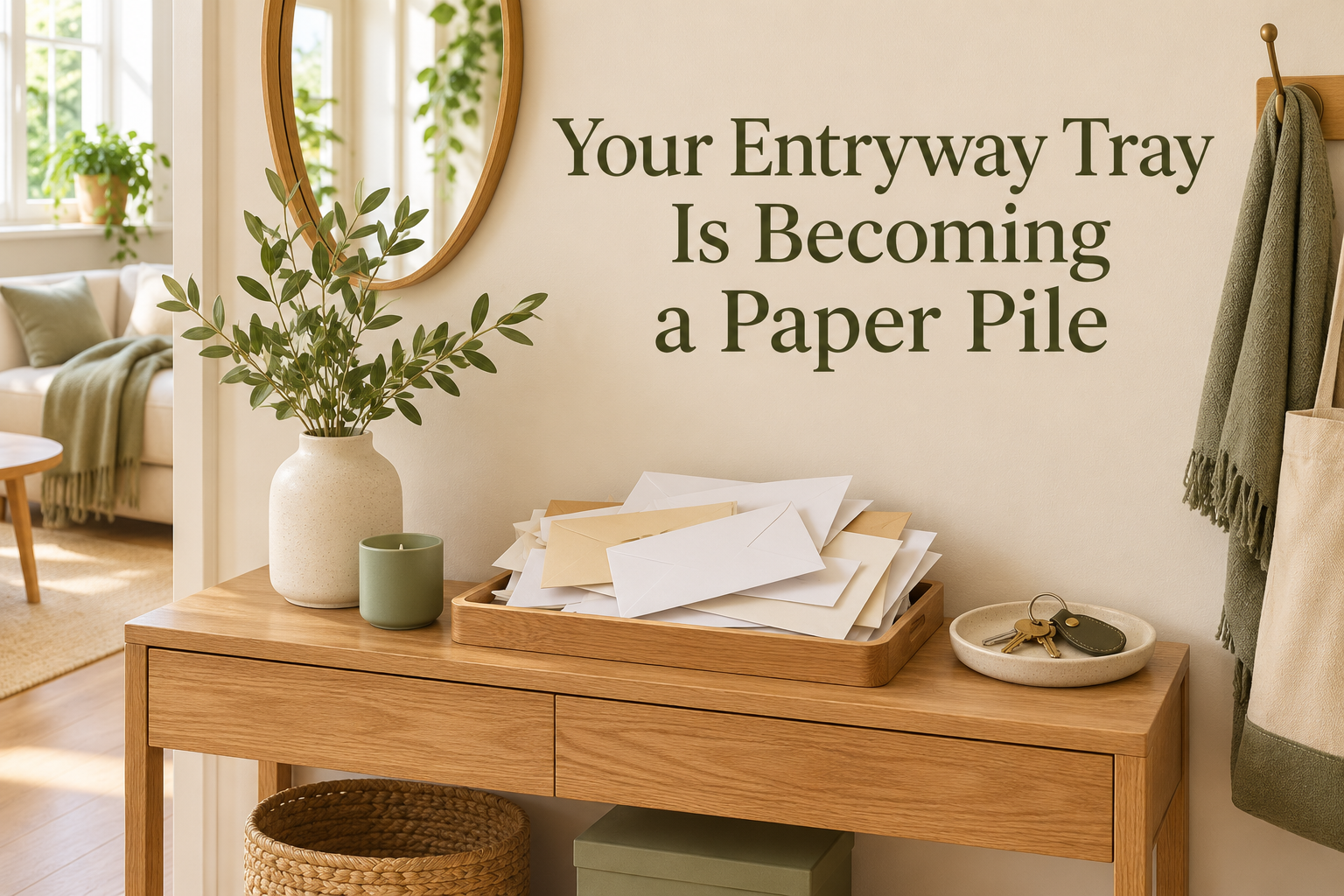
A tray by the door looks like an organizing solution until the keys disappear under envelopes. The surface is technically contained, but every new piece of paper joins the same unanswered question: what happens next?
For a small apartment entryway, try separating the place where mail arrives from the place where paperwork gets handled. You do not need a bigger console or a collection of matching boxes. Start with a small action spot and a clear way for papers to leave it.
Find out what the tray is holding
Empty the tray onto a clear surface when you have time to look through it. Separate everyday carry items from paper. Then distinguish documents that need a response, records you need to keep, and material you have checked and no longer need.
Do not discard something just because it has been on the tray for a while. Read it first, check any deadline, and keep anything whose purpose or retention needs you are unsure about. This is a sorting routine, not a document-retention timetable.
When keys, unopened envelopes and finished paperwork share one tray, the tray hides several different jobs.
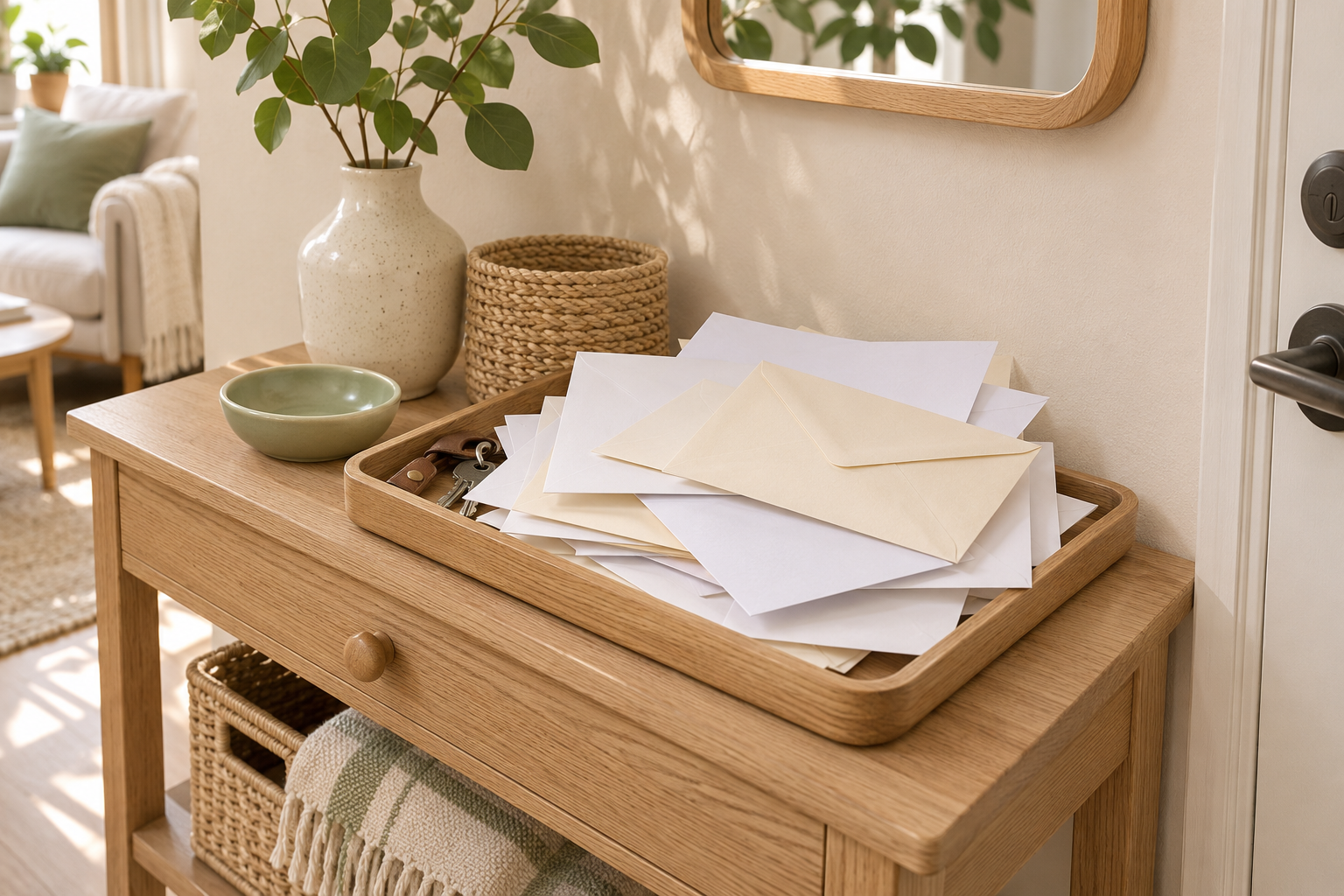
Give pending papers one small action spot
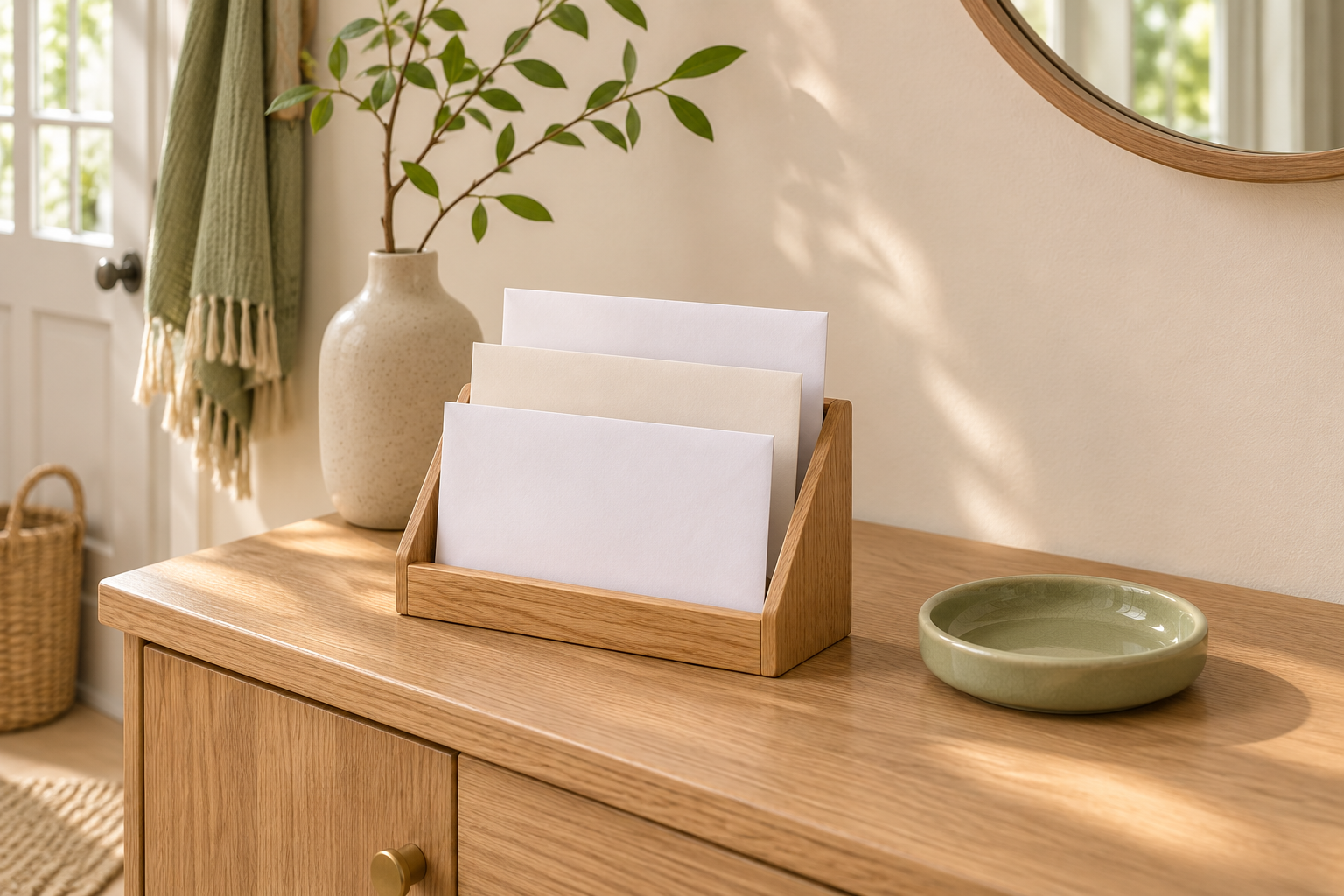
Use a folder, a shallow letter tray or an upright file you already own. Put only papers that still need something done there. A letter to answer and a form to complete can share this temporary location; a record you are keeping long term should have a separate home.
An upright file is an option, not a requirement. It can hold papers together without spreading them over the whole console. A flat folder may work better inside an existing drawer, especially if you do not want documents visible near the entrance. Choose what you can reach and review easily.
Keep the keys dish separate. If mail fills it again, change the routine before adding a second tray. An organizer does not remove the need to open, read and decide.
A small upright file gives pending papers a distinct place without burying the everyday keys dish.
Move the action to where you can do it
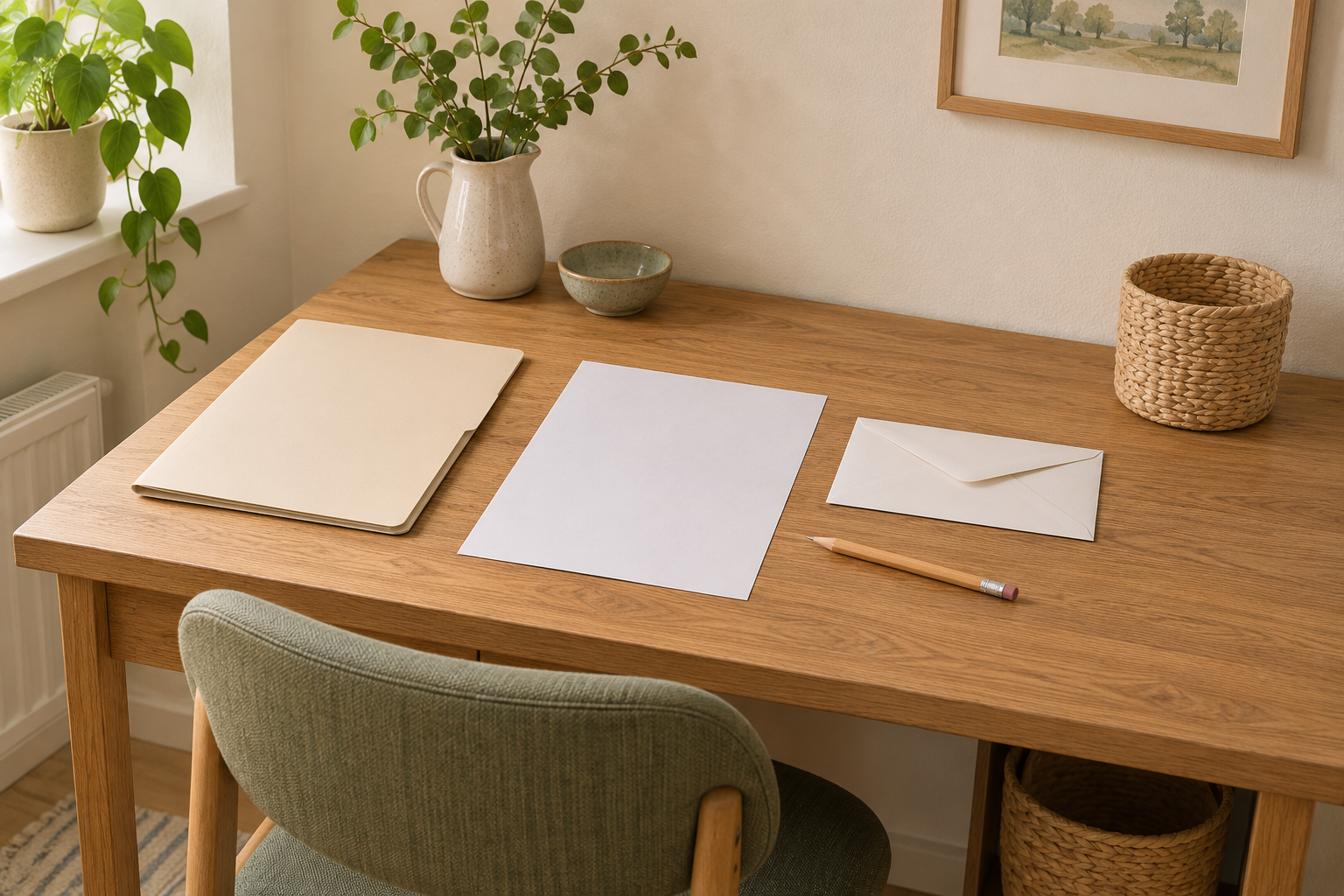
The doorway may be a good place to collect mail and a poor place to deal with it. If you answer letters or complete forms at a desk or table, take the action folder there. You can use the same folder for the trip rather than creating another permanent pile.
For each paper, identify the next step: read, reply, complete, check with someone, or put away. Note a real deadline in the calendar or reminder system you already use. The folder keeps the paper together; it is not a reliable reminder on its own.
When the step is finished, decide where the document belongs. Return needed records to your existing filing system. Handle material you no longer need according to its contents and your local disposal rules. Do not leave personal details visible in a shared entrance or an open discard pile.
Taking the folder to a usable work surface turns a landing spot into a next step.
Review the spot before it becomes storage
Try a brief daily check at a moment that already happens, such as when you put your keys down. This is a chance to notice new mail and deadlines, not a promise to finish every task immediately. Give longer tasks a specific time rather than repeatedly moving their papers to the bottom.
A full file is a signal to review its contents, not an automatic reason to buy a larger one. Some papers may belong in long-term storage; others may be waiting on someone else. Keep those distinctions visible in whatever simple way works for you.
In a shared home, agree on whose papers go where. Do not sort or discard someone else’s mail without their agreement. Separate folders can help if a single household pile makes ownership unclear.
Test the routine before buying an organizer
For a few days, use an existing folder and a small dish. Place them on a stable surface that does not obstruct the door, the walking route or access to switches. If your entryway has no suitable surface, keep the paper folder nearer the place where you actually handle it.
Notice what still lands on the console. If the tray mostly catches keys and sunglasses, it may already be doing its job. If papers keep accumulating, ask whether the action spot is inconvenient, the next step is unclear, or there is no review time. Buying a prettier container will not necessarily fix any of those problems.
For other items arriving at the door, see our small apartment entryway ideas. If paperwork has migrated to the kitchen, our countertop prep-space guide can help you separate storage from a working surface.
Images are AI-generated organizing illustrations, not photographs of a tested installation.

Comments