
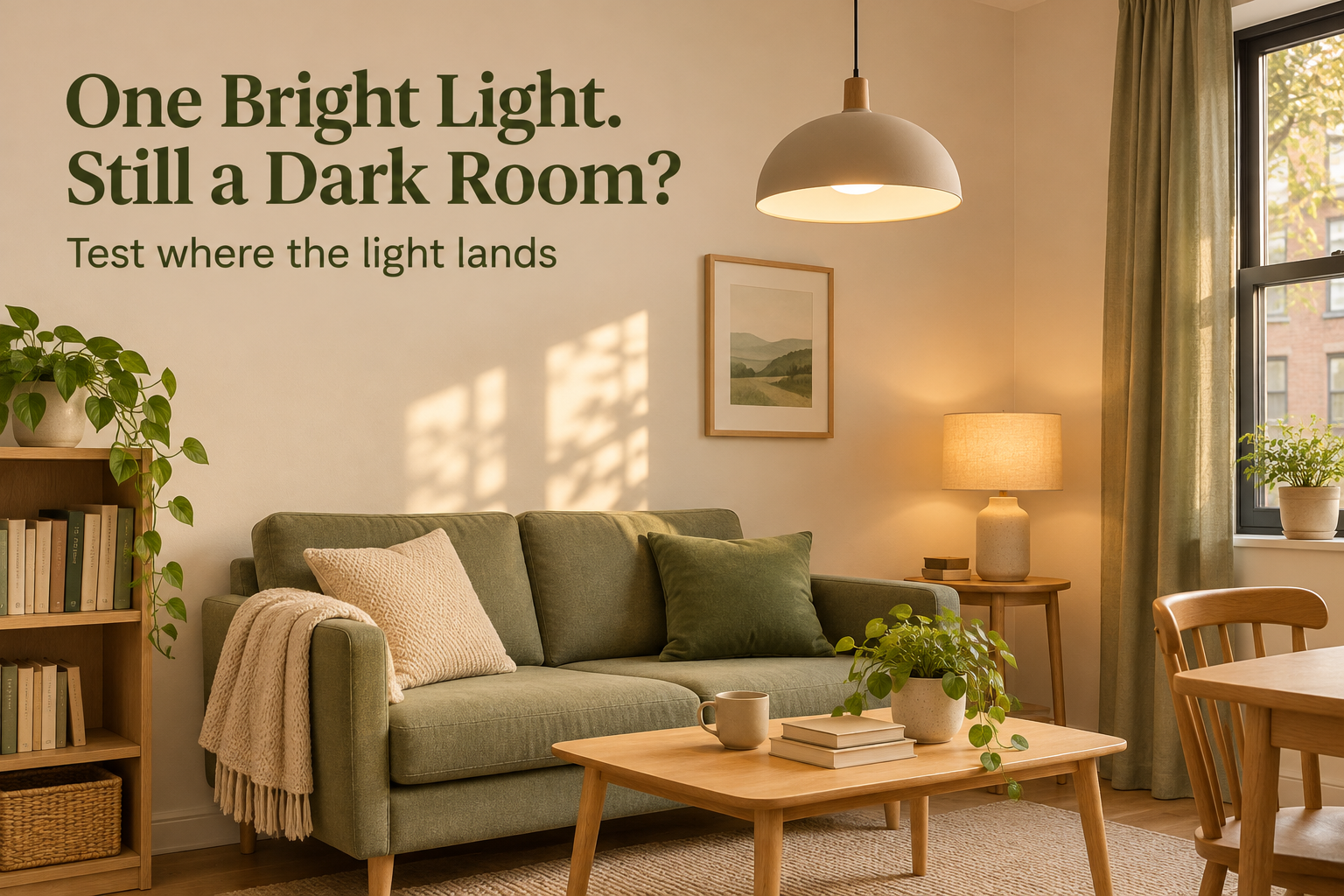
You switch on the ceiling light, and the coffee table is bright. The chair where you read still feels dim, while the far wall seems to disappear. Before replacing the bulb or buying several lamps, check where the light actually lands.
In a small living room, a single fitting can work well for general light yet leave a particular activity poorly served. The useful question is not how many lights the room should have. It is which part of your evening routine needs better light, and whether an existing lamp can help.
Look for the dark task, not just the dark corner
Check the room after daylight fades, with the lights and curtains set as you normally use them. Stand at the entrance, then sit in your usual seat. Notice whether you can comfortably find your keys, read a page, and see the route through the room.
A dim, unused corner does not automatically need a lamp. A reading chair, a shelf you use daily, or a change in floor level deserves more attention. Start with the place where the lighting causes an actual inconvenience.
Look at the surfaces around your seat as well as the brightest spot in the middle of the room.
Move one lamp before buying another
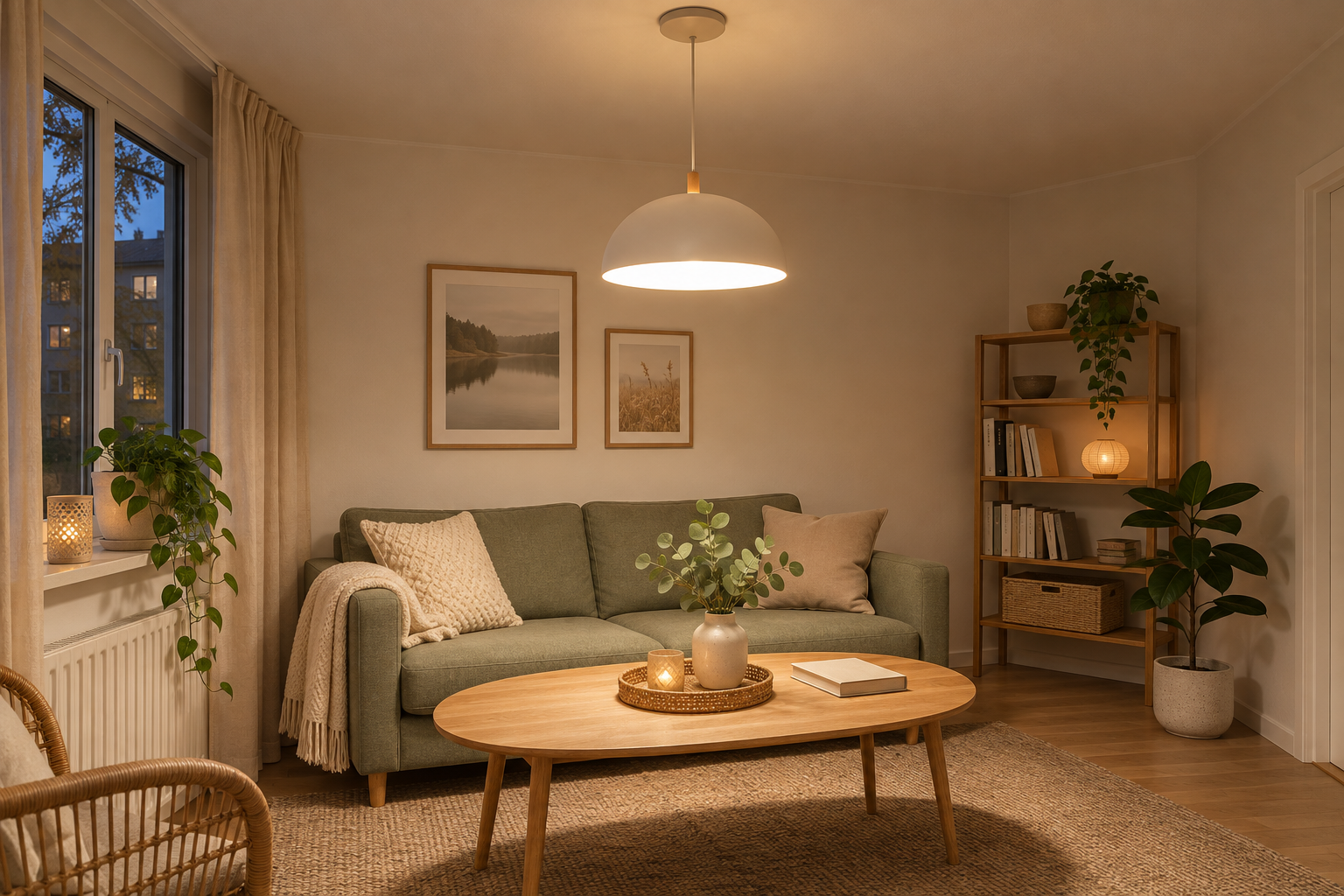
If you already have a portable lamp, unplug it and test it on a stable surface near the activity that needs light. Keep its cable beside the wall and out of the walking route. Do not stretch a lead across the room just to make a proposed layout work.
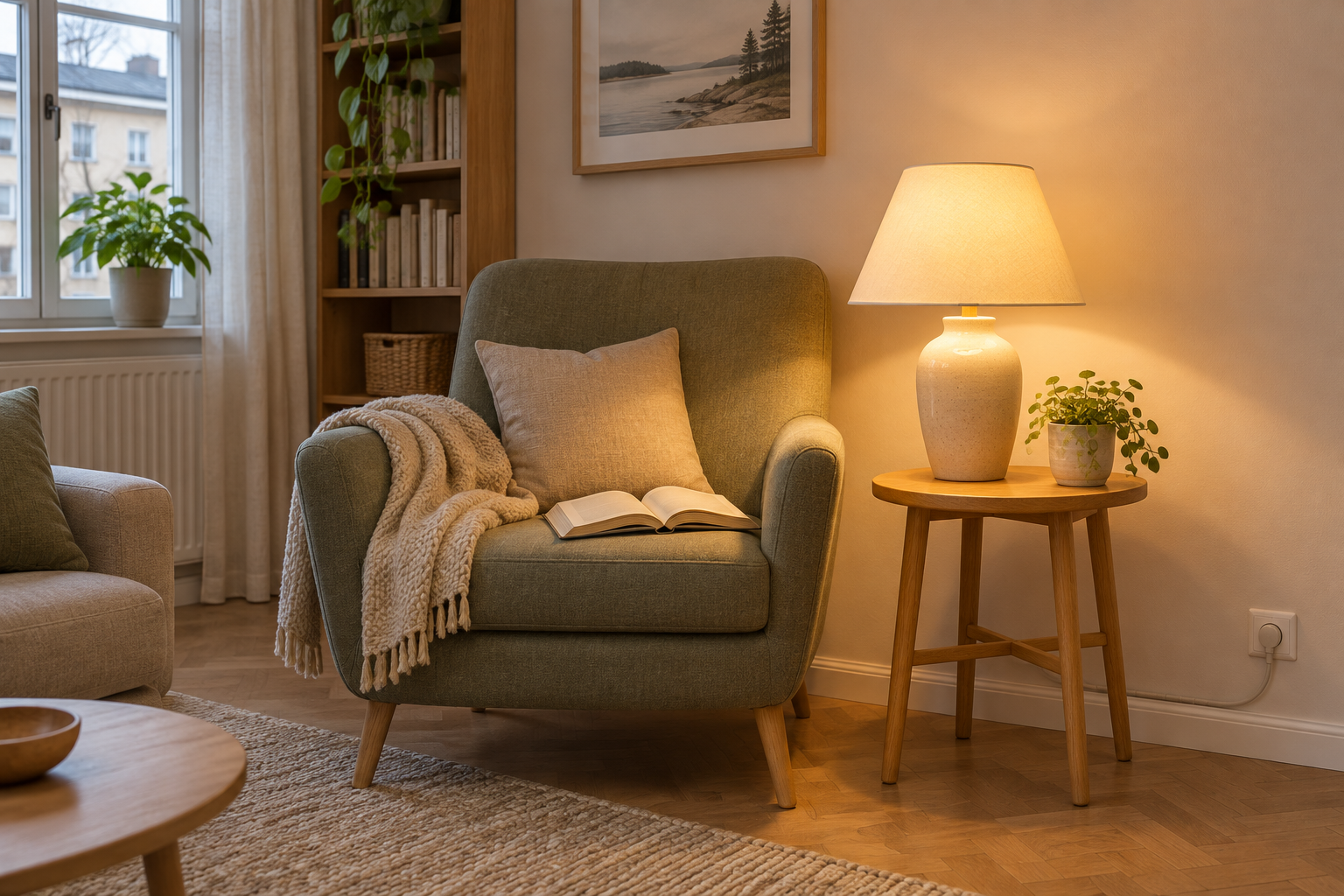
Try the lamp beside a reading seat rather than on a cabinet across the room. Sit down and check the page. If your hand or shoulder casts a distracting shadow, try the other side or adjust the lamp within its intended range.
The shade matters too. A shade that directs most light downward can be helpful for a surface but may do little for the surrounding wall. A more diffusing shade can spread light differently. Assess the lamp you have rather than assuming that every table lamp behaves the same way.
A small, stable table beside the chair lets you test useful light without adding another large piece of furniture.
Check glare from the seat you actually use
A lamp can brighten a corner and still be uncomfortable if the exposed bulb is in your line of sight. Check it from the sofa, the reading chair, and any nearby desk. Adjust the position or use a suitable shade so you are not staring directly into the source.
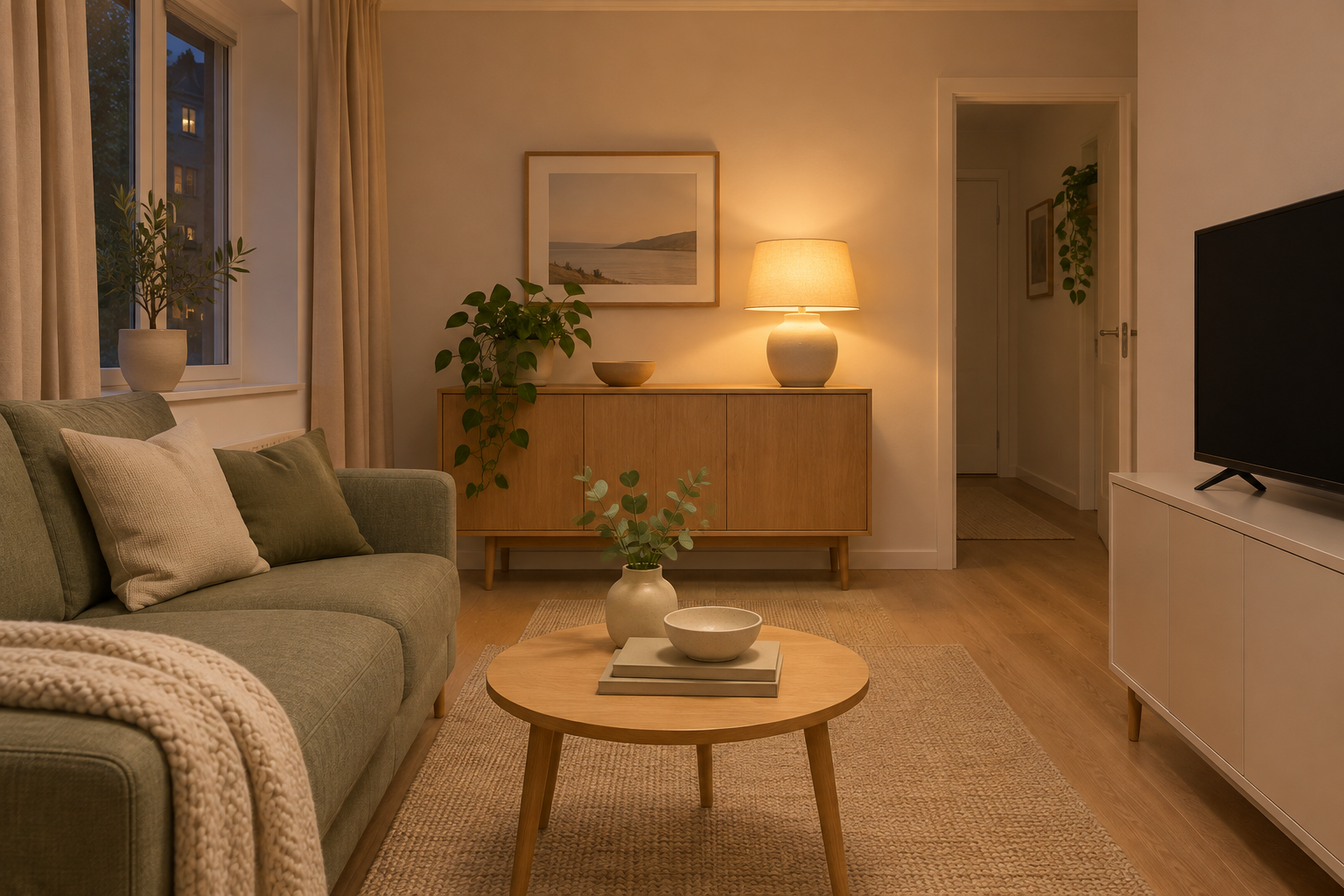
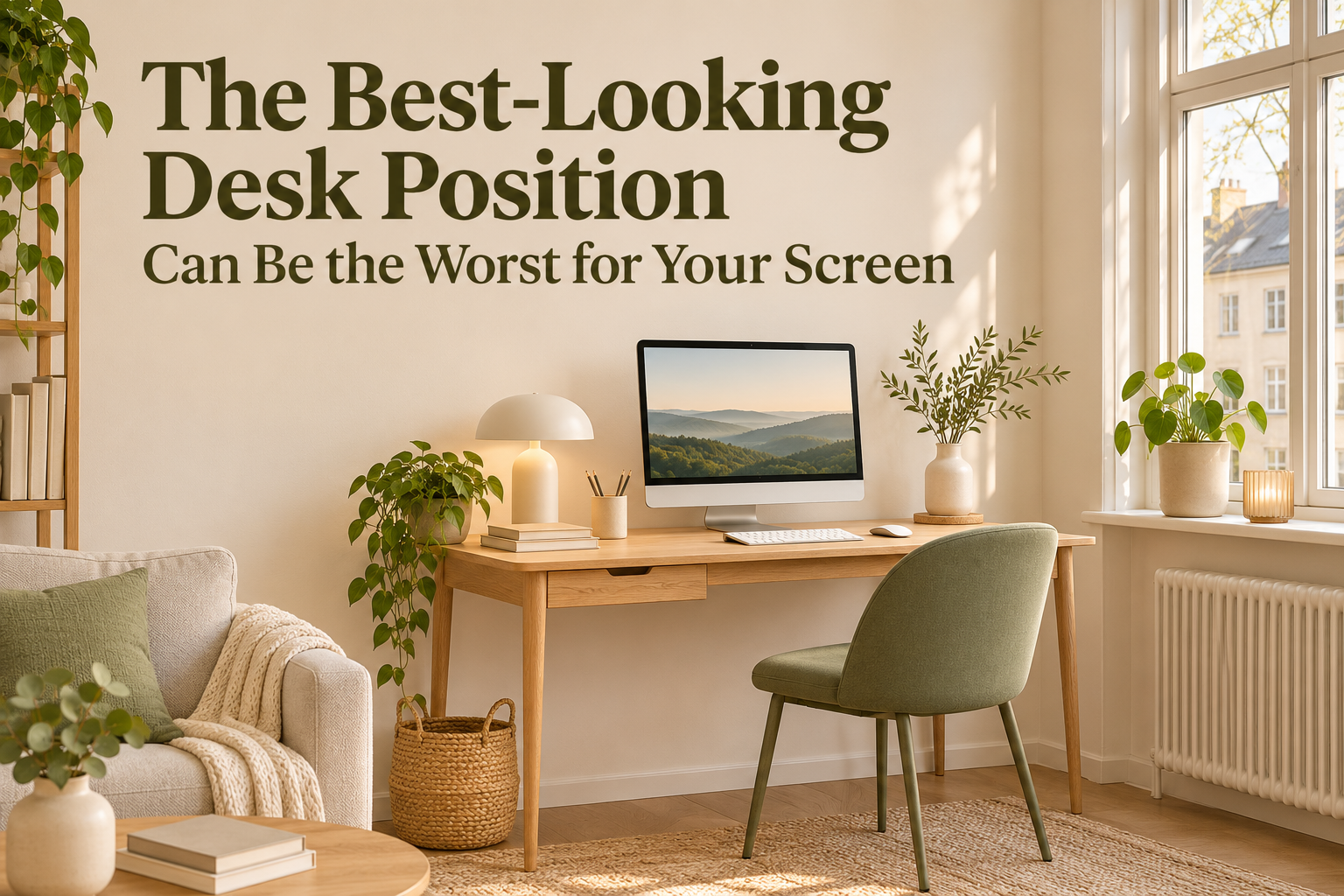
Look at the TV or monitor as well. If the lamp appears as a bright reflection, move it and check again from the same seat. Test the screen in its normal position instead of assuming that a lamp behind or beside you will always be better.
Use your seated view to check the lamp, the screen, and the route through the room together.
Choose brightness separately from the color of the light
If a bulb change is still needed, compare the lumen rating for light output rather than using wattage alone as a brightness guide. Check the fitting’s permitted bulb type and maximum rating, and follow the lamp manufacturer’s instructions. A dimmable bulb also needs compatible equipment.
Color temperature describes the light’s appearance, not how much light reaches your book. A warmer-looking light may suit a relaxed evening, but it does not fix poor placement. Match nearby lamps to your preference and test them together before replacing every bulb.
There is no universal bulb or lamp count for every small room. Shade design, wall finishes, ceiling height, daylight, the activity, and individual visual needs all affect the result.
Leave the floor plan workable
In a narrow room, a floor lamp’s base can occupy the very route you are trying to keep clear. A table lamp on furniture you already use may be easier to accommodate. A wall light can be another option, but installation, lease restrictions, cable routing, and suitability all need checking first.
Keep lamps stable, away from materials that could contact a hot bulb, and within the manufacturer’s clearances. Do not trap power cords under rugs or furniture. If a usable position needs electrical changes, consult a qualified professional rather than improvising wiring.
For the rest of the layout, our guide to small-apartment flow looks at keeping everyday routes usable. If the problem is your work screen rather than the room at night, see the desk-and-window placement test.
A simple evening test
- Identify one activity that feels poorly lit.
- Move an existing portable lamp to a safe, stable position nearby.
- Check the page or task from your normal seat.
- Look for an exposed bulb, screen reflections, and blocked walkways.
- Keep the change only if it helps. Buy something new only when you can describe what the current lamp cannot do.
A small room does not need every corner equally bright. It needs light where you use it, comfortable views from your seats, and space to move safely.
Images are AI-generated illustrations of layout ideas, not measured lighting comparisons. Actual light levels depend on the room, fixture, bulb, and placement.
Comments