
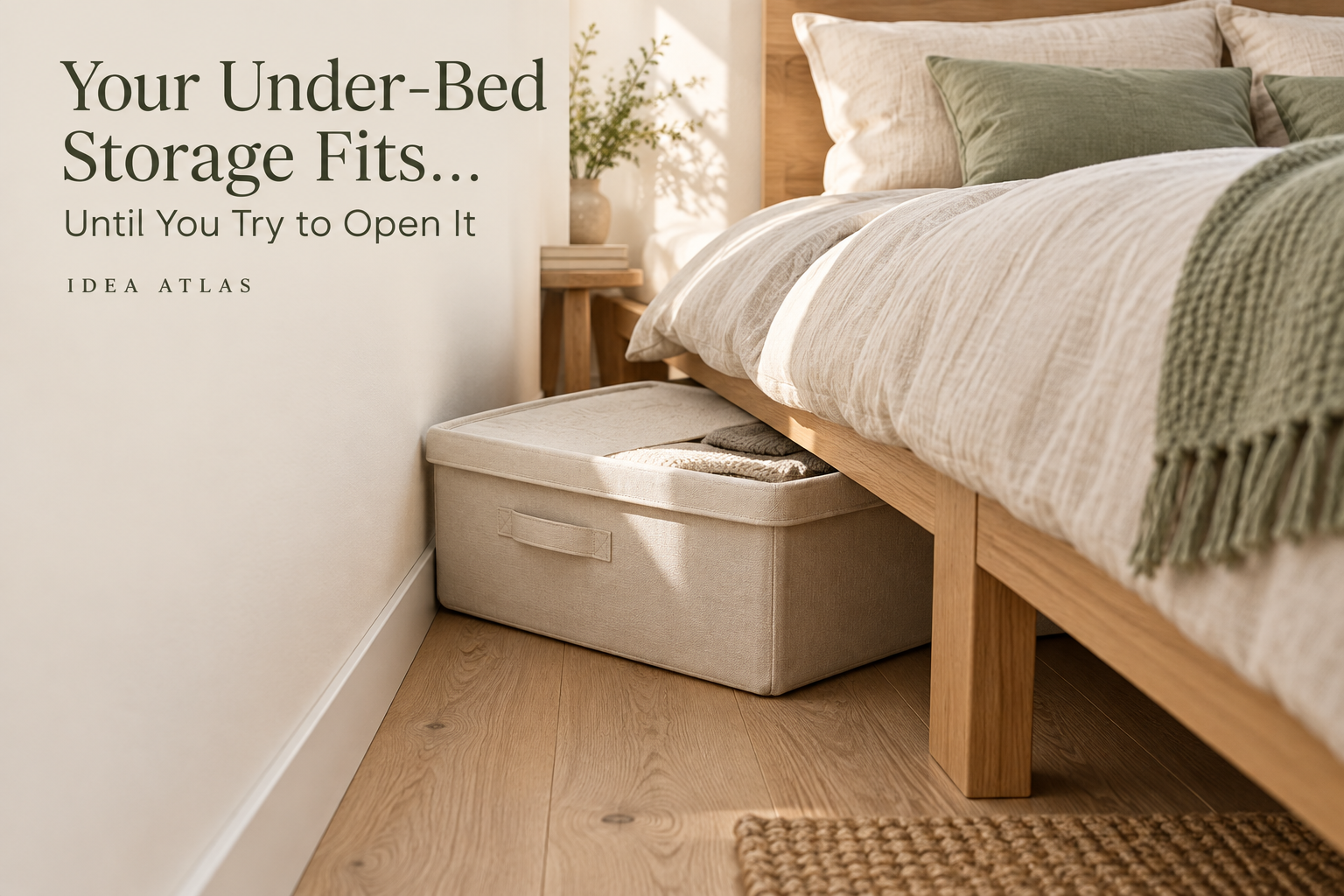
You measure the gap beneath the bed, find a low storage box and slide it neatly out of sight. Then laundry day comes. The box pulls halfway out, hits the wall and leaves the clothes you need trapped beneath the frame.
This is an under-bed storage clearance problem. A container can fit beneath the bed while the surrounding room gives you too little space to use it.
Before buying more storage, test the full routine: pull it out, open it, reach the back and put it away. The fix may be a different access side, a shorter box or a lid you can open from the front.
Check the box in its open position
A closed box tells you how much space it occupies when everything is put away. It does not show where the box, its lid and your body will go when you need something.
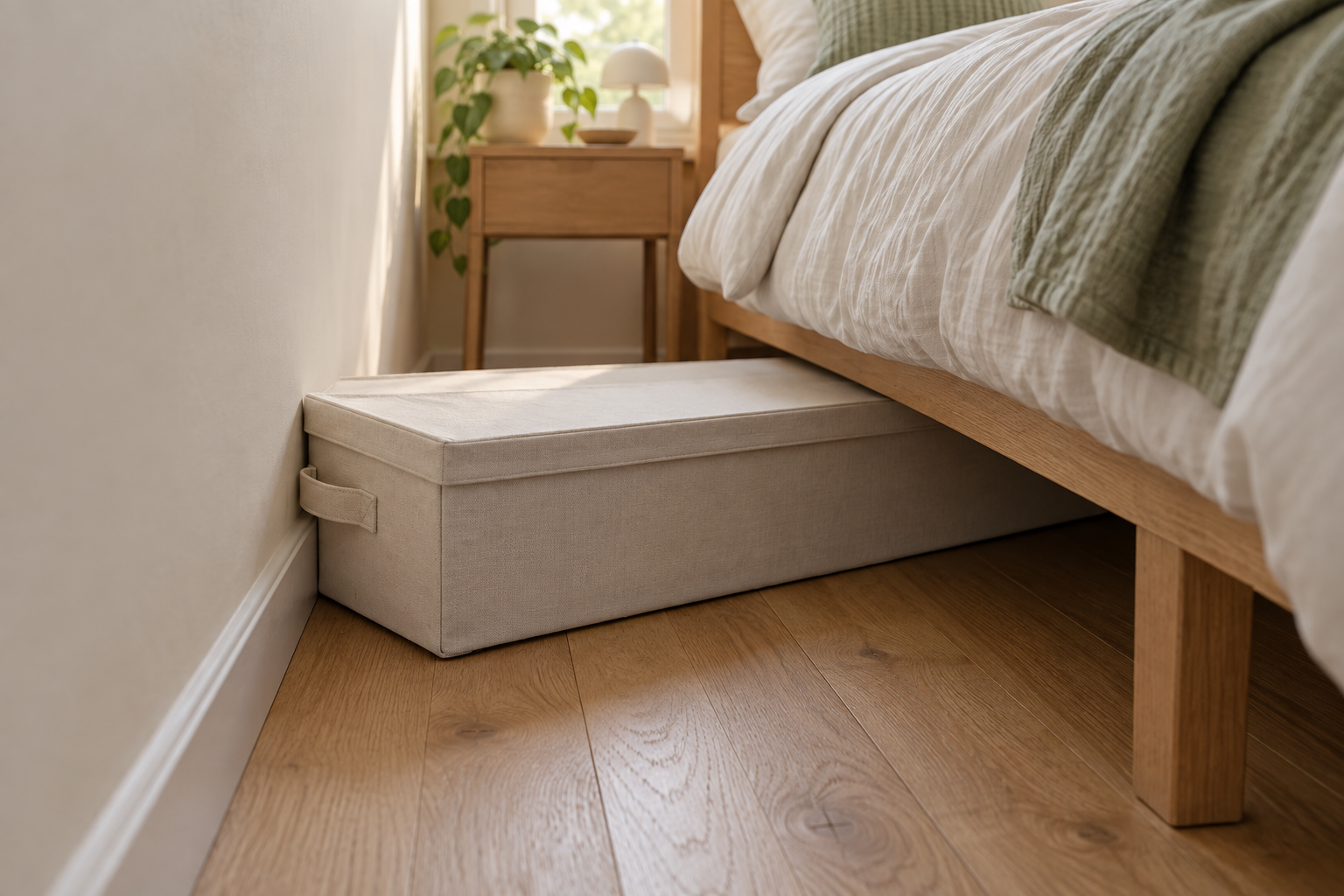
Imagine a long container sliding sideways into the narrow gap between a bed and a wall. Its leading edge reaches the wall while most of the lid remains under the bed. Even if you can release the fasteners, you may have nowhere to lift the lid.
A built-in drawer has a similar problem when its opening path meets a nightstand. The handle is visible, but the rear of the drawer stays difficult to reach.
A low box can still need a long pull-out path before you can reach everything inside.
Measure the route beyond the bed
Start underneath. Check the lowest point along the container’s path, including side rails and crossbars, and note any center legs. Measure the assembled container with its lid, handles and wheels rather than relying on capacity or internal dimensions.
Manufacturer listings can show both measurements. For example, Sterilite’s underbed box listing distinguishes outside dimensions from interior dimensions at the bottom. Use the outside measurements when checking whether a box will fit.
Next, measure outward from the side where you plan to retrieve it. Identify the first obstacle: a wall, dresser, nightstand leg or door. Test the door in its usual open position too.
Allow for the box’s usable open position and somewhere to reach into it comfortably. There is no single clearance number that works for every container, body or room. An unobstructed route beside the closed bed does not guarantee enough space beside an open drawer.
Give everyday storage the accessible side
If one side of the bed has more room, try retrieving loose containers there. Keep the handles facing that side and avoid placing a second row in front of items you use regularly.
Before changing the access side, check the full route through the bed frame. Supports may prevent a box from passing across. On the more open side, make sure the withdrawn box leaves a workable place to reach inside without trapping you against a dresser or blocking the bedroom door.
For a built-in storage bed, the drawer direction is usually part of its design. Check the specific frame’s instructions before assuming a drawer can move to the other side. Loose boxes offer more options, provided the bed’s supports leave a clear route.
If the whole arrangement needs reconsidering, our small bedroom layout ideas cover the wider room.
The useful change is enough clear floor beside the bed to open the container and reach its contents.
Choose an opening that works in the gap
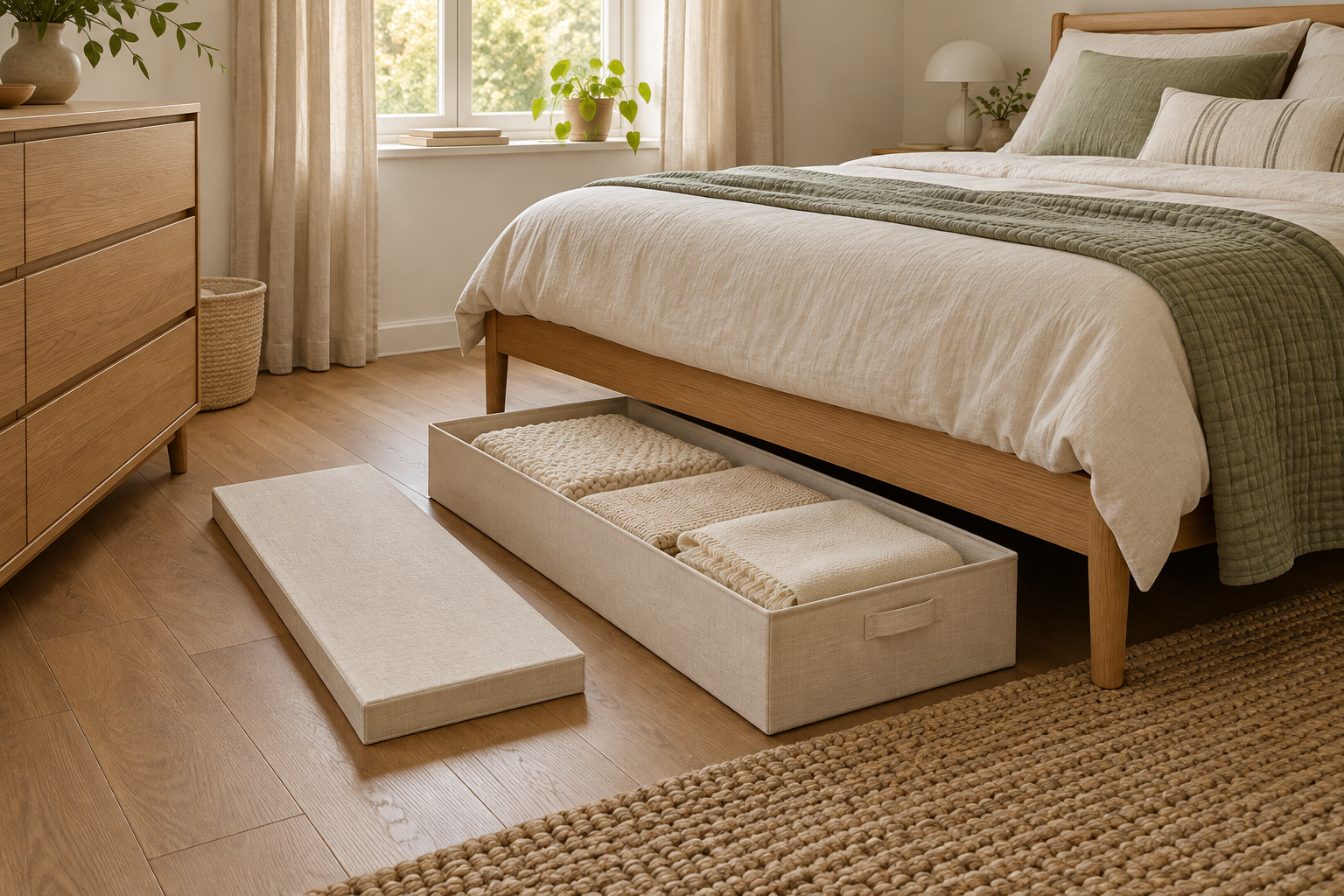
When the bed cannot move, look at how the container opens. A shorter front-to-back depth can reduce the space needed to pull a loose box completely out. A lower height alone does not shorten that footprint.
A split lid, front-opening flap or accessible zipper may let you retrieve items while part of the container remains under the bed. Check the actual opening: a hinged lid still needs room to swing, and a zipper is useful only if you can reach and operate it.
Keep frequently used items near that opening. A front flap will not help much if the item you want is buried behind a tightly packed blanket.
Wheels can make a suitable box easier to move, but they cannot create missing floor space. Check their direction and try them on your flooring. Do not assume every wheeled box can turn around a bed leg or cross a rug edge smoothly.
Separate everyday items from seasonal storage
Think about how often you will repeat the retrieval routine. Clothes you wear each week deserve an opening you can use without moving furniture. A spare winter quilt may reasonably live farther back if you can still remove it when needed.
Use separate containers when mixing those categories makes daily access awkward. A compact box near the edge can hold regularly used clothes, while a less convenient space holds seasonal bedding. Keep each container light enough for you to handle, and put a simple contents label on the side you can see.
Partial opening can be perfectly adequate for a box used occasionally or for items kept near its accessible end. You still need a workable way to remove the whole container for cleaning, checking the contents or changing seasons.
Frequently used clothes belong near the accessible edge, with seasonal bedding in a separate container.
Test one container before buying a set
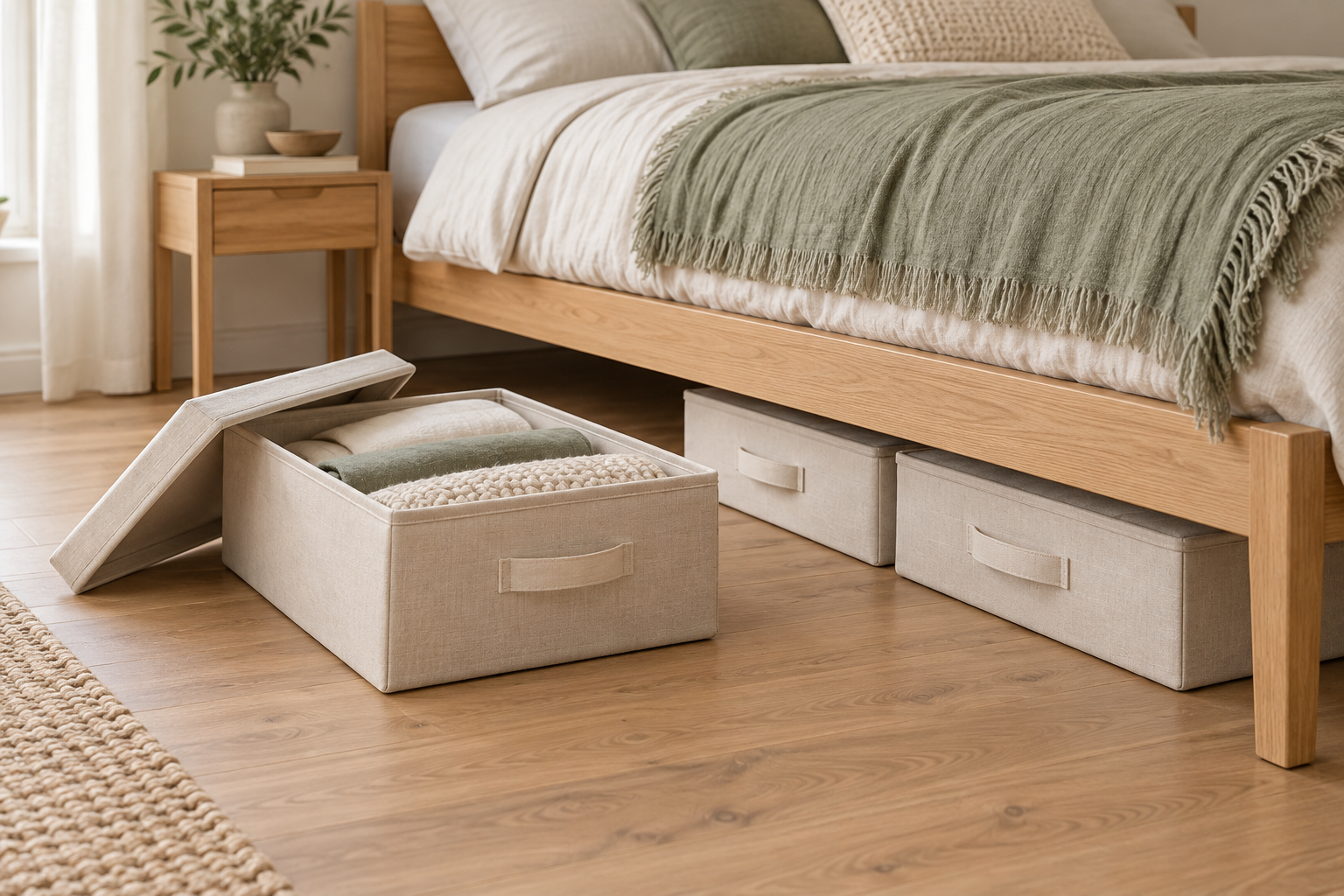
Try a container you already own, or use an empty cardboard box with the proposed outside dimensions to check the path. Include the intended opening direction. A flat floor outline cannot reveal whether the lid hits the bed rail.
For the final test, use the actual container with a typical load. Pull it out, open it, take something from the back and return it. Check the bedroom door and nearby storage again, then make sure the container goes back without catching the bedding.
If you must rearrange the room each time, choose a different container or reserve that spot for less frequent use. If reaching the floor is uncomfortable, keep everyday belongings at an easier height elsewhere.
One box that works with your room is a better starting point than a matching set you cannot open.
Images are AI-generated illustrations of storage access, not measured room plans.

Comments