
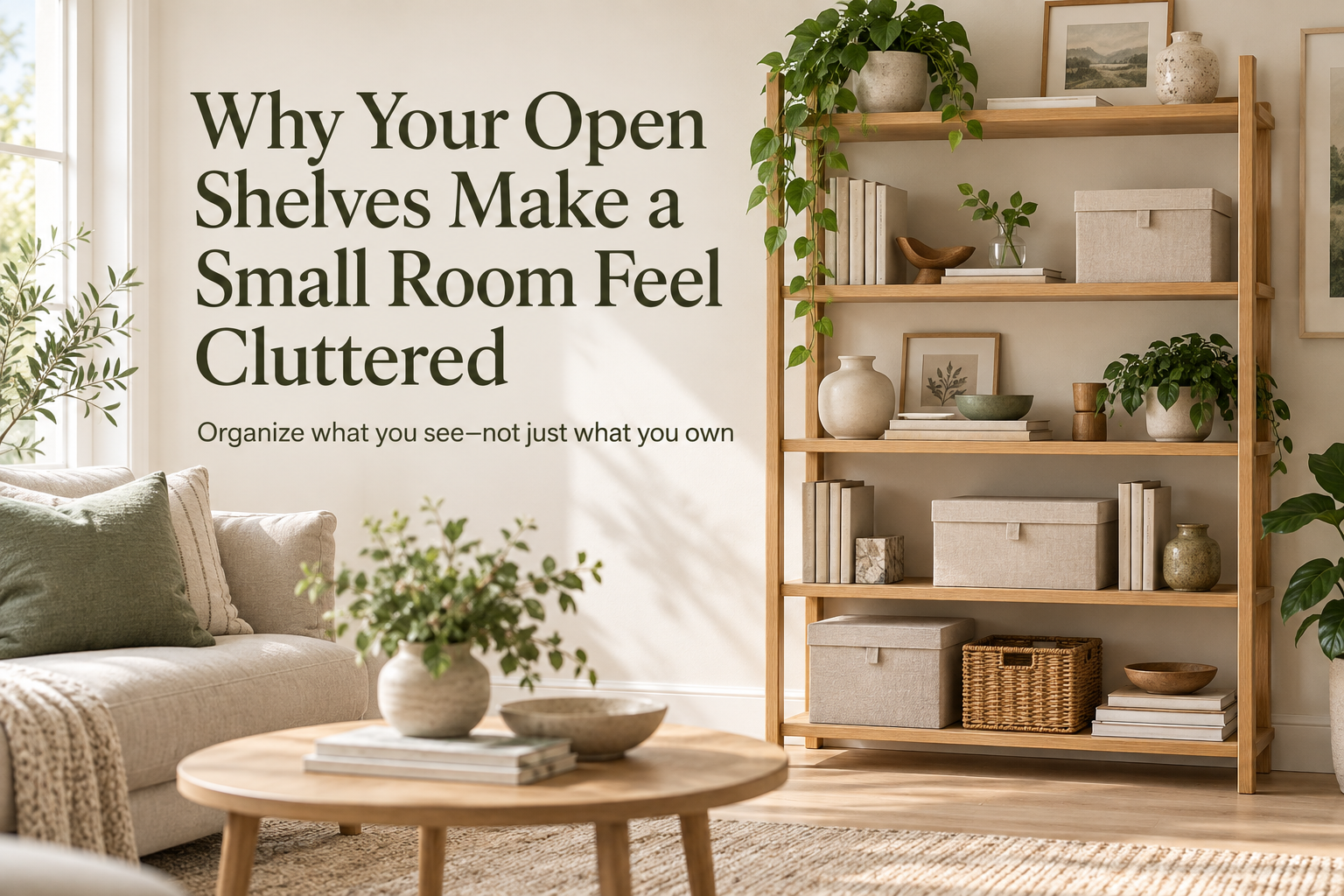
Your shelf can be organized and still make the room look busy. The books stand upright, the cables are coiled, and everything has a place. Yet from the sofa, the shelf reads as a patchwork of labels, edges, colors, and small objects.
Try a different question before rearranging the room: how much of what you store needs to be visible?
Same shelf. Less visual clutter. Group some of those belongings into a few opaque boxes, keeping the same furniture and the same objects. The change can reveal whether the problem is the amount you own or the way it appears from across the room.
AI-generated illustrations show the storage principles discussed; they do not document a real room transformation.
Why an Orderly Shelf Can Still Look Busy
An open shelf puts storage on display. A packet of supplies, a notebook spine, and a loose cable each add their own outline. Arranging them neatly changes their position, but leaves all those details visible.
In a small room, the shelf may also sit behind the desk or beside the television. Its contents become part of the background you see while doing something else. A useful storage spot can therefore feel more prominent than you intended.
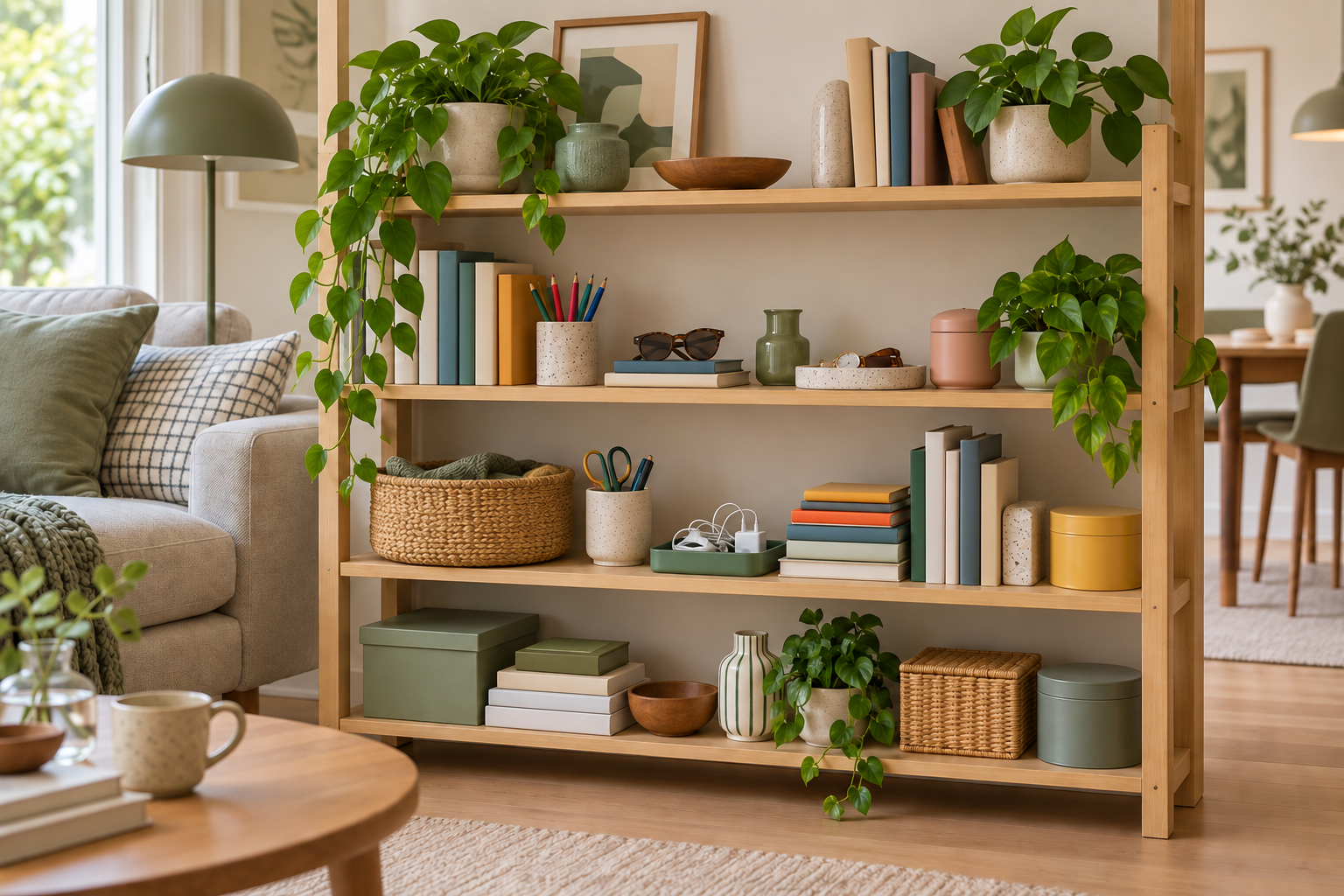
Small Contrasts Add Up
Look for contrasting packaging, different container heights, and objects scattered across several levels. A row of neutral books can look quieter than a smaller collection of bright packets and tangled cords. Object count alone does not explain the effect.
Depth Can Make the View Harder to Read
Items placed in front of other items create overlapping edges. A small ornament in front of books, with a cable behind it, can turn one shelf into several layers. Check the view from where you normally sit, rather than judging only while standing directly in front of it.
Try the Same Shelf With Fewer Visible Details
Choose one busy section and photograph it from your usual seat. Keep the camera position, lighting, furniture, and belongings unchanged for the comparison.
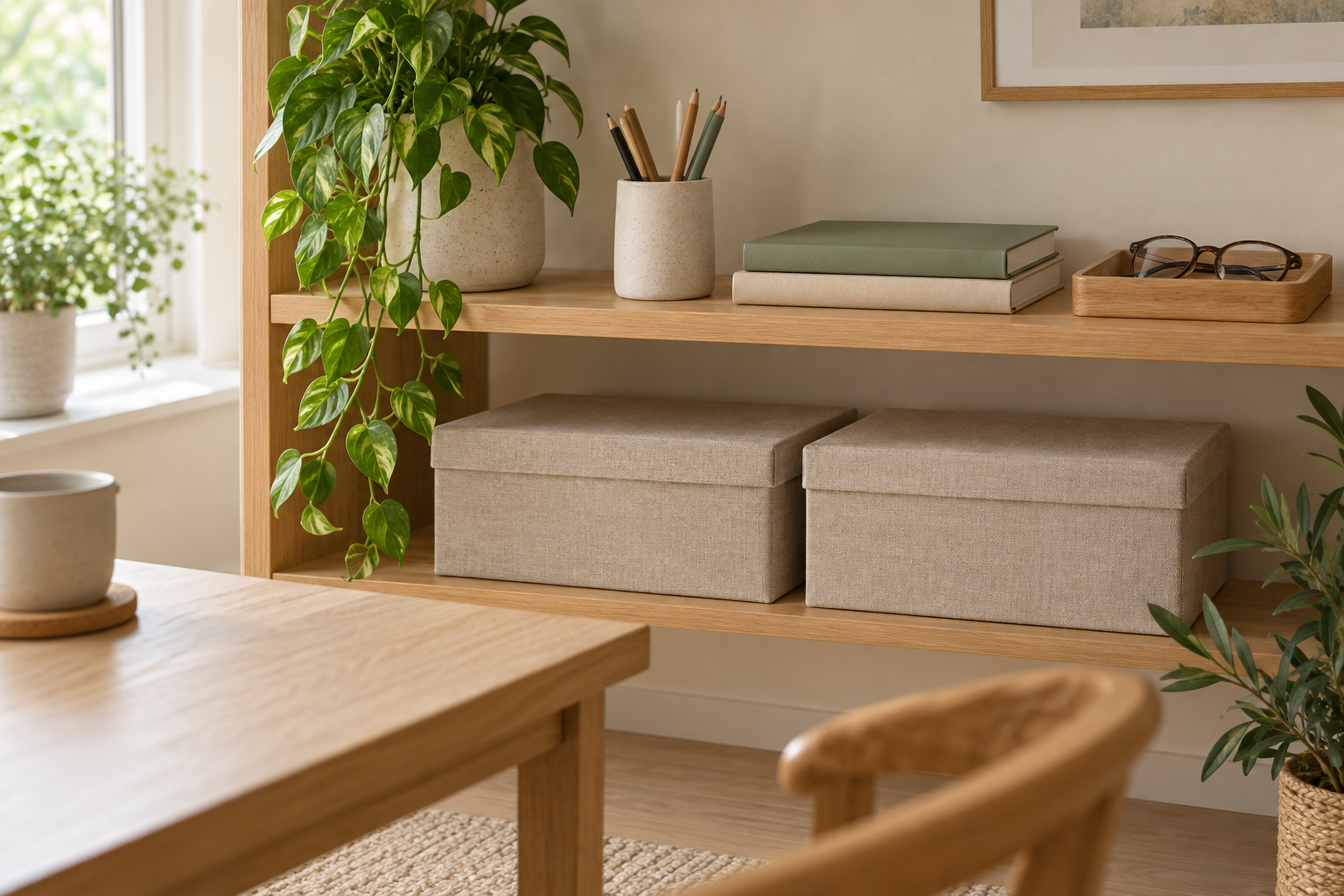
Gather compatible small items into a few opaque containers you already have. For example, put unused cables and adapters together, and stationery refills in another box. Return both groups to the same shelving unit. Leave the books and objects you want to see where they are.
Opaque sides conceal the individual shapes inside. Clear boxes can make things easier to locate, but their contents remain part of the view. Open wire baskets have the same limitation when the goal is visual calm.
Take a second photograph. Does your attention still jump between lots of small details? If the boxes introduce loud patterns or many different finishes, try simpler containers. There is no required color or matching set; the comparison should show which arrangement works in your room.
The belongings are still there, but the shelf now presents fewer separate shapes.
Keep Everyday Items Easy to Reach
A calmer shelf should still work on an ordinary weekday. If reaching your glasses means lifting two boxes and opening a lid, that arrangement is likely to become frustrating.
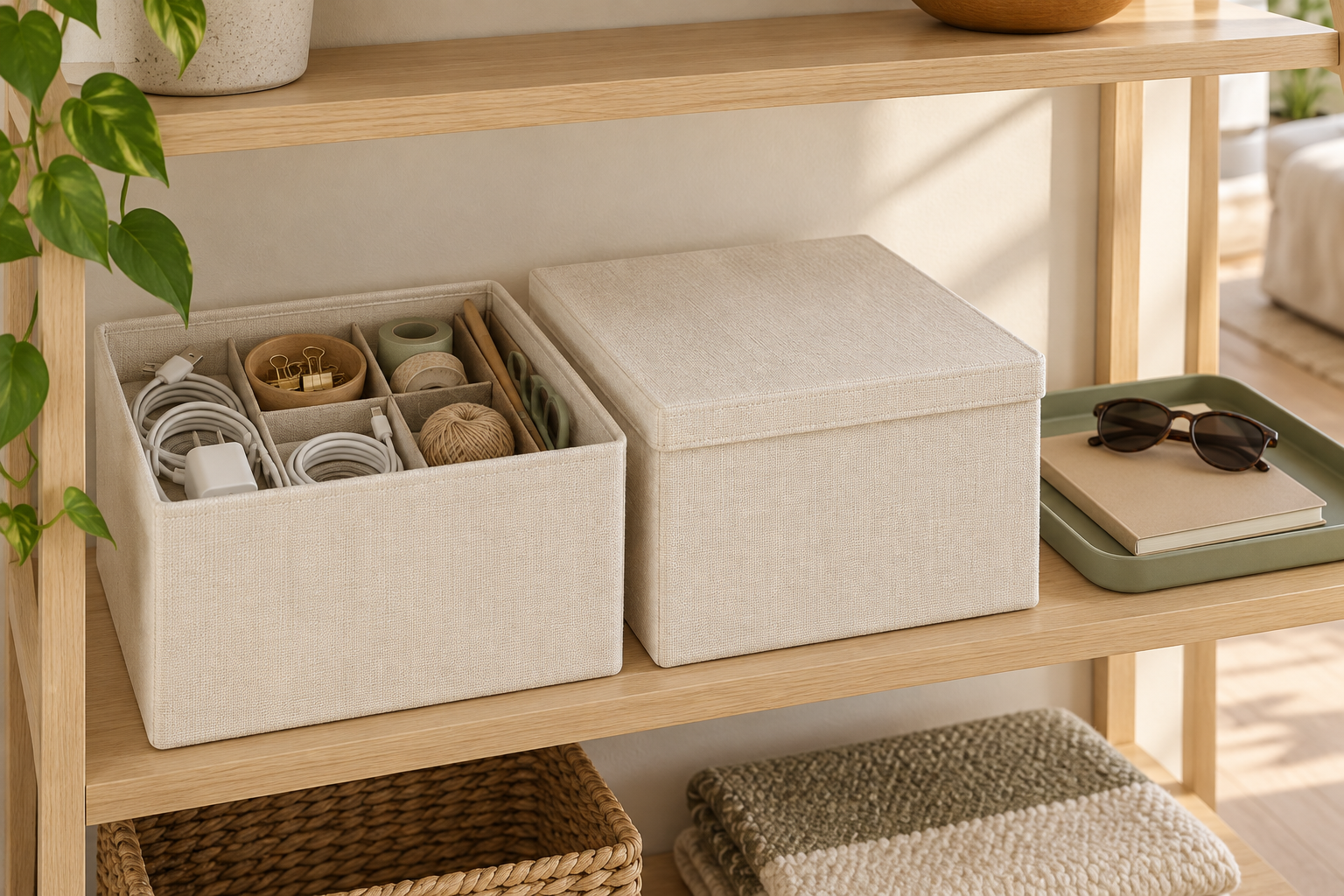
Keep daily-use items visible or in an easy-access tray. Box the loose supporting pieces: spare pens, unused charging cables, or small accessories that otherwise spread across a shelf. A tray groups objects without hiding them, so it suits access better than concealment.
Group by a task you recognize, such as “desk supplies,” rather than filling containers with unrelated things just because they fit. A short label can prevent repeated searching. Keep the label easy to read where you retrieve the box, without turning the whole shelf into a wall of labels.
When Open Shelves Are the Better Choice
Open shelving can be useful for books you reach for often, frequently used dishes, or a collection you enjoy seeing. Visible storage can also help if you forget about belongings once they disappear behind a lid.
A shelf of similar objects may already feel coherent. Boxing those objects could make access harder without improving the view. Likewise, replacing every exposed item with a large box can make a light-looking shelf feel bulky.
Use the comparison to choose what stays exposed. Keep the display or daily-use group that earns its place, then contain the scattered small items around it.
Check Fit and Safety Before Filling Boxes
Measure the usable shelf opening and check that each box is fully supported and can be removed comfortably. Include the container’s weight when checking the shelf’s stated load limit. A box of dense objects can be unexpectedly heavy; use manageable loads and keep heavier items low.
Follow the shelving manufacturer’s installation instructions. Wall shelves need suitable brackets and fixings for the wall and intended load. Secure freestanding furniture as directed; the CPSC’s anchoring guidance explains the importance of preventing tip-overs.
Boxes for loose belongings are not automatically suitable enclosures for powered devices. Keep ventilation openings clear and follow each device’s placement instructions. For example, TP-Link advises keeping Deco units uncovered and out of closed spaces. Store spare disconnected cables in a box; leave operating equipment appropriately ventilated.
Judge the Shelf From the Room
Return to your usual seat after using the arrangement for a few days. Can you find what you need, put it back easily, and enjoy the view?
If so, you may already have enough storage. You have changed what the room shows, while keeping what it holds. If belongings genuinely have nowhere to go, explore these broader space-saving storage ideas for small apartments as a separate next step.
Comments