
When your front door opens straight into the living room, even a few shoes and bags can take over the entrance. You may not have room for a console table, a coat rack, and a bench—and you do not need all three.
The most useful small entryway ideas for apartments start with what happens when you arrive home: opening the door, putting down your keys, taking off your shoes, and moving into the room. Give those actions a place before adding decoration.
This guide focuses on creating an entry zone without a separate foyer. Start with one surface, one shoe solution, and a clear route through the space, then add only what your routine needs.
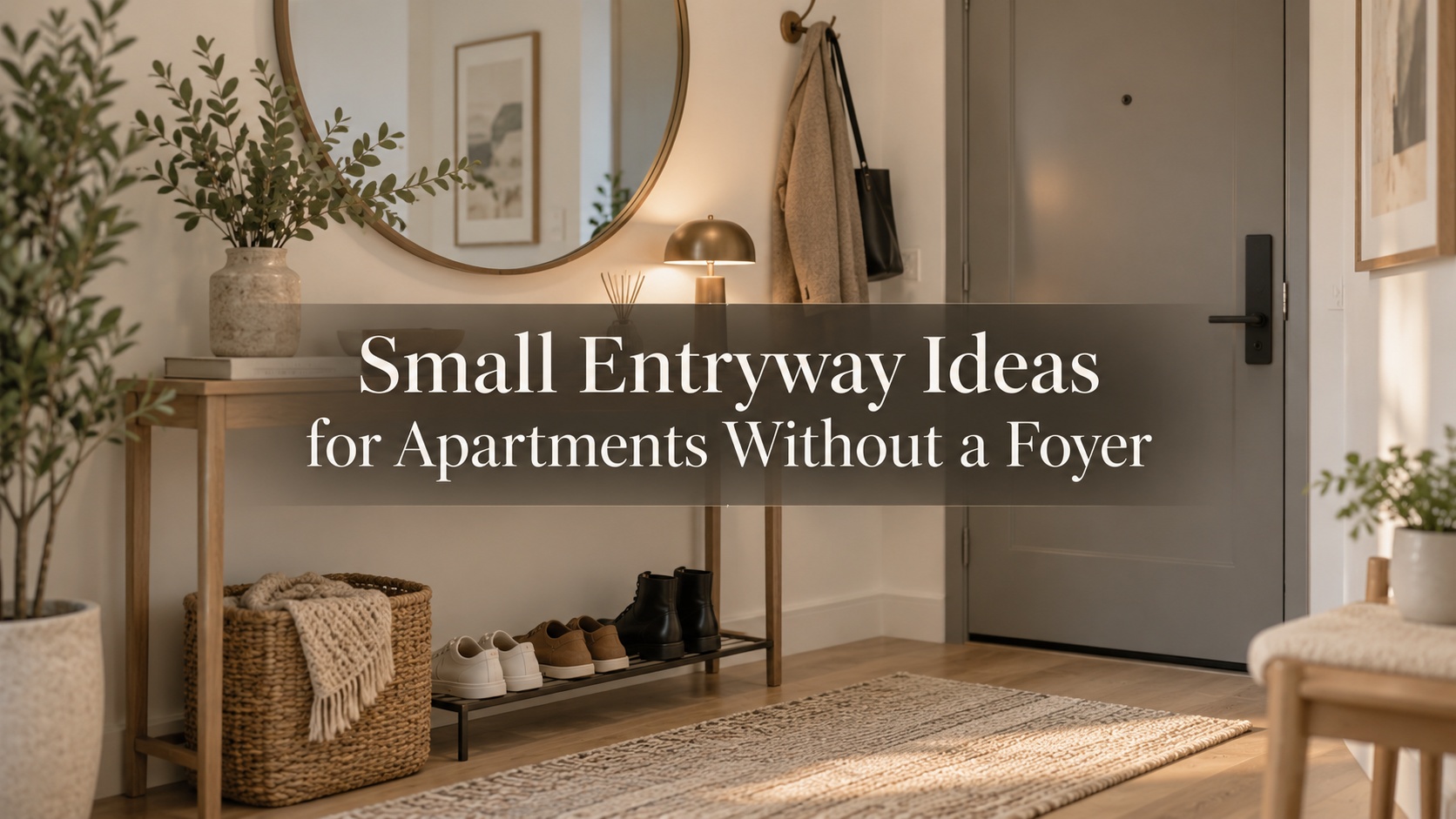
The featured image is an AI-generated illustration. Interior photographs are credited individually. All images are for inspiration, not measured layouts or product tests.
- Start With the Door Swing and Walking Route
- Choose a Layout That Matches Your Entrance
- Give Keys, Bags, and Mail a Small Landing Spot
- Store Everyday Shoes, Not Your Entire Collection
- Group Hooks and a Mirror on One Wall
- Add Seating Only When You Need It
- Make Rental-Friendly Choices Without Skipping Safety
- Finish With a Practical Mat and One Personal Detail
- Test the Setup Before Buying More
- Create a Useful Arrival Zone, Not a Second Room
Start With the Door Swing and Walking Route
Open the front door fully and notice which floor area it uses. Then trace the route from the entrance to the living room, kitchen, and any nearby closet. Keep that route separate from the space you can use for storage.
Before choosing furniture, measure the usable wall width, the depth available beside the route, and the door clearance above the floor. Include baseboards, handles, and nearby closet doors. A cabinet that fits when closed may still be awkward when its doors or drawers open.
Make keeping the exit clear a non-negotiable part of the plan. The U.S. Fire Administration advises keeping doors and windows unobstructed. Do not use shared corridors or the space in front of your exit as overflow storage.
Choose a Layout That Matches Your Entrance
Instead of copying a complete entryway from a photo, choose the version that matches the shape of your apartment.
When the Door Opens Into the Living Room
Use the nearest available wall or an existing side table as the landing spot. A small tray and a shoe rack may be enough. Avoid placing a tall divider immediately behind the door just to create a foyer; keep the entrance connected to the rest of the room.
For the wider layout, see our small apartment layout ideas for better flow.
When You Have a Narrow Hallway
Try keeping storage on one side rather than filling both walls. Compare shallow wall storage with a slim shoe cabinet, remembering that coats, bags, and open cabinet fronts also project into the walking route. Leaving the opposite side empty is a useful starting point.
When There Is Almost No Free Wall
Let nearby furniture do double duty. Reserve one drawer in a cabinet for entry essentials, or use a tray on a surface just inside the room. The landing spot does not have to sit directly beside the front door to be convenient.
Give Keys, Bags, and Mail a Small Landing Spot
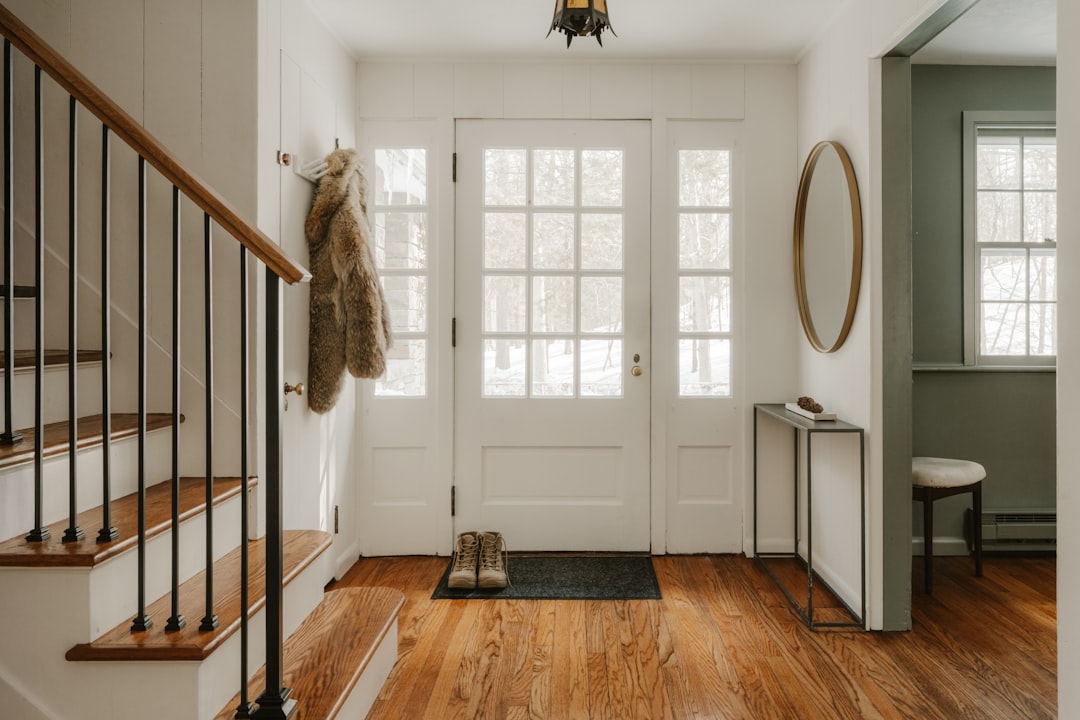
Decide what belongs near the entrance before choosing an organizer. Keys, a wallet, and sunglasses may need only one tray. A work bag needs its own resting place, not a larger pile of small containers.
Keep the landing surface deliberately limited. Try one tray for daily essentials and one place for incoming mail. Move anything that needs longer-term storage elsewhere instead of expanding the entryway to accommodate it.
For a shared apartment, divide the tray or drawer by person. Test the arrangement for a few days before buying matching organizers; the right compartments depend on what you actually carry.
Store Everyday Shoes, Not Your Entire Collection
Choose a starting allowance, such as one or two frequently worn pairs per person. Treat that as an organizing experiment, not a rule for every household. Store occasion shoes and off-season footwear somewhere else.
A low rack lets you see the available pairs. A shallow closed cabinet is an alternative when you prefer less visible storage. IKEA’s small-hallway storage example shows both compact shoe storage and wall-mounted organization.
Check the interior dimensions as well as the outside size. Your boots or larger shoes may not suit every compartment. Also check how a tilt-out front or drawer opens before placing the cabinet near the door.
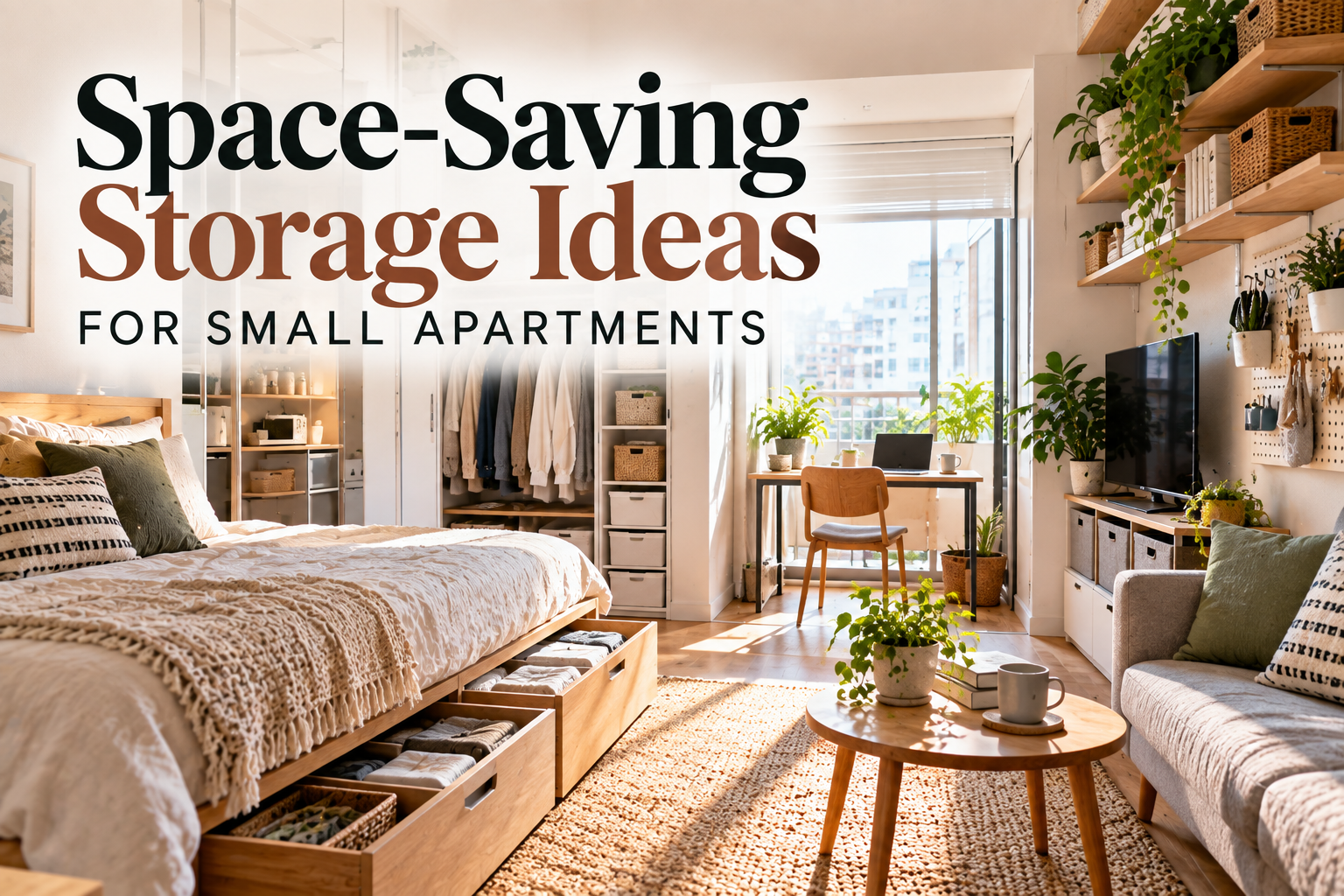
For overflow storage elsewhere in the apartment, explore our space-saving storage ideas.
Group Hooks and a Mirror on One Wall
If a wall is available, plan a small grouping around the items you use: perhaps a few hooks for jackets and a mirror for a final check before leaving. You do not have to fill the wall with shelving.
Test the arrangement with the actual bag or coat hanging in place. Empty hooks take up little space, but their contents may extend into the route or cover the mirror. Position storage for everyday use rather than for an empty-room photograph.
Choose a mirror you can mount according to its instructions, and check what it reflects from the doorway. A useful final-check position matters more than buying the largest mirror that fits.
Add Seating Only When You Need It
A bench earns its place when someone regularly sits to put on shoes. Otherwise, try using a nearby dining chair before dedicating entryway space to another piece of furniture.
For a bench with storage, check its seating rating and leave space to sit, bend forward, and open any compartment. A storage box is not automatically suitable as a seat. One comfortable, usable piece is preferable to a tight arrangement that only works when nobody is using it.
Make Rental-Friendly Choices Without Skipping Safety
When wall changes are limited, start with a tray on existing furniture and a small, suitable shoe organizer. For adhesive hooks or hanging strips, follow the exact product’s surface, preparation, and weight instructions. Do not assume every removable fitting works on every wall.
For example, 3M’s instructions for a specific set of picture-hanging strips identify compatible surfaces and a capacity that depends on the specified number of pairs. Those instructions should not be generalized to a different hook, shelf, or mirror.
Do not skip required wall fixing to make a cabinet feel rental-friendly. The CPSC’s Anchor It! guidance recommends securing top-heavy furniture and following manufacturers’ instructions. Resolve installation permission before buying furniture that needs anchoring.
Finish With a Practical Mat and One Personal Detail
A mat can mark the arrival zone without another furniture piece. Check that the door passes over it freely and that its edges lie flat. IKEA’s hallway guidance also recommends an anti-slip underlay; check compatibility with the mat and your flooring.
Then choose one personal detail: a small print, a favorite bowl, or a restrained color accent. Leave enough of the landing surface empty to use it when you arrive carrying something.
Test the Setup Before Buying More
Try the layout with furniture and containers you already own. You can mark a proposed footprint with removable tape suitable for your floor, testing a hidden spot first. A footprint is only the beginning: also allow for opening doors, hanging coats, and using a seat.
Walk through the arrival routine with your usual bag and shopping. Can you open the door fully, put down your keys, remove your shoes, and continue into the room without moving furniture? Repeat the test when someone else is already inside the entrance.
Finally, try a quick reset: return spare shoes to their main storage, sort the mail, and clear the tray. If the setup continually overflows, reduce what lives there before adding another cabinet.
Create a Useful Arrival Zone, Not a Second Room
An apartment entryway does not need to imitate a large foyer. Start with a clear route, a small landing spot, and storage for what you use most often. Add a mirror or seat only when it fits both the space and your routine.
The aim is simple: a place to arrive, put things away, and move comfortably into your home. For another approach to defining zones without adding rooms, read our smart studio apartment layout ideas.
Comments