
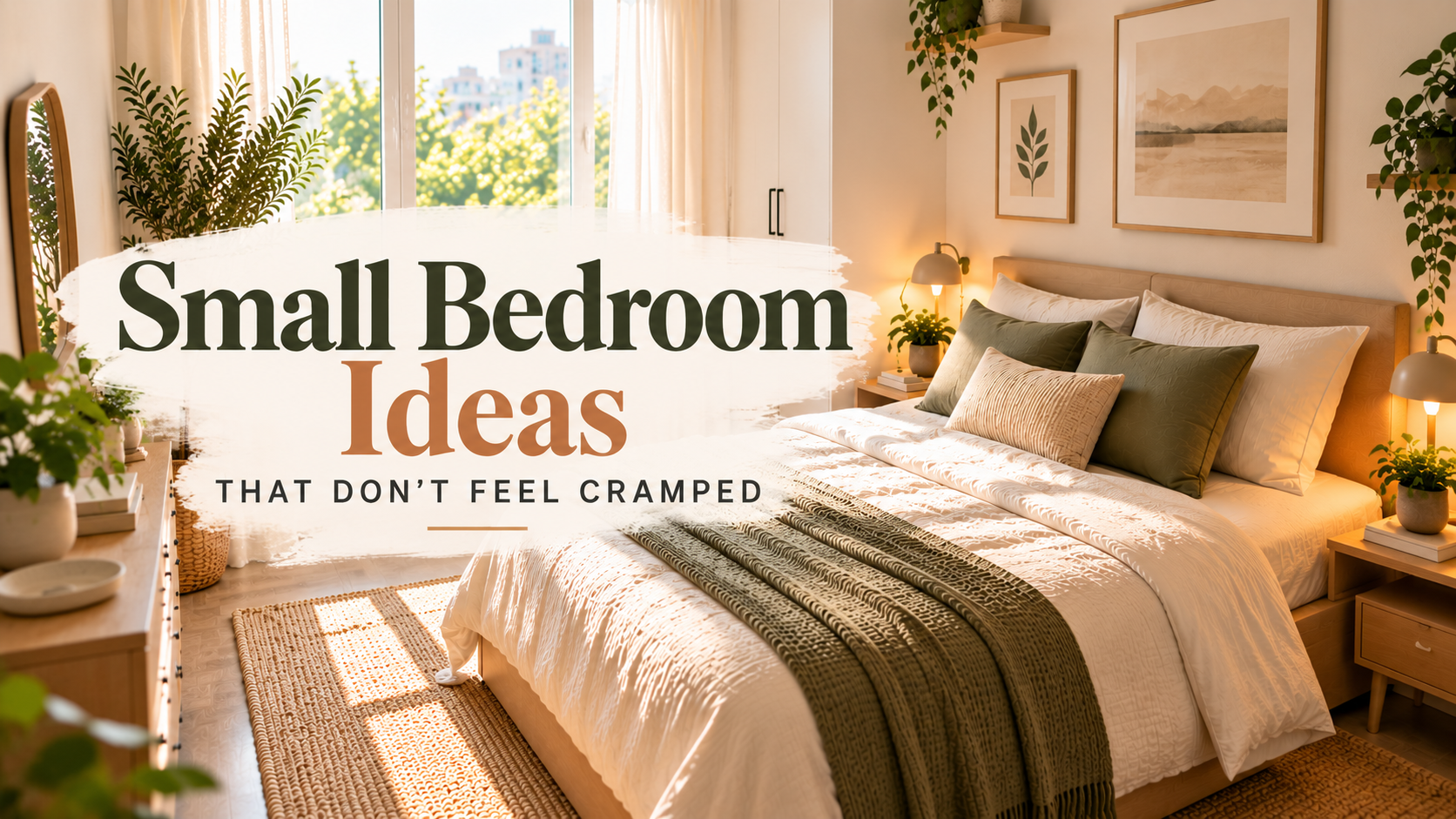
Small Bedroom Ideas That Don’t Feel Cramped
A small bedroom can feel comfortable and relaxing without needing much floor space.
The challenge is that bedrooms often need to handle several jobs at once. You need space for a bed, clothing, storage, lighting and sometimes even a desk — all while trying to keep the room calm enough to actually rest in.
The solution is not necessarily to make everything smaller. A few thoughtful choices in layout, furniture and storage can make a compact bedroom feel more open and easier to use.
Here are practical small bedroom ideas that can help you make the most of limited space without making the room feel crowded.
Start With the Bed Placement
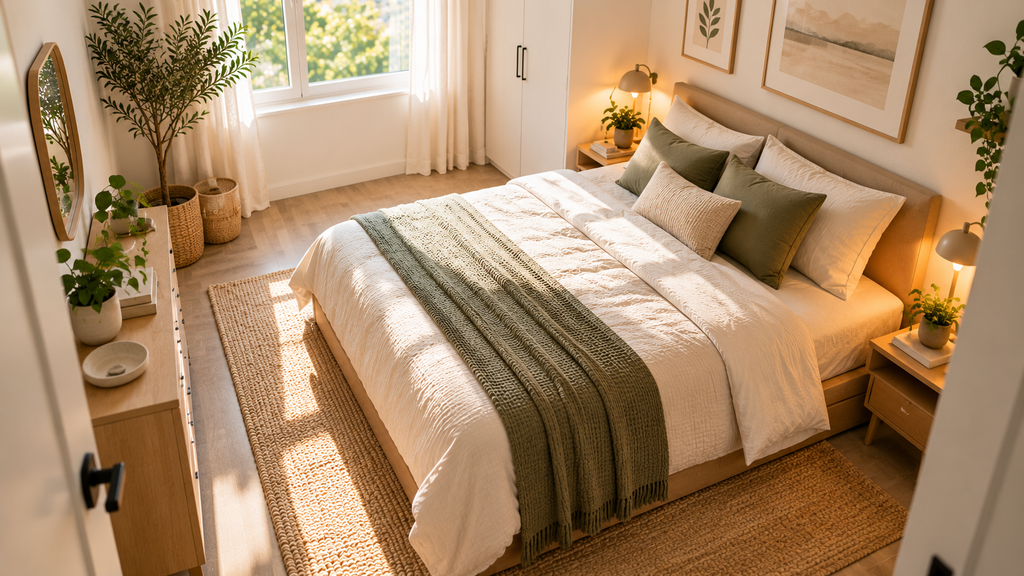
The bed is usually the largest piece of furniture in a bedroom, so its position has a major impact on how the rest of the room works.
Before adding storage or decorative pieces, think about how you move between the door, bed, closet and windows.
Try to keep the main walking paths as clear as possible. Even a narrow but uninterrupted path can make a small bedroom feel more comfortable.
If space allows, leaving access to both sides of the bed can also make the room feel less confined. In very small bedrooms, however, placing one side of the bed against a wall may free up valuable floor space.
The best arrangement depends on the shape of the room and how you actually use it.
Choose Furniture With the Right Proportions
Large furniture can quickly dominate a small bedroom.
Instead of automatically choosing the smallest furniture available, look for pieces that provide enough function without unnecessary bulk.
A bed frame with a simple profile, a narrow nightstand or a compact dresser can leave more visible floor space around the room.
Furniture with raised legs can also help. Being able to see more of the floor underneath furniture creates a greater sense of openness.
The goal is not to fill every available space. A little breathing room between pieces can make the entire bedroom feel calmer.
Use the Space Around the Bed
The area around the bed can provide useful storage without requiring another large piece of furniture.
Under-bed drawers or storage containers can hold seasonal clothing, extra bedding or items that are not used every day.
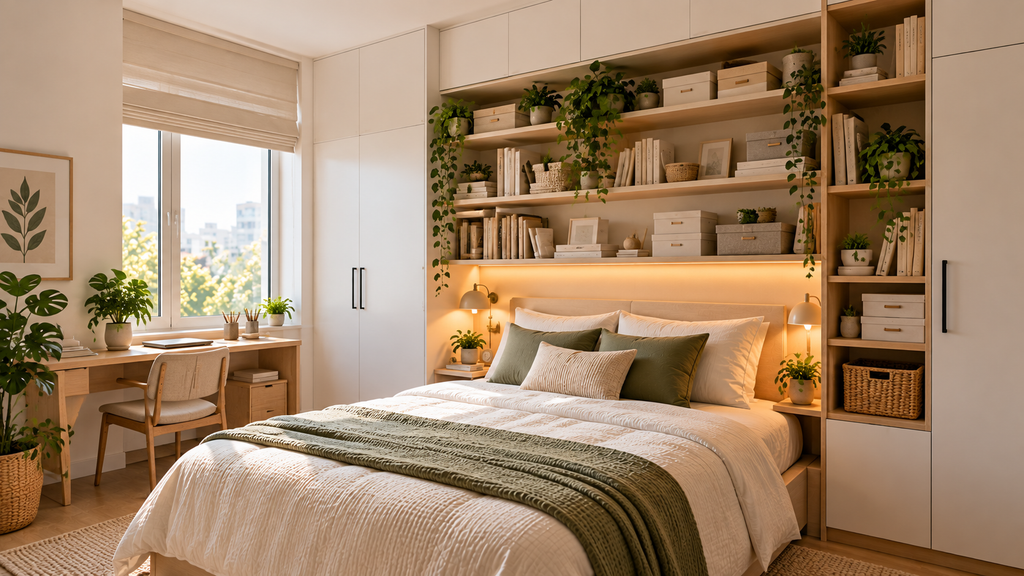
A narrow shelf above the headboard can provide space for books or small decorative objects, while wall-mounted bedside shelves can replace traditional nightstands when floor space is limited.
Using these overlooked areas can reduce the need for additional storage furniture elsewhere in the room.
Take Storage Up the Wall
When floor space is limited, vertical space becomes much more valuable.
Tall shelving, wall-mounted cabinets and floating shelves can provide storage while keeping more of the floor open.
The key is to avoid covering every wall from floor to ceiling. Too much visible storage can make a small bedroom feel visually heavy.
Use vertical storage where it solves a real problem, and leave some sections of the wall relatively simple.
That balance helps the room feel organized rather than packed.
Protect Natural Light
Natural light can dramatically change how spacious a bedroom feels.
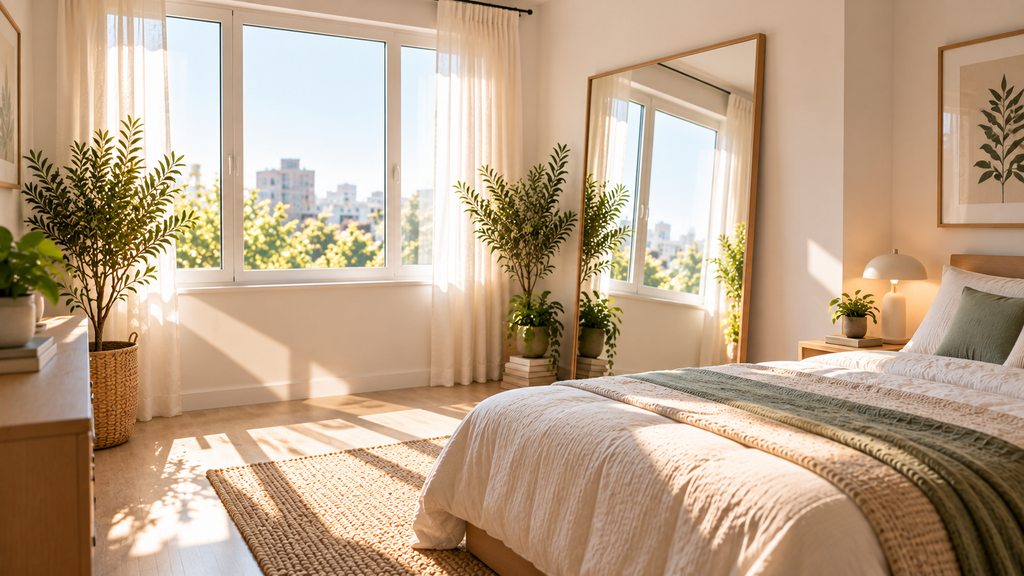
Avoid placing tall furniture directly in front of windows whenever possible. Heavy curtains can also make a small room feel darker and more enclosed.
Sheer curtains or simple window treatments allow more daylight to enter while still providing privacy.
Mirrors can help distribute that light around the room. Placing a mirror where it reflects a window or another bright part of the room can make the space feel more open.
A brighter bedroom often feels larger even when nothing about the floor plan has changed.
Keep the Color Palette Calm and Connected
A small bedroom does not have to be completely white.
Warm neutrals, soft natural colors and muted accent tones can all work well in compact spaces.
What matters most is creating visual continuity.
Repeating similar colors across bedding, curtains, furniture and accessories can reduce visual fragmentation and make the room feel more cohesive.
You can still introduce contrast through cushions, artwork, plants or smaller decorative pieces without overwhelming the space.
Leave Some Space Empty
One of the easiest mistakes to make in a small bedroom is trying to use every available corner.
Not every wall needs furniture. Not every shelf needs to be full. And not every empty space needs another storage solution.
Visible empty space gives the eye somewhere to rest and helps individual pieces of furniture feel more intentional.
Sometimes removing one unnecessary chair, shelf or decorative item can improve the room more than adding another space-saving product.
A Small Bedroom Can Still Feel Generous
A comfortable small bedroom is less about squeezing more things into the room and more about deciding what deserves the available space.
Start with a practical bed position, choose furniture with appropriate proportions, use vertical and under-bed storage carefully, and protect natural light.
Most importantly, leave enough open space for the room to breathe.
With a thoughtful layout and a few deliberate choices, even a compact bedroom can feel calm, functional and surprisingly spacious.


Comments