
Living in an apartment often means making the most of a living room that has to do more than one job. It may be where you relax, entertain friends, eat, work, and sometimes even store things that don’t fit anywhere else.
The good news is that a small living room doesn’t necessarily need more space to feel better. The right furniture placement, proportions, storage, and lighting can make a surprisingly big difference.
Here are seven practical ideas for creating a small apartment living room that feels comfortable, functional, and visually open.
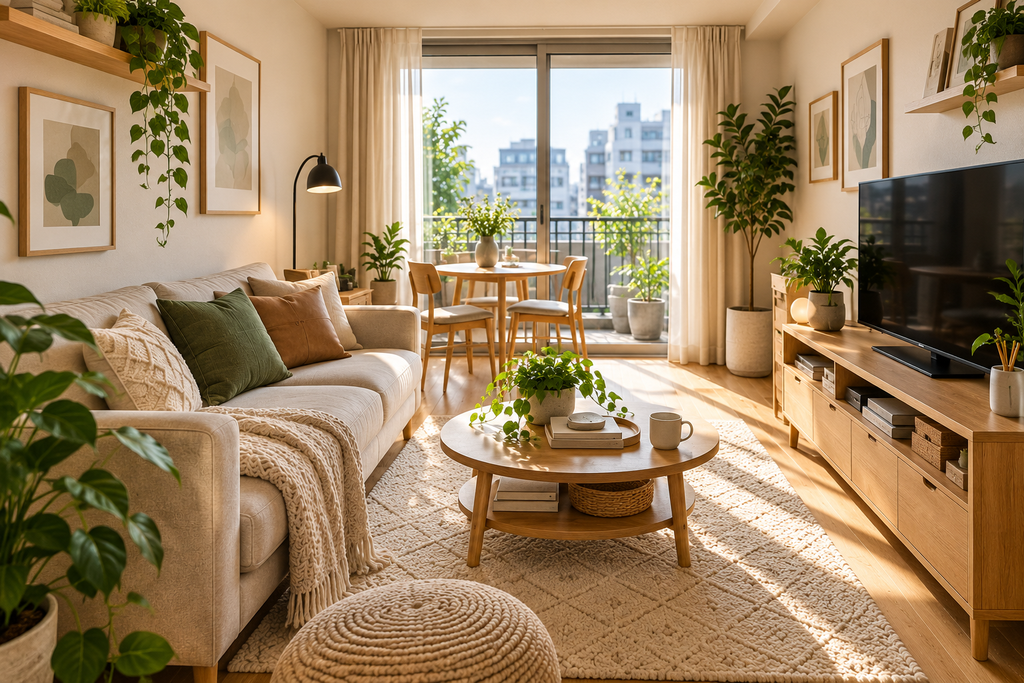
Start With a Clear Path Through the Room
Before deciding where everything should go, think about how you move through the living room.
The route from the entrance to the sofa, kitchen, balcony, or other rooms shouldn’t require you to weave around furniture. A coffee table that’s too large or an extra chair in the wrong place can make an otherwise reasonable room feel cramped.
Try arranging the largest pieces first and keeping the main walking paths as simple as possible. Good circulation can make a small living room feel noticeably more comfortable without changing its actual size.
Choose a Sofa That Fits the Room
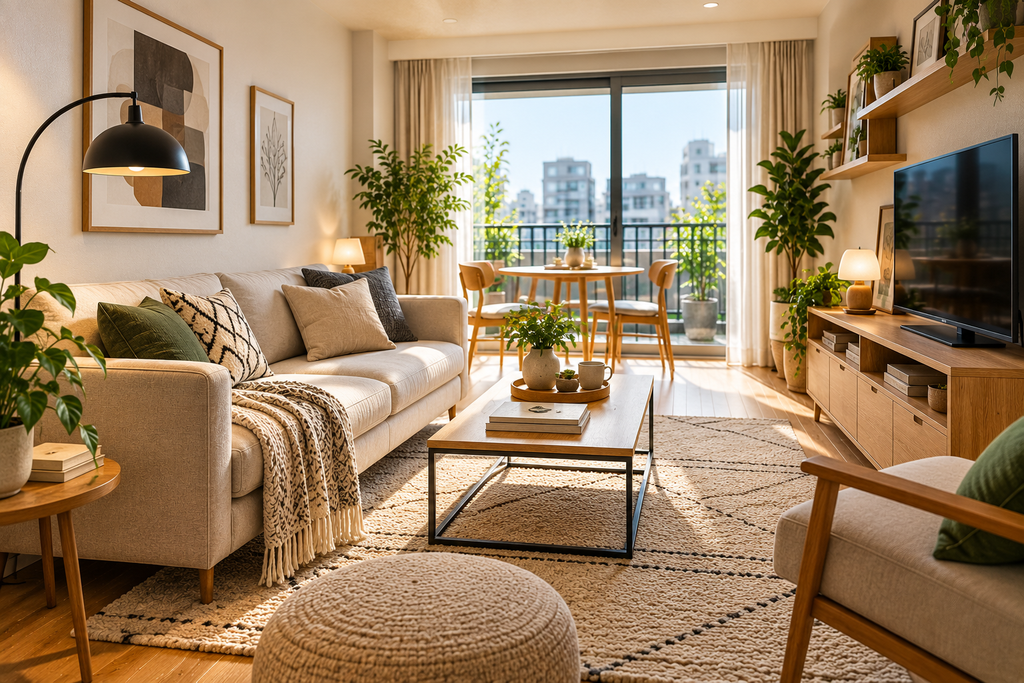
A small living room doesn’t automatically require the smallest sofa you can find.
What matters is proportion. A sofa that’s too large can dominate the room, but several undersized chairs and tables can create even more visual clutter.
Measure the available space before choosing a sofa and consider designs with slimmer arms, raised legs, and a relatively simple silhouette. Seeing more of the floor underneath the furniture can help the room feel lighter and more open.
Use One Strong Focal Point
Small rooms can quickly become visually busy when too many objects compete for attention.
Instead, choose one area to act as the focal point. It could be a piece of artwork, a textured wall, an attractive window, or a carefully styled media area.
Keeping the surrounding decor relatively simple gives the eye somewhere to rest and can make the entire room feel more intentional.
You don’t need an empty or minimalist room — just a clearer visual hierarchy.
Make Storage Part of the Furniture
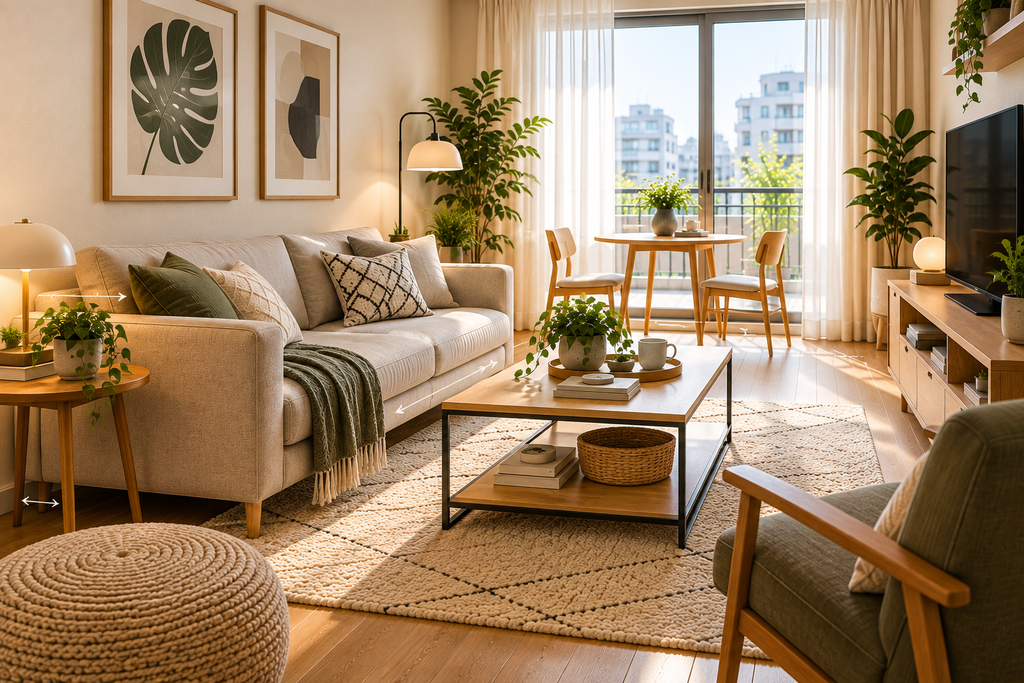
Storage is especially valuable in an apartment living room, but adding separate cabinets everywhere can consume precious floor space.
Look for furniture that combines storage with another function. A TV console with drawers, an ottoman with hidden storage, or a coffee table with shelves can keep everyday items nearby without leaving them on display.
Wall-mounted shelves can also provide storage while preserving floor space.
The goal isn’t to hide everything. It’s to give the things that create clutter an obvious place to go.
Use Vertical Space Without Filling Every Wall
When floor space is limited, walls become useful real estate.
Floating shelves, tall bookcases, wall-mounted lighting, and artwork can draw attention upward and provide useful storage or decoration.
But vertical storage works best when it is balanced with some empty space. Covering every wall with shelving can make a small living room feel more enclosed.
Use height strategically rather than simply trying to fit as much as possible into the room.
Let Natural Light Do More Work
Natural light is one of the easiest ways to make a small living room feel more open.
Try not to block windows with tall furniture. Where privacy allows, lighter window treatments can help daylight reach farther into the room.
A well-positioned mirror can reflect light into darker areas, while lighter surfaces can help distribute it throughout the space.
At night, using several smaller light sources — such as a floor lamp and table lamp — can create more depth than relying on a single bright ceiling light.
Choose Flexible Pieces for a Flexible Room
Apartment living rooms often need to change throughout the day.
A small side table might become a laptop table. An ottoman might provide extra seating when guests arrive. Nesting tables can expand when needed and take up less space afterward.
Furniture that is easy to move or serves more than one purpose gives you more ways to use the same limited area.
Before buying something new, ask yourself not only whether it fits, but also how many useful roles it can perform.
Small Living Rooms Can Still Feel Generous
A successful small living room isn’t about squeezing the maximum amount of furniture into the available space.
It’s about creating enough room for the activities that matter to you while reducing unnecessary obstacles and visual clutter.
Start with circulation and furniture proportions, then improve storage, lighting, and flexibility. Even a few small changes can make an apartment living room feel calmer, more comfortable, and easier to use.
And before buying new furniture, it can be worth testing different arrangements on paper or with a room-planning tool. A few minutes of planning can save you from discovering that the perfect-looking sofa or table doesn’t actually work in your space.
Comments