
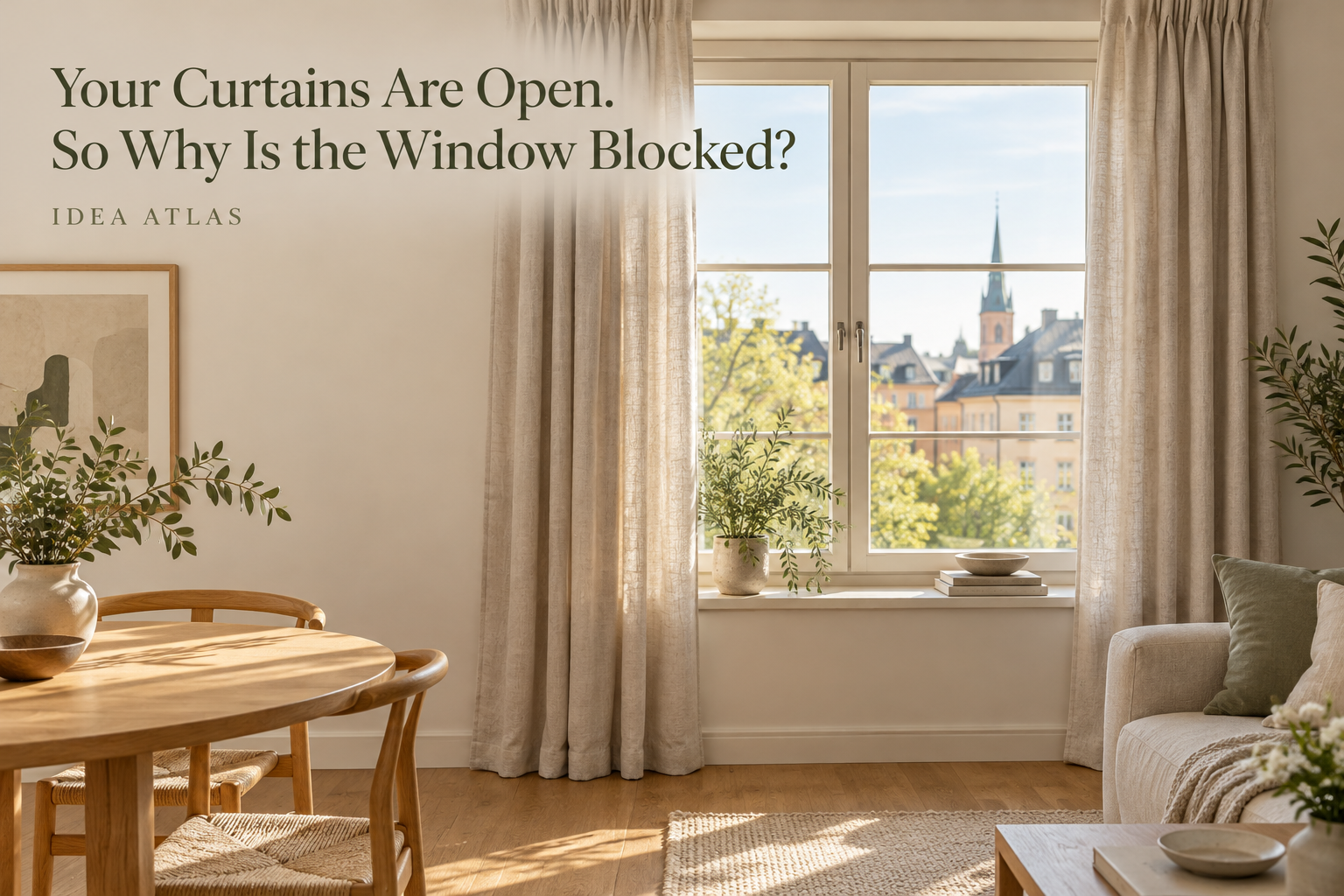
You open the curtains every morning, but a thick bundle of fabric still covers each side of the glass. In a small apartment with one main window, that is worth checking before you buy a brighter lamp or another mirror.
The curtain color may not be the problem. The fabric may simply have nowhere to go when it opens.
Start by looking at the curtain stack, not just the closed curtains. If the gathered folds sit across the glass, test whether they could rest over the wall beside the window instead. A wider rod can help when there is suitable wall space, but it is not the right answer for every window.
Images are AI-generated illustrations, not photographs of a measured renovation. The examples show layout principles rather than promised changes in room brightness.
Look at the window with the curtains fully open
Draw both panels as far as they normally travel. Stand where you usually sit, then look at the outer edges of the window. Are you seeing glass, or a column of folded fabric?
Curtains still take up width when open. That gathered width is often called the stack or stack-back. A rod can cover the window when the curtains are closed yet provide too little usable space for the folds when they open.
Open curtains can still overlap the glass when their folds have nowhere else to sit.
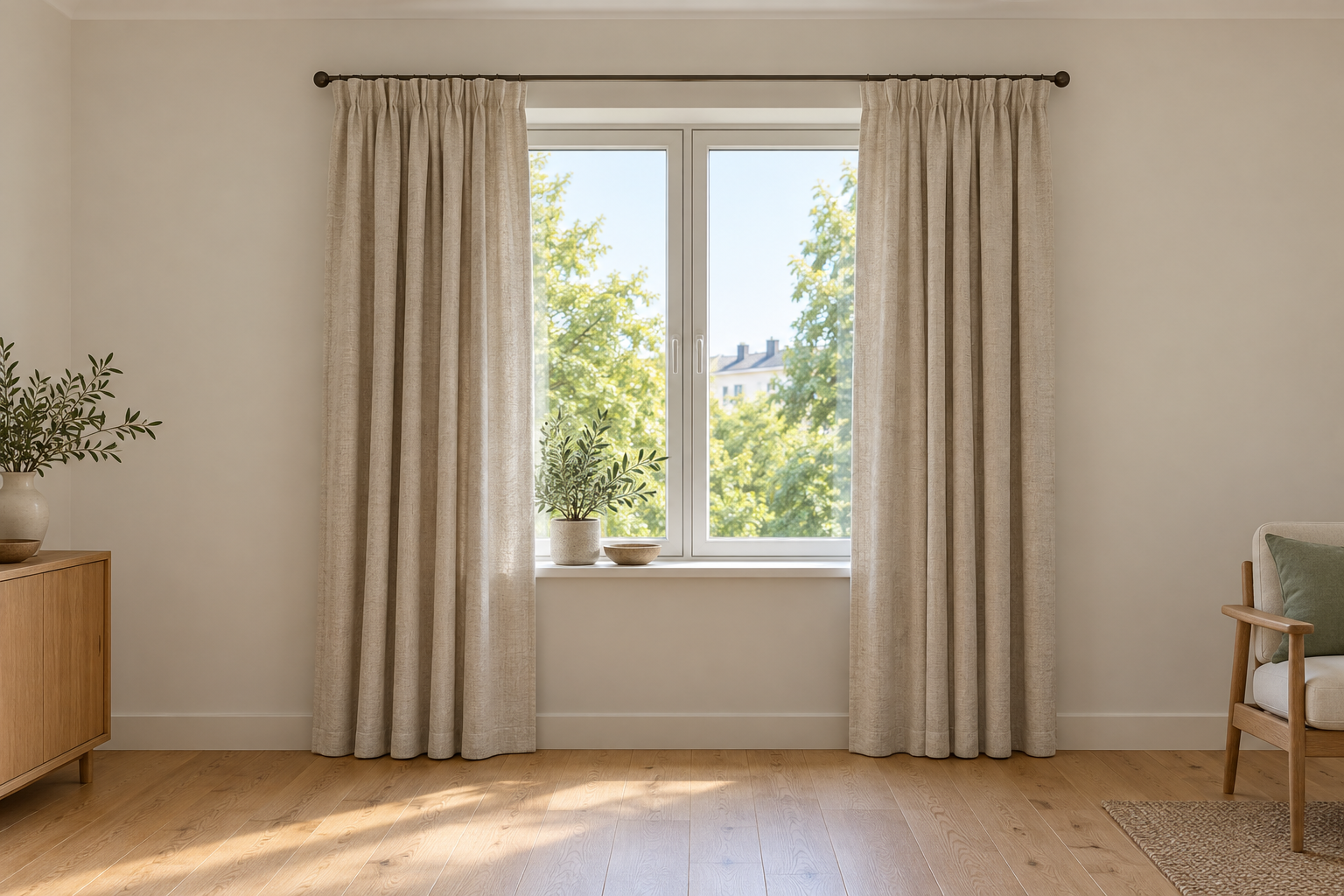
Check the top as well as the middle. A tieback may pull the lower fabric away while leaving the heading over the pane. Also check whether rings stop at a support bracket before the fabric reaches the end of the rod. Do not remove a required support to gain travel.
Measure the space for the folds, not just the window
Measure the outside width of the window trim, then the unobstructed wall beside it. Look for corners, cabinets, light switches and anything else that would prevent a curtain stack from resting there.
If you already own the curtains, gently gather one panel as it normally hangs and measure its occupied width. Do not crush it into an unnaturally tight bundle: you want an arrangement you can repeat each day. If you are ordering new curtains, ask the supplier for the expected stack width for that fabric, lining, heading and track.
There is no single extension measurement that guarantees every curtain will clear the glass. Thick lined fabric and a fuller heading can need different space from a lighter panel. The usable travel between fittings matters, too; decorative finials do not provide hanging space.
For a manufacturer example, IKEA’s VIDGA measuring guide includes extra width beside the window and asks readers to account for the opening, sill, radiators and furniture. Follow the instructions for the particular hardware you choose rather than treating another system’s measurements as universal.
Give the open fabric a place beside the glass
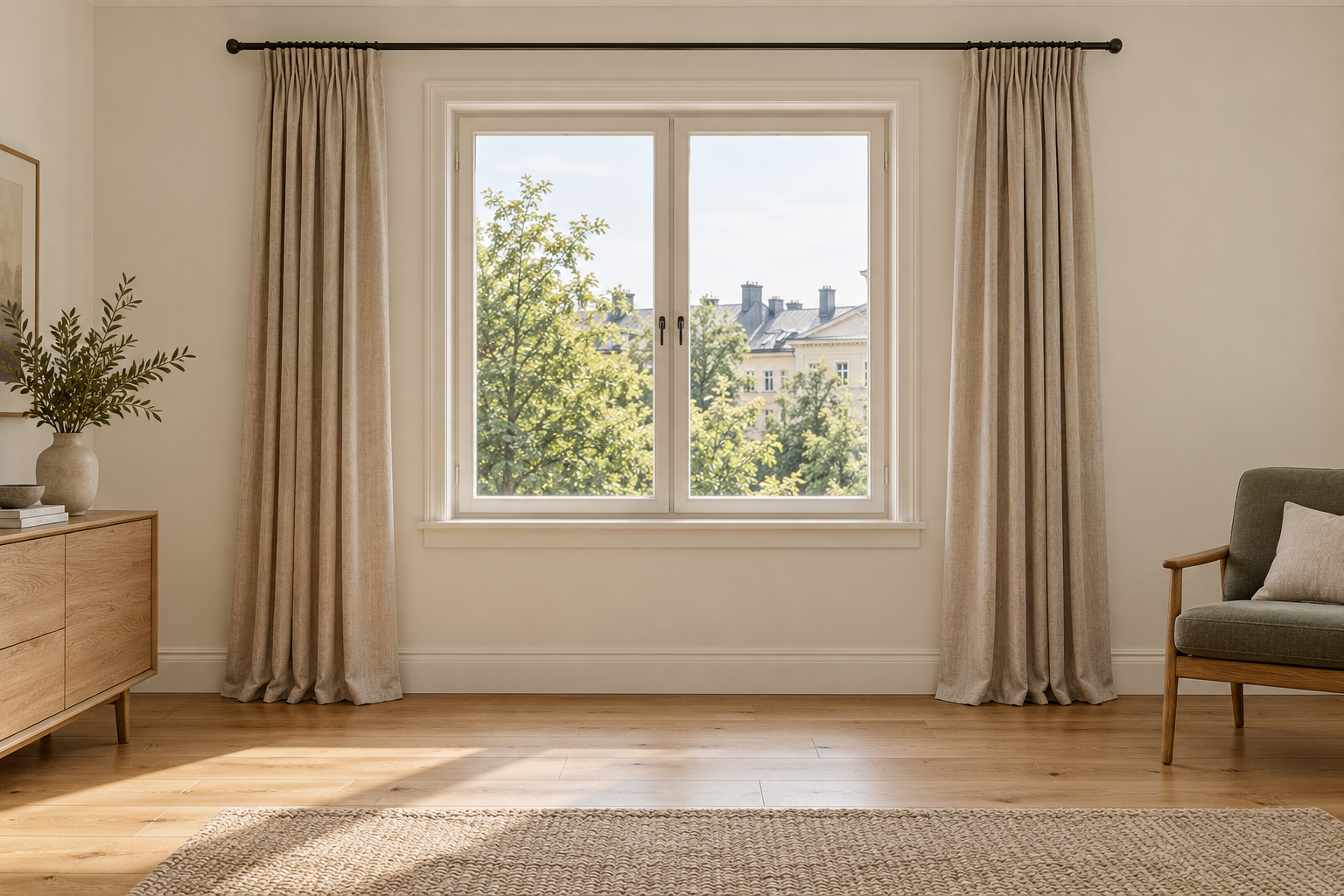
Where the wall and mounting conditions allow it, extending the usable rod or track beyond the trim can give each panel a place to gather. The point is to move the open fabric off the glass, not to make the window itself larger.
In this example, the curtain folds rest over the adjacent wall rather than across the window.
Before changing hardware, compare the existing curtain width with the new span. Panels that close comfortably on a short rod may look stretched or leave gaps across a longer one. Check the open position and the closed position together.
Do not solve this by extending a telescopic rod beyond its rated range, dropping a support bracket or relying on unsuitable fixings. Confirm the wall or ceiling material, the hardware’s load and support requirements, and your rental agreement before mounting anything. Keep fabric clear of heat sources according to their instructions.
Moving an existing piece of furniture can sometimes reveal enough side space without replacing the curtains. That is a useful test before purchasing a new treatment.
When there is no room at the sides
A window next to a corner or fitted cabinet may not have room for two substantial curtain stacks. Forcing the same arrangement into that space can trade one obstruction for another.
A compact raised shade is one alternative when there is little side space for gathered curtains.

Consider a roller shade or another treatment whose open position suits the available space. Check how much of the top of the glass its roll or folded stack occupies, and whether it interferes with the window handle or opening. A shade is not automatically a clear-window solution.
A single curtain panel drawn to the more spacious side may also be an option if the hardware supports that arrangement. Test its larger one-sided stack and confirm that the panel can still close properly. In other rooms, accepting some covered glass is a reasonable compromise for privacy or the curtains you already own.
Keep privacy and nighttime use in the decision
More exposed glass is not always the goal. A street-facing bedroom may need daytime screening, and you may prefer to soften strong sun or reduce glare while working.
Sheer fabric can filter light, but do not assume it provides the privacy you need after dark. Check the view with the room lights on from an appropriate outside viewpoint, or choose a treatment designed for your privacy requirements.
If you use a sheer layer and a heavier layer, plan space for both when open. Do not replace useful blackout curtains solely to make a daytime photograph look lighter. Choose the open and closed arrangement that works for your actual routine.
Try the open-window check before buying
- Open the curtains and identify any fabric still covering the glass.
- Check where the rings or gliders stop and how wide the gathered fabric is.
- Measure available side space and inspect obstructions.
- Confirm any proposed arrangement works when closed, too.
- Check mounting, heat-source clearance, window operation and privacy before making changes.
If the curtains are already clear of the glass, a longer rod is unlikely to solve your room’s lighting problem. Look instead at furniture blocking the window, the direction of daylight and the lighting you need for specific tasks. Our small bedroom ideas cover the broader room arrangement.
The useful question is simple: when the curtains are open, where does the fabric go? Answer that first, and you can make a more informed choice without buying a whole new room.


Comments