
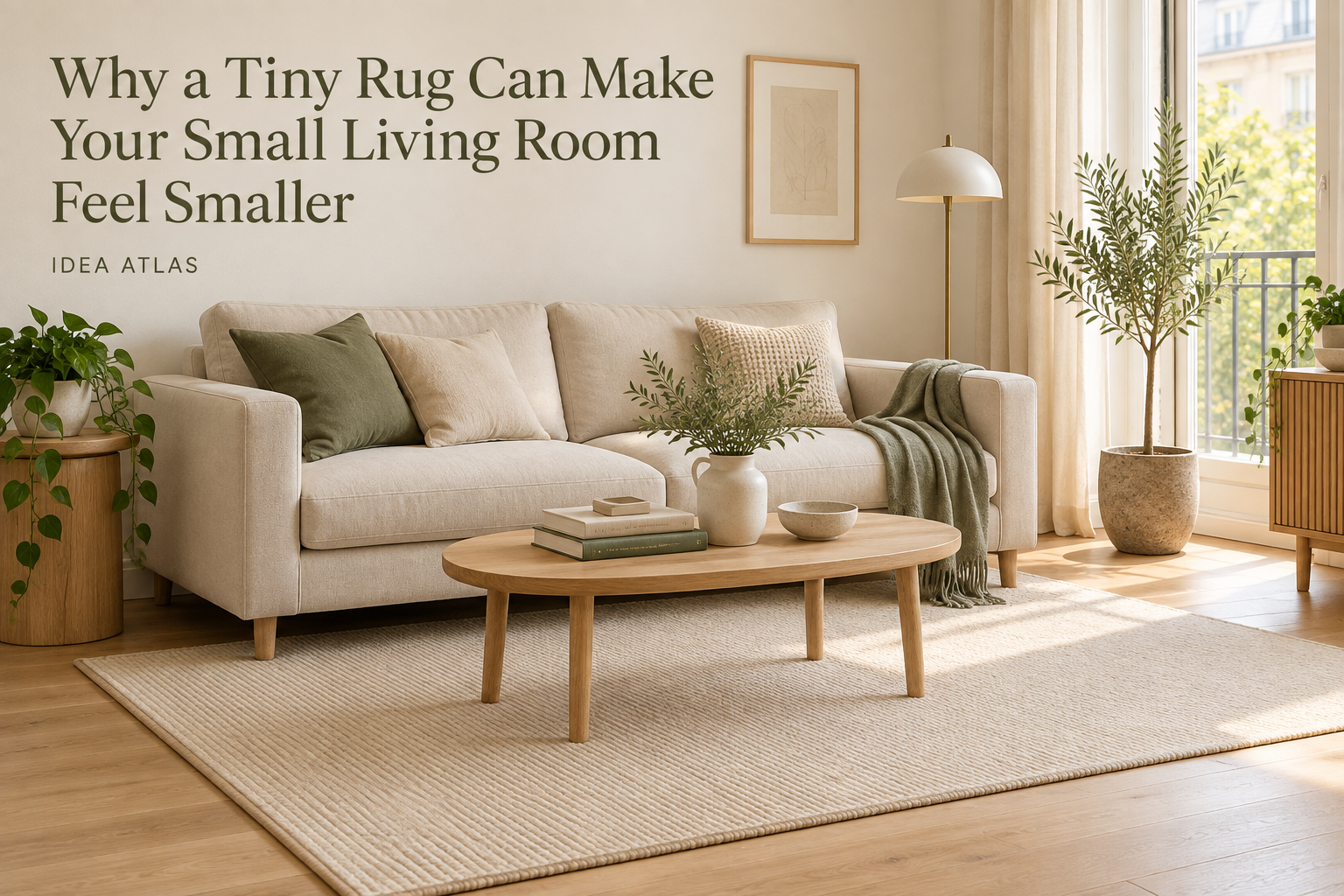
A small living room can make a small rug feel like the sensible choice. It costs less, shows more floor and seems easier to fit around the furniture.
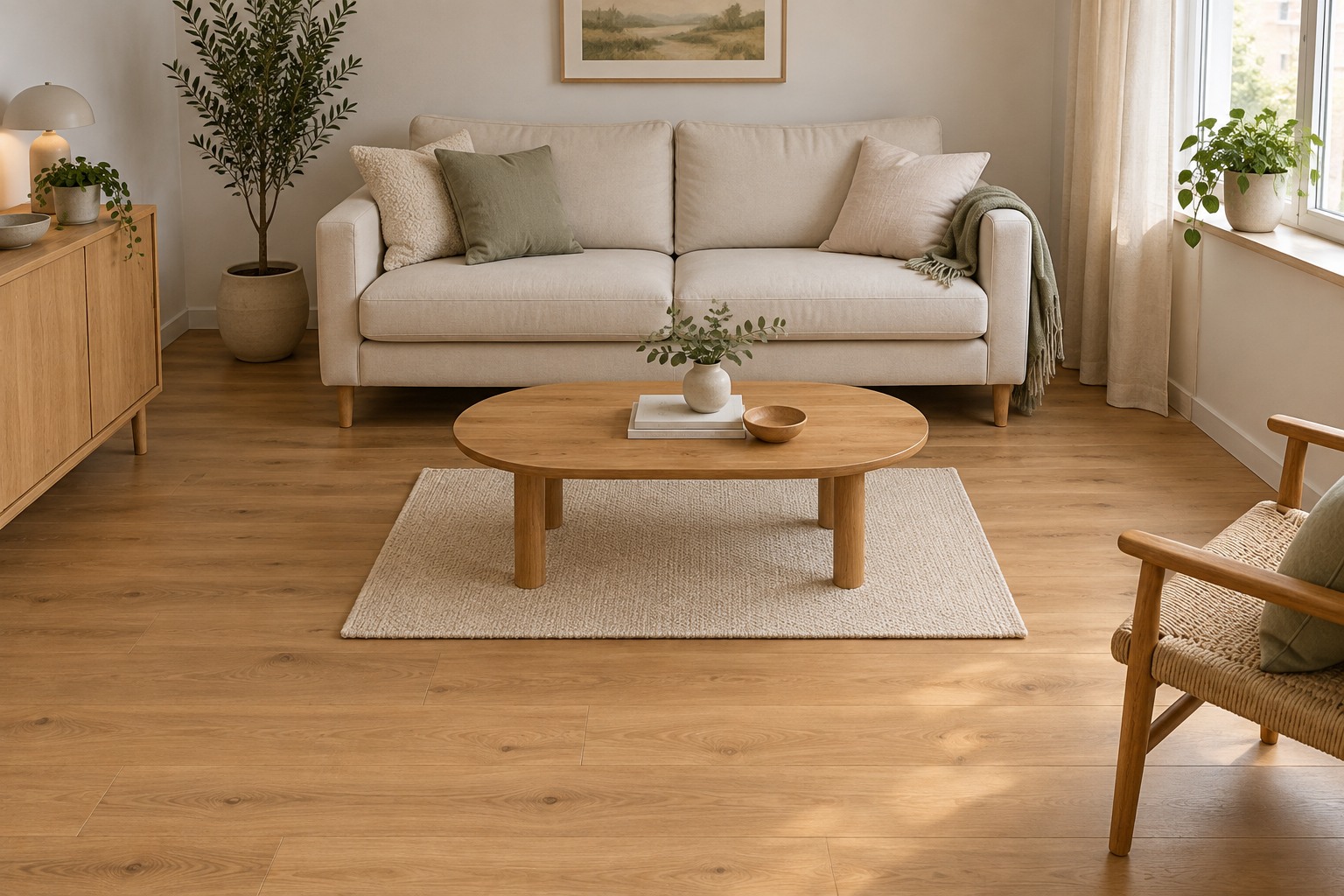
But when the rug sits beneath only the coffee table, with bare floor separating it from every seat, the room can look more broken up. The sofa, chair and table start to read as separate pieces rather than one seating area.
If your small living room rug looks too small, check its relationship to the seats before shopping for a replacement. A different position may help. So might a larger rug, a smaller furniture grouping or no central rug at all.
Why an isolated rug can make the room feel smaller
Imagine a compact sofa, one armchair and a coffee table. A little rectangle under the table creates a strong boundary around the smallest part of that arrangement. Beyond it, strips of bare floor separate each seat from the center.
Your eye may follow those breaks instead of seeing a single, comfortable place to sit. That visual disconnection is what can make the arrangement feel cramped or unfinished.
The room has not lost usable space, and a larger rug will not add square footage. This is about the way the furniture relates to one another. Color, contrast, furniture shape and the view from the doorway can all affect the result.
A rug that stops short of every seat can leave the coffee table looking like its own small island.
Use front legs on the rug as a starting point
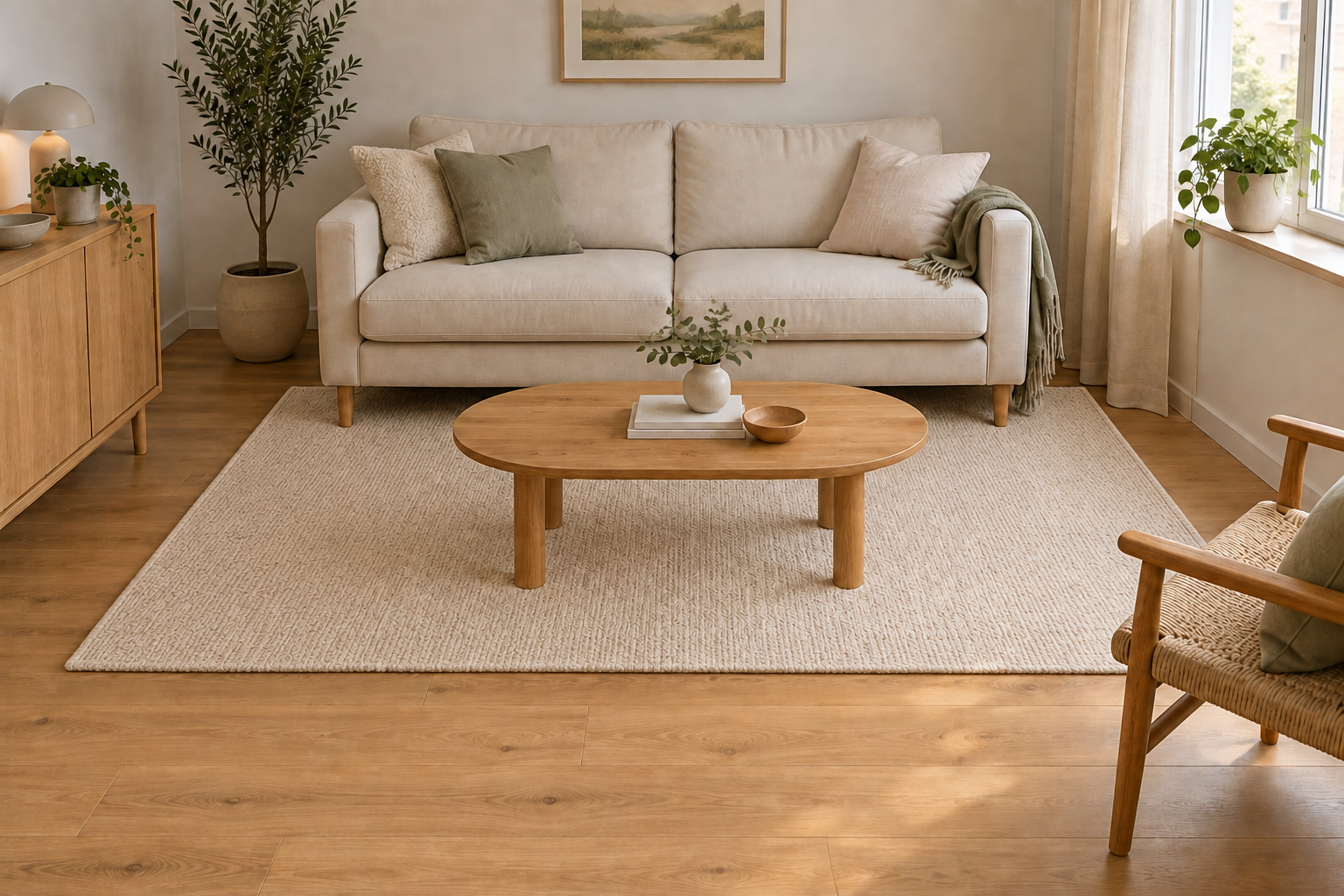
Try an outline that reaches beneath the front legs of the sofa and the other main seats. The shared surface can give the group a clearer connection without needing to cover the whole floor.
IKEA’s rug guidance recommends a living room rug large enough for the front legs of the sofa and armchairs, explaining that this helps define one seating area.
Treat that as a useful baseline. A curved sofa, a deep chaise, an unusual chair base or a narrow room may need a different arrangement. Check that furniture remains stable if some supports sit on the rug and others stay on the floor.
For a cohesive main seating area, let the rug relate to the seats you actually use together. An accent chair across the room does not automatically need to touch it.
A rug beneath the sofa’s front legs connects it to the coffee table while leaving floor visible around the group.
Measure the seating group before the empty floor
Begin with furniture in a comfortable position. Measure the area the rug needs to connect, including the span of the sofa and the position of any chair that belongs with it. Then compare that outline with available rug dimensions.
Do not choose a size solely because it fits the empty rectangle between the seats. That approach often produces a rug sized for the coffee table rather than the room’s main activity.
Check the room boundaries too. The rug should not force furniture into a doorway, block a vent or turn a clear route into an awkward squeeze. There is no single border measurement that suits every apartment.
If the furniture arrangement itself feels unsettled, our small living room ideas for apartments can help you think through the broader layout before settling the rug position.
Tape the outline before buying anything
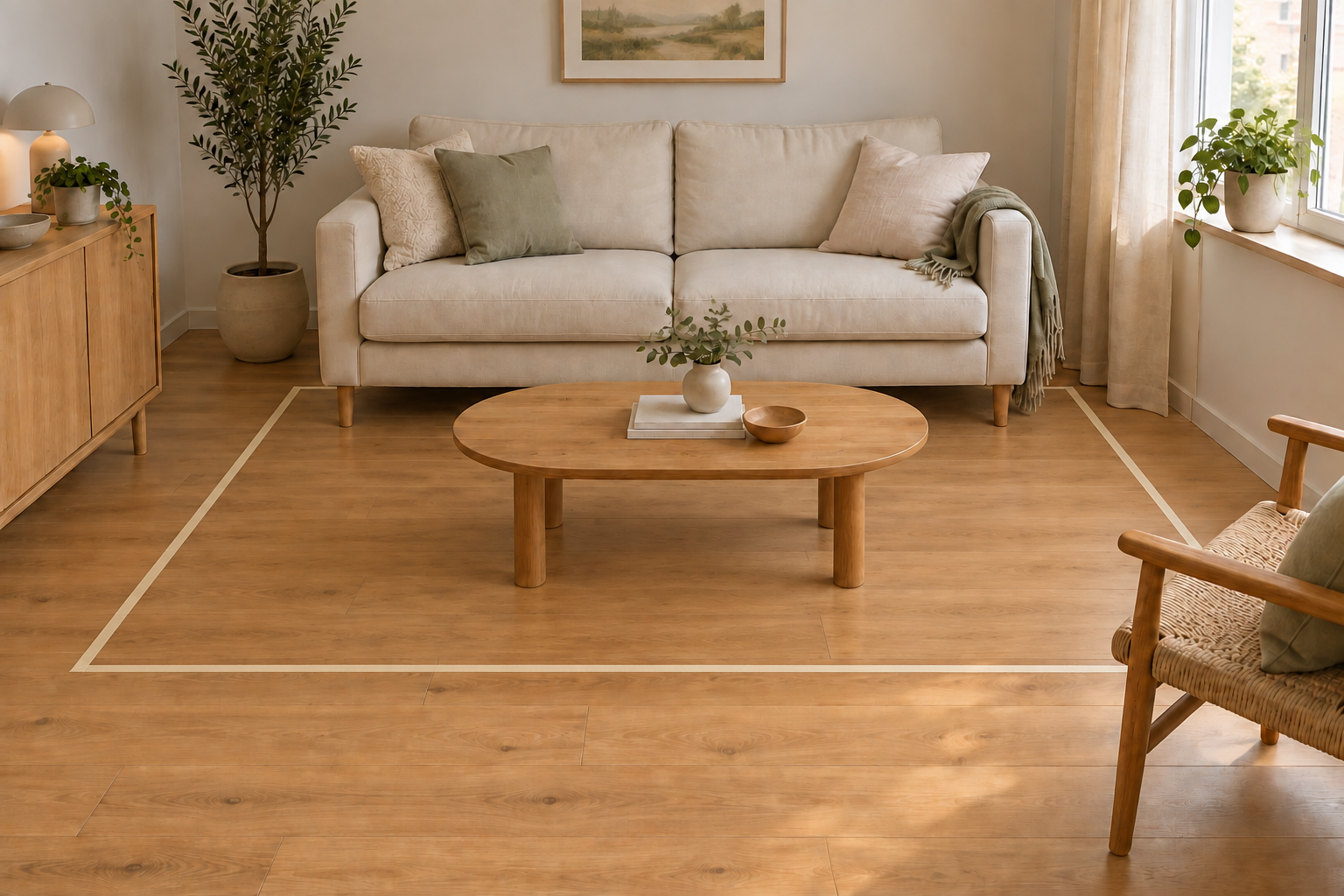
Mark a candidate rug size with removable tape suitable for your flooring. Follow the tape and flooring guidance, test a hidden spot first and remove it promptly after the check. Skip adhesive tape on a delicate finish if you cannot confirm compatibility.
Keep the furniture in place and look from the entrance and your usual seat. Take a photo, then test another outline from exactly the same camera position. Change only the outline so the comparison stays useful.
Next, use the room normally. Open nearby doors fully. Walk the main route, pull out storage and check where feet or mobility equipment would cross an edge. A flat outline cannot show pile height, curling corners, slipping or whether a door will clear the finished rug and pad.
Before purchasing, also check the cleaning instructions, rug weight, pad compatibility with your floor and the seller’s return conditions. Practical access and safe edges take priority over a tidy-looking layout.
A taped outline helps you compare rug sizes around the existing furniture before committing to a purchase.
Try the rug you own in a different position
Start with a no-cost experiment. Turn a rectangular rug so its longer side follows the sofa, or shift it closer to the seating. Recheck the whole group rather than centering it automatically in the room.
You could also bring the seats slightly closer together if conversation, table access and walking routes remain comfortable. Avoid compressing the furniture simply to make a rug appear to fit.
If the rug still looks isolated, try removing it for a day. Continuous bare flooring may suit the arrangement better. Keep comfort, sound and any rental requirements in mind before deciding.
When replacement makes sense, compare simpler designs in the dimensions you tested. Layering a small rug over a larger one adds cost and extra edges, so it is not an automatic budget fix.
When a small accent rug works well
A small rug can be right when it has a smaller job. It might serve a single reading chair or add a deliberate accent to a compact arrangement that already feels connected.
A coffee-table-only rug can also be a choice you enjoy. If its proportions look intentional, the furniture works together and the edges cause no problems, there is no need to replace it to satisfy a styling rule.
Before buying, ask one question: does this rug help the seating area feel like a whole? Test the answer in your room, with the furniture you own and the routes you need to keep clear.
Images are AI-generated illustrations of layout principles, not measured room plans.

Comments